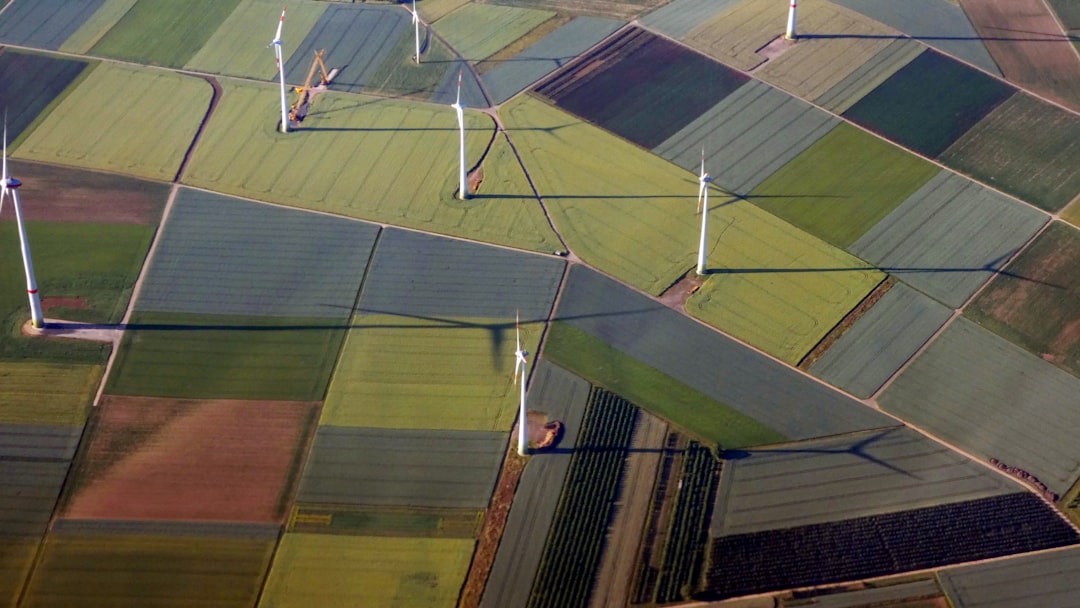
The United States' largest clean energy project reached completion this week as the final turbines became operational at the SunZia Wind facility in New Mexico, marking a milestone in renewable energy deployment even as federal fossil fuel policies pull in the opposite direction.
The massive wind farm comprises 242 turbines with a combined capacity of 1,000 megawatts—enough electricity to power approximately 300,000 homes annually, according to project developer Pattern Energy. The facility represents the single largest renewable energy project to come online in U.S. history.
"This is what climate action at scale looks like," said Mike Garland, CEO of Pattern Energy, during a statement announcing completion. "While policy debates continue, the clean energy transition is happening on the ground."
The SunZia project pairs the wind generation with a 550-mile high-voltage transmission line running from New Mexico to Arizona, addressing one of renewable energy's persistent challenges: moving power from windy or sunny regions to population centers.
In climate policy, as across environmental challenges, urgency must meet solutions—science demands action, but despair achieves nothing. The SunZia completion demonstrates that technological infrastructure enables rapid clean energy scaling, even amid political headwinds.
The project's timeline illustrates both progress and persistent obstacles. Initial planning began over a decade ago, with construction commencing in 2023. The lengthy development period reflects challenges in permitting, transmission infrastructure, and coordinating across federal and state jurisdictions.
"This should have been built five years ago," said Leah Stokes, environmental policy professor at the University of California, Santa Barbara. "We have the technology and economics on our side—regulatory hurdles remain the bottleneck."
The project arrives during a contradictory moment in U.S. energy policy. While renewable installations reach record levels driven by favorable economics and state policies, the current administration has prioritized fossil fuel expansion, opening federal lands to oil and gas leasing and rolling back clean energy incentives.
Yet market forces increasingly favor renewables. Wind and solar now represent the cheapest sources of new electricity generation in most of the country, according to investment bank Lazard's latest levelized cost analysis. Battery storage costs have dropped 90% over the past decade, addressing intermittency concerns.
"The economics are unstoppable," said Jenny Chase, solar analyst at BloombergNEF. "Even without subsidies, clean energy wins on cost. The question isn't whether we transition—it's how fast."
The SunZia wind farm will displace approximately 1.5 million tons of CO₂ emissions annually—equivalent to removing 300,000 gasoline-powered vehicles from roads, according to project estimates. Over its anticipated 30-year lifespan, the facility will prevent approximately 45 million tons of greenhouse gas emissions.
The project also demonstrates renewable energy's economic impact beyond climate benefits. Construction employed over 1,200 workers at peak, with permanent operations supporting approximately 50 long-term jobs. New Mexico will receive tax revenue and lease payments estimated at $60 million annually.
Indigenous communities have both celebrated and critiqued the project. While tribal nations hold ownership stakes and receive revenue shares, some Apache groups raised concerns about sacred site impacts during development.
"Energy transition must include Indigenous sovereignty," said Nicole Horseherder of Tó Nizhóní Aní (Beautiful Water Speaks). "Climate solutions cannot repeat the extraction model that caused the crisis."
The SunZia completion comes as global renewable capacity reaches historic milestones. The International Energy Agency reports that renewable energy capacity additions exceeded 500 gigawatts globally in 2025—surpassing fossil fuel additions for the first time. China, the European Union, and the United States lead deployments.
However, climate scientists emphasize that current renewable deployment, while encouraging, remains insufficient for limiting warming to 1.5°C. Meeting Paris Agreement targets requires tripling renewable capacity by 2030—a pace that would demand SunZia-scale projects monthly.
"We're moving in the right direction but not nearly fast enough," said Fatih Birol, executive director of the International Energy Agency. "Emergency speed means mobilizing resources like we do for war—because climate impacts are already here."
The project's transmission infrastructure may prove as significant as the turbines themselves. Energy experts identify grid modernization and long-distance transmission as critical barriers to further renewable expansion.
"We can build solar and wind farms quickly," said Jesse Jenkins, energy systems engineer at Princeton University. "Getting that power where it's needed requires transmission—and that's where we're falling behind."
Despite political uncertainty, renewable energy developers report robust project pipelines. Pattern Energy alone has 15 gigawatts of wind and solar projects in development—enough capacity to power approximately 4 million homes.
"The transition has its own momentum now," Garland said. "Economics, technology, and climate reality align. Political resistance can slow us down—but it can't stop what's already unstoppable."