
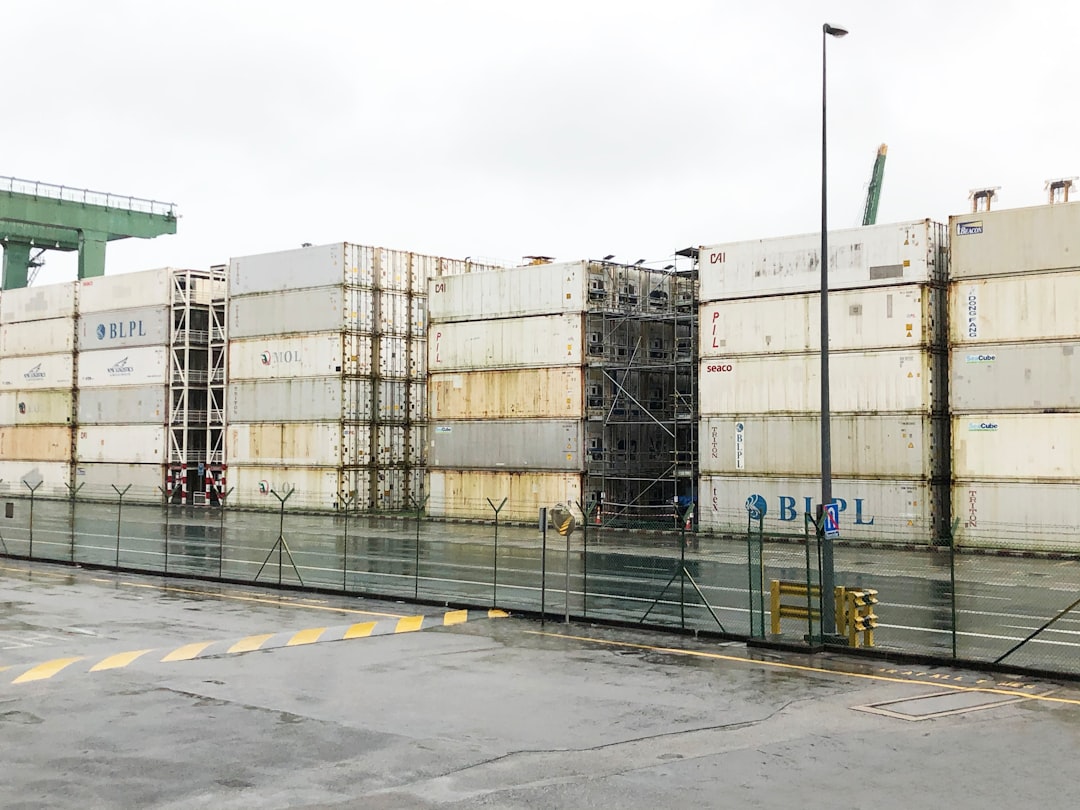
The United States consul in São Paulo has directly intervened in a Brazilian infrastructure auction, suggesting a Chinese company should not be allowed to win the bidding for a major container terminal at the Port of Santos, Latin America's largest port.
The diplomatic pressure, first reported by Folha de S.Paulo, marks an unusually direct American attempt to influence Brazilian commercial decisions. The terminal auction represents a strategic gateway to South America's largest economy and a crucial node in global supply chains.
In Brazil, as across Latin America's giant, continental scale creates both opportunity and governance challenges. The Santos port complex handles approximately 30% of Brazil's foreign trade, making it a prize target for both Washington and Beijing as the two powers compete for influence across the region.
The intervention comes as Brazil deepens economic ties with China, now its largest trading partner. President Luiz Inácio Lula da Silva's administration has pursued a pragmatic foreign policy that balances relations between major powers while asserting Brazilian sovereignty on commercial matters.
According to the Painel S.A. column, the American consul made the suggestion during meetings with Brazilian government officials and port authorities, arguing that Chinese control over critical infrastructure poses security concerns. The consul's office declined to comment on specific conversations, citing diplomatic protocol.
Brazilian officials, speaking on background, expressed frustration with what they characterized as heavy-handed tactics that could backfire by pushing Brazil closer to China. "We determine who participates in our infrastructure auctions based on Brazilian law and Brazilian interests," one official told reporters. "This kind of pressure doesn't help the American case."
The terminal project involves modernizing and expanding container handling capacity at a site that serves the industrial heartland of São Paulo state, home to much of Brazil's manufacturing sector. Multiple companies from various countries have expressed interest in the concession, which could involve billions of reais in investment over the contract period.
Paulo Sérgio Mello, an international relations analyst at the Fundação Getulio Vargas in Rio de Janeiro, noted that the American intervention highlights Washington's concern about losing economic influence in the region. "The problem is that telling Brazil what it can't do rarely works," he said. "It often produces the opposite effect."
The timing is particularly sensitive as Brazil assumes greater leadership within BRICS, the bloc of major emerging economies that includes China, Russia, India, and South Africa. The Lula administration has positioned itself as an independent voice in global affairs, refusing to align exclusively with either Washington or Beijing.
Chinese state-owned enterprises already operate terminals at other Brazilian ports, including facilities in Paranaguá and Rio Grande, without significant controversy. These investments have generally delivered promised infrastructure improvements while respecting Brazilian labor and environmental regulations.
The American consul's intervention contrasts sharply with China's approach, which has emphasized commercial benefits and avoided public pressure on Brazilian decision-making. Chinese diplomats in Brasília have maintained that their companies compete on merit and respect Brazil's sovereign right to choose partners.
Business leaders in São Paulo expressed concern that political considerations might override economic efficiency in the auction process. "What matters is which company can deliver the best terminal at the best price," said Maria Helena Santana, former head of Brazil's securities regulator. "Foreign pressure from any direction undermines our institutions."
The auction is expected to proceed in the coming months under oversight by the National Waterway Transportation Agency. Brazilian officials have emphasized that all qualified bidders meeting technical and financial requirements will be allowed to compete, regardless of diplomatic pressure.
The episode illustrates the complex balancing act facing Brazil as it navigates between the world's two largest economies. With China purchasing roughly one-third of Brazilian exports—primarily soybeans, iron ore, and petroleum—and the United States remaining a crucial market and technology partner, Brasília has strong incentives to maintain good relations with both powers.
However, the American intervention may have already achieved the opposite of its intended effect. Brazilian lawmakers across the political spectrum criticized foreign interference in domestic commercial decisions, with even traditionally pro-American voices expressing discomfort with the consul's approach.
As one Brazilian diplomat put it: "If Washington wants to compete with China for influence in Latin America, pressuring us on who can bid for our infrastructure is exactly the wrong way to do it."