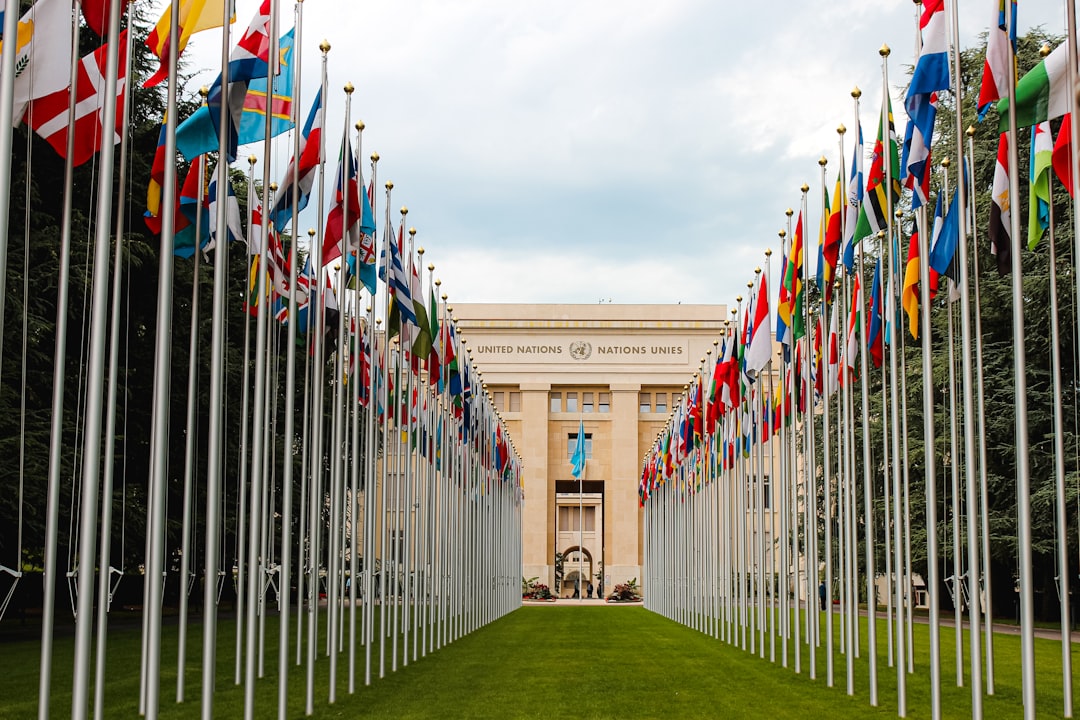
Ukraine has formally called for Russia's expulsion from the United Nations Security Council, according to Belarusian news outlet Nasha Niva, arguing that Moscow's ongoing invasion violates the fundamental principles of the UN Charter and disqualifies it from holding a permanent seat on the body responsible for maintaining international peace.The appeal, delivered by Ukrainian Foreign Minister Dmytro Kuleba in a letter to UN Secretary-General António Guterres, acknowledges the procedural difficulties but insists that "extraordinary violations of international law require extraordinary responses." The proposal has virtually no chance of success given that Russia holds veto power over Security Council decisions, but Ukrainian officials argue it serves an important purpose in highlighting the dysfunction of the current system."How can an aggressor state that has violated every principle of the UN Charter continue to sit in judgment on international peace and security?" Kuleba wrote. "The answer is that it cannot, and the world must find a path forward that restores credibility to this institution."To understand today's headlines, we must look at yesterday's decisions. The UN Security Council was designed in 1945 to prevent another world war by giving the five major Allied powers—the United States, the Soviet Union, Britain, France, and China—permanent seats with veto authority. The structure was meant to ensure great power cooperation but has frequently resulted in paralysis when permanent members have conflicting interests.Russia inherited the Soviet Union's seat when that state collapsed in 1991, though some international legal scholars have questioned whether that succession was properly authorized under UN procedures. Ukrainian officials have seized on this ambiguity to argue that Russia's claim to permanent membership was never properly validated.The practical obstacles to removing Russia are formidable. The UN Charter provides no mechanism for expelling a permanent member, and any attempt to do so through a Charter amendment would require approval by two-thirds of the General Assembly and ratification by all five permanent Security Council members—including Russia itself.However, Ukrainian officials say their goal is not necessarily to achieve Russia's immediate removal but to build international momentum for Security Council reform and to delegitimize Russian participation in multilateral institutions. The campaign has gained support from several Eastern European and Baltic states that share Ukraine's frustration with Russian obstruction of Security Council action.Russian UN Ambassador Vasily Nebenzya dismissed the Ukrainian proposal as "desperate propaganda" and accused Kyiv of seeking to undermine the UN system. "Russia is a founding member of the United Nations and a permanent Security Council member," he told reporters. "No amount of Ukrainian lobbying will change that reality."The debate reflects broader frustration with the Security Council's inability to act on the Ukraine crisis. Russia has used its veto power repeatedly to block resolutions condemning its invasion, while the General Assembly—which cannot compel action but can issue symbolic condemnations—has passed multiple resolutions critical of Moscow.For supporters of UN reform, Ukraine's proposal, while unlikely to succeed in the near term, adds to growing pressure for changes to an institution that many see as increasingly anachronistic. Whether that pressure will translate into meaningful reform remains an open question, but Ukraine's diplomatic offensive ensures the issue will remain on the international agenda.
|