UAE residents expressed mounting concern this week about potential nuclear fallout from Iran's Bushehr Nuclear Plant, located approximately 600 kilometers from Dubai, as the facility emerges as a possible target in escalating U.S.-Israeli military planning against Tehran.
Online discussions across UAE communities reflected growing anxiety about the Emirates' vulnerability to radiation leaks should the Bushehr reactor sustain damage from airstrikes. "With everything going on, is there a chance that we will have to deal with a nuclear fallout situation?" asked one resident in a widely-discussed post that drew dozens of responses analyzing wind patterns, desalination dependencies, and evacuation scenarios.
The concerns reflect a stark reality of Gulf geography: the Emirates' gleaming business hubs, carefully constructed as havens of stability and prosperity, sit within range of potential environmental catastrophe should regional military escalation damage nuclear infrastructure across the Persian Gulf.
In the Emirates, as across the Gulf, ambitious visions drive rapid transformation—turning desert into global business hubs. Yet that transformation has created massive infrastructure vulnerabilities that heightened regional conflict now exposes.
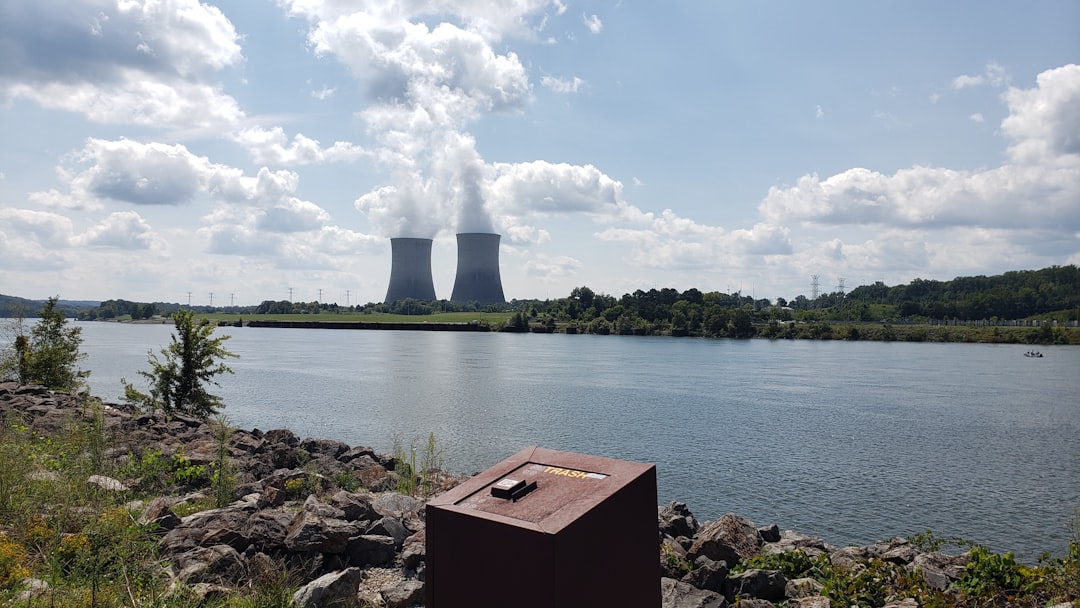
The Bushehr Nuclear Power Plant, Iran's only operational nuclear reactor, sits on the Persian Gulf coast roughly 600-650 kilometers from Dubai. Nuclear safety experts note that prevailing wind patterns could carry radioactive particles across the Gulf to the UAE within 24 hours of a significant release, depending on wind speed and atmospheric conditions.
More critically for the UAE, any substantial radiation release could contaminate Gulf waters that feed the Emirates' extensive desalination infrastructure. The UAE depends almost entirely on desalinated seawater for drinking water and agriculture, making the country acutely vulnerable to any contamination of Gulf marine environments.
"The desalination angle is what keeps planners up at night," explained an infrastructure consultant familiar with UAE water systems. "We can close windows and shelter indoors for airborne particles, but if the Gulf water supply becomes contaminated, we're looking at a fundamental challenge to habitability."
President Donald Trump and Israeli officials have repeatedly referenced Iran's nuclear facilities as potential military targets, with Trump stating that everything could be "finished in four hours" if diplomatic negotiations fail. Israeli strikes have reportedly already targeted locations near nuclear sites, heightening fears of accidental or intentional damage to the Bushehr reactor.
Nuclear engineers responding to UAE residents' concerns emphasized that Bushehr, a Russian-designed VVER-1000 pressurized water reactor, differs substantially from the Chernobyl-type RBMK reactor and should not produce similar catastrophic releases even if damaged. However, any breach of containment could still release radioactive materials into the environment with serious regional consequences.
The UAE itself operates nuclear power plants at Barakah, roughly 280 kilometers west of Abu Dhabi, making the Emirates both dependent on nuclear energy for economic development and acutely aware of the technology's risks. The Barakah plants, also built with Korean and international cooperation, represent a $24 billion investment in the UAE's energy diversification strategy.
Environmental security experts note that the UAE's concerns about Bushehr reflect broader vulnerabilities facing Gulf states whose rapid development has concentrated populations and infrastructure in coastal zones vulnerable to various environmental threats, from oil spills to climate change to now potential nuclear contamination.
"The UAE has built itself into a first-world economy in a challenging geography," observed a regional risk analyst. "That brings first-world vulnerabilities—dependence on specific infrastructure systems that, if disrupted, could cascade into existential challenges."
Government officials have not publicly addressed resident concerns about Bushehr, consistent with the UAE's pattern of downplaying regional security threats while working diplomatically to manage them. The Emirates maintains cautious diplomatic relations with Tehran despite alignment with Washington and Jerusalem, reflecting pragmatic recognition of shared Gulf geography.
For the business community and expatriate population that drive UAE prosperity, the nuclear fallout concerns represent a tangible manifestation of how regional conflicts—previously managed through diplomacy and distance—increasingly threaten the stability upon which the Emirates' economic model depends. The anxiety reflects not panic but rather realistic assessment of infrastructure vulnerabilities that rapid development has created alongside rapid prosperity.