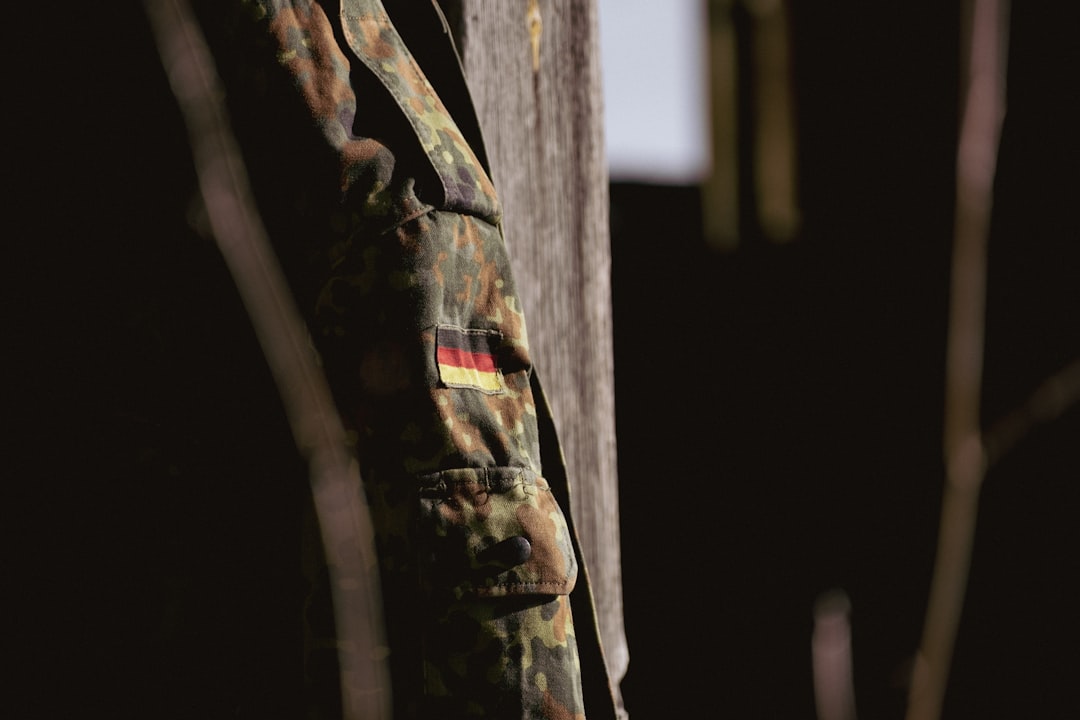
To understand today's headlines, we must look at yesterday's decisions. And few decisions have been as foundational to European security since 1945 as the American military presence in Germany.
That seven-decade consensus now faces its gravest challenge. President Donald Trump has signaled his willingness to withdraw American forces from Germany following a heated confrontation with Chancellor Friedrich Merz, according to statements from the White House on Tuesday.
The clash between the two leaders reportedly centered on defense spending commitments and what Trump characterized as Germany's insufficient contributions to NATO. "We're going to look very seriously at reducing our troop levels in Germany," Trump told reporters. "They want our protection, but they don't want to pay for it."
Approximately 35,000 American service members are currently stationed in Germany, a legacy of the post-World War II occupation that evolved into a cornerstone of NATO's deterrence strategy. Ramstein Air Base serves as the headquarters for US Air Forces in Europe, while facilities in Stuttgart host US European Command and US Africa Command.
The timing could not be more precarious. As Ukraine enters its fourth year defending against Russia's full-scale invasion, any fracturing of the transatlantic alliance would represent a strategic victory for Moscow. European defense analysts have long warned that American withdrawal from Germany would create operational gaps that European forces cannot immediately fill.
"This isn't just about troops," said Jana Weber, a senior fellow at the Berlin-based Institute for Strategic Studies, speaking to Reuters. "It's about intelligence sharing, logistics networks, and the entire architecture that has kept Europe secure for generations."
Chancellor Merz, who took office last year promising to rebuild Germany's neglected military, has already committed to raising defense spending to 2.5 percent of GDP by 2028. But that timeline appears insufficient for Trump, who has repeatedly demanded that NATO allies reach 3 percent immediately.
The threat arrives as Germany grapples with its largest defense transformation since reunification. The Zeitenwende—or "turning point"—announced by former Chancellor Olaf Scholz in 2022 committed €100 billion to modernizing the Bundeswehr. Yet procurement delays and bureaucratic resistance have slowed implementation.
European leaders convened emergency consultations Tuesday evening, with France, Poland, and the Baltic states expressing alarm at the prospect of American withdrawal. NATO Secretary General Mark Rutte released a carefully worded statement emphasizing the alliance's "enduring commitment to collective defense" while declining to address Trump's comments directly.
This is not the first time Trump has threatened to reduce the American footprint in Europe. During his first term, he ordered the Pentagon to withdraw nearly 12,000 troops from Germany, though that plan was subsequently frozen. This time, European officials fear he may be serious.
The question facing Europe is no longer whether it can rely on American protection indefinitely, but whether it can fill the void if that protection vanishes. History suggests that such transitions are neither swift nor smooth—and adversaries are always watching for moments of weakness.