The Trump administration has begun direct outreach to Kurdish leaders inside Iran, seeking to exploit ethnic tensions and fracture the Islamic Republic from within as U.S.-Israeli military strikes continue, according to Axios reporting based on sources familiar with the conversations.
The strategy, which involves both official diplomatic channels and indirect contacts through intermediaries in Iraqi Kurdistan, aims to encourage Iranian Kurds to rise up against the regime in Tehran, potentially opening a new internal front in the conflict.
To understand today's headlines, we must look at yesterday's decisions. The approach bears a striking resemblance to American strategy in Iraq in 2003, when the Bush administration worked closely with Iraqi Kurdish leaders in the north to support the invasion and topple Saddam Hussein. That partnership succeeded militarily but unleashed sectarian dynamics that destabilized Iraq for over a decade.
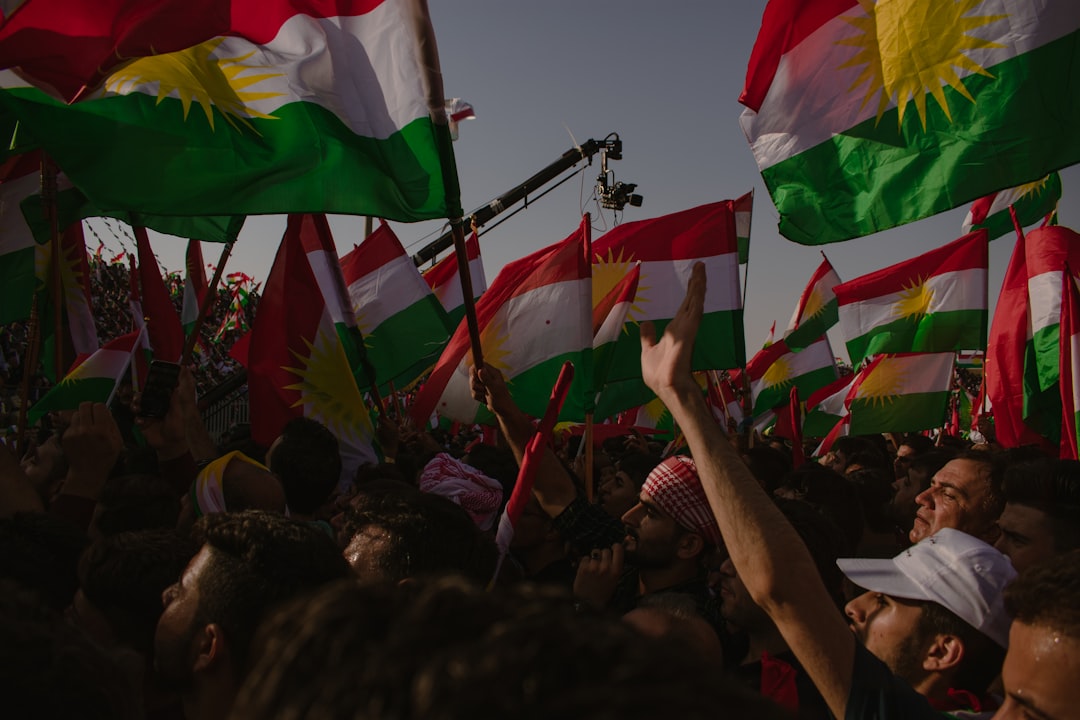
Kurds constitute approximately 10 percent of Iran's 85 million people, concentrated in the northwestern provinces along the border with Iraq and Turkey. They have long faced discrimination and repression from the Persian-dominated state. Kurdish political parties remain banned, and the regime has periodically launched military operations against Kurdish insurgent groups operating in the mountainous border regions.
The largest of these groups, the Party of Free Life of Kurdistan (PJAK), has waged a low-level insurgency against Tehran for two decades. While PJAK lacks the capacity to threaten the regime's survival, it has successfully carried out attacks on Iranian security forces and disrupted government operations in Kurdish areas.
According to Axios, the Trump administration's outreach includes conversations with leaders from the Kurdish Regional Government in Iraq, who maintain extensive networks inside Iranian Kurdistan. The message is straightforward: the United States is committed to regime change in Tehran, and Iranian Kurds have an opportunity to secure greater autonomy or even independence in the aftermath.
The strategy raises profound questions. Do Iranian Kurds actually want this? Kurdish communities in Iran have historically shown more interest in cultural rights and political inclusion within the existing state than in separatism. Unlike Iraqi Kurds, who had experienced genocide under Saddam and had already established de facto autonomy by 2003, Iranian Kurds remain integrated—albeit marginalized—in Iranian society.
Moreover, any Kurdish uprising would face overwhelming force from the Islamic Revolutionary Guard, which has demonstrated repeatedly its willingness to crush internal dissent with brutal efficiency. The 2022 protests sparked by the death of Mahsa Amini, a Kurdish woman, were particularly intense in Kurdish regions—and were met with live ammunition, mass arrests, and executions.
The regional complications are even more complex. Turkey, a NATO ally and critical partner for the United States in the region, has spent decades fighting Kurdish insurgents and views any empowerment of Kurdish groups—anywhere—as an existential threat. Ankara routinely conducts airstrikes and ground operations in both Iraqi and Syrian Kurdistan to suppress Kurdish militant activity.
If the Trump administration's outreach to Iranian Kurds becomes public and visible, Turkey will almost certainly object strenuously. President Recep Tayyip Erdoğan has already been skeptical of U.S. operations against Iran; enabling Kurdish separatism could push Ankara toward open opposition.
There is also the question of what happens if the strategy succeeds. If Kurdish regions of Iran rise up and the regime falls, what comes next? An independent Kurdistan carved from Iranian territory would immediately face hostility from Turkey, likely opposition from Iraq, and uncertain support from Washington. The history of American commitments to Kurdish allies is not encouraging—the U.S. abandoned Kurdish forces in Syria in 2019 when Turkey objected.
The Trump administration appears to be betting that ethnic fractures can accelerate the regime's collapse. But that bet assumes that Iranian identity is fragile and that minority groups, given the opportunity, will choose separation over a reformed inclusive state. The evidence for that assumption is thin.
Kurdish political leaders in Iraq have been notably cautious in their public statements. While they have long supported greater rights for their ethnic kin across the border, they have stopped short of endorsing separatism or direct military action. Iraqi Kurdistan depends on stable relations with both Iran and Turkey for trade and security; openly siding with Washington in a conflict with Tehran risks severe economic and military retaliation.
For Iranian Kurds themselves, the question is whether they trust American promises. Kurdish history is filled with betrayals by external powers who encouraged uprisings and then abandoned those who heeded the call. The 1975 Algiers Agreement saw the U.S. and Iran—then under the Shah—withdraw support for Iraqi Kurdish rebels, leading to a collapse of their revolt and mass reprisals. In 1991, the U.S. encouraged Iraqi Kurds and Shiites to rise up against Saddam after the Gulf War, then stood aside as the regime slaughtered them.
Any Iranian Kurd considering whether to support an American-backed uprising would be wise to study that history carefully.
The outreach to Kurdish leaders is part of a broader U.S. strategy to fracture Iran along ethnic and sectarian lines. The Trump administration has also reportedly made outreach to Baloch groups in southeastern Iran and Arab communities in the southwest, seeking to exploit long-standing grievances against the Persian center.
Whether this strategy succeeds depends on factors beyond Washington's control: the resilience of Iranian national identity, the willingness of minority groups to risk everything for uncertain American support, and the regime's capacity to suppress internal dissent even while under external attack. History suggests caution. Iran has survived external pressure and internal unrest before. And the Kurds, more than most peoples, know the cost of trusting foreign powers.