Private jet charter prices from Dubai have surged by as much as 400 percent over the past 48 hours as wealthy residents scramble to leave the emirate amid escalating conflict with Iran, according to aviation industry sources cited by The Guardian.
The exodus, concentrated among ultra-high-net-worth individuals and their families, represents a sharp reversal for a city that has marketed itself as a safe haven in an unstable region. For years, Dubai has attracted billionaires, oligarchs, and business elites seeking a stable, tax-free environment insulated from Middle Eastern turmoil. That reputation is now being tested.
"We've never seen anything like this," a senior executive at a Dubai-based charter company told The Guardian, speaking on condition of anonymity. "Clients are willing to pay almost anything to get out. We've had people offering double and triple the normal rates just to get on a flight today."
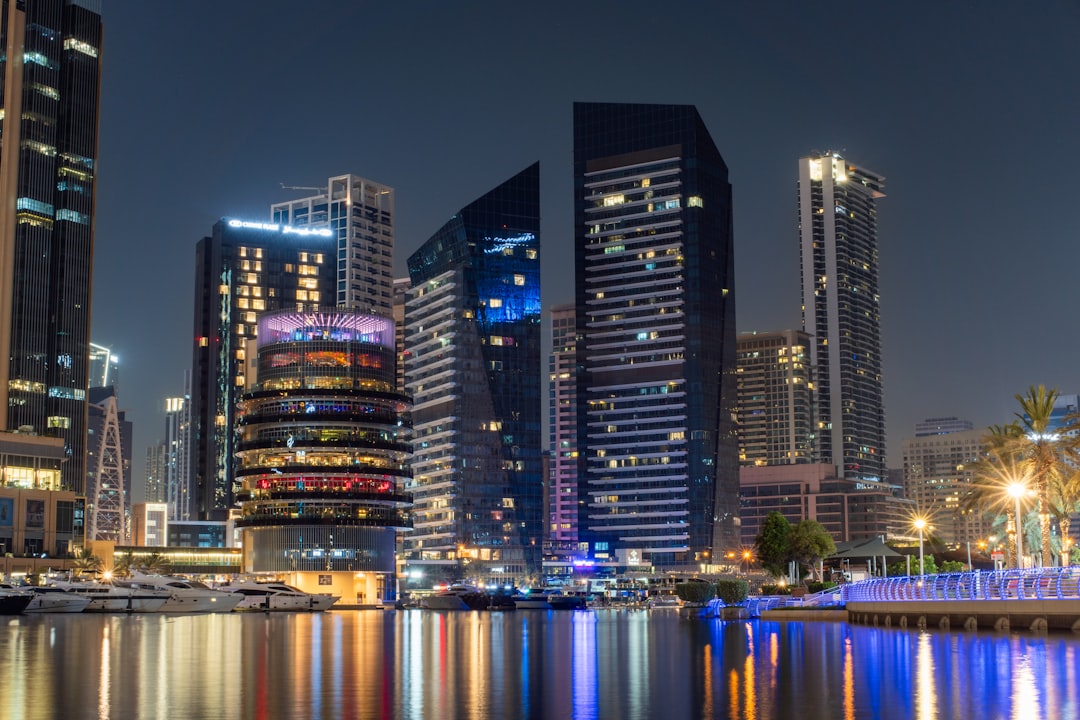
To understand today's headlines, we must look at yesterday's decisions. Dubai, and the broader United Arab Emirates, positioned itself over the past two decades as the Switzerland of the Middle East—a neutral, business-friendly hub removed from regional conflicts. While neighbors faced wars, sanctions, and instability, Dubai built Burj Khalifa, hosted global conferences, and became home to the regional headquarters of hundreds of multinational corporations.
That model relied on a foundational assumption: Dubai would never be a target. The UAE's military alliance with the United States, its economic ties to Europe and Asia, and its careful diplomacy with all regional powers were meant to ensure that whatever happened elsewhere in the Middle East, Dubai would remain an oasis of stability.
That assumption is now in question. While Iran has not directly threatened the UAE, the prospect of missiles, drones, or proxy attacks reaching the emirate has grown significantly as the conflict has expanded. Qatar's shooting down of two Iranian jets on Sunday demonstrated that the conflict is no longer contained to Iran itself. If Qatar can be drawn in, so can the UAE.
The spike in charter demand has created a secondary crisis: availability. Dubai is one of the world's busiest private aviation hubs, with hundreds of jets based at Al Maktoum International and Dubai International airports. But with demand far exceeding supply, even clients willing to pay premium rates are finding few options.
"The problem isn't just price," another industry source explained. "It's availability and routing. Many private jet operators are refusing to fly into Dubai right now because of the risk. And those that are operating are prioritizing existing clients and repositioning their aircraft out of the region entirely."
The phenomenon is not limited to private aviation. Commercial airline bookings out of Dubai have also spiked, though not as dramatically. Emirates, the state-owned flagship carrier, reported that flights to Europe and Asia are operating at near-full capacity. Business class seats on routes to London, Singapore, and Hong Kong are selling for more than $15,000 one-way, triple the typical rate.
Conversely, inbound tourism has collapsed. Hotels across Dubai are reporting mass cancellations, and the emirate's tourism authority has suspended its marketing campaigns. The Dubai Shopping Festival, a major annual event, has been scaled back significantly, and several international conferences scheduled for March have been postponed or moved to other cities.
The economic implications extend beyond tourism. Dubai's real estate market, which has experienced a boom over the past three years fueled by an influx of wealthy Russians, Indians, and Europeans, is showing signs of strain. Luxury property brokers report that viewing appointments have dropped by 60 percent in the past week, and several high-profile sales have been put on hold.
What this says about regional confidence is clear: the ultra-wealthy, who have the resources and information to assess risk, do not believe Dubai is safe. That perception, even if the emirate is never actually attacked, is damaging. Dubai's model depends on confidence. If that confidence erodes, the capital flows that have driven its transformation over the past two decades could reverse.
The UAE government has sought to project calm. Officials insist the country is safe, that its air defenses are robust, and that the conflict with Iran does not directly involve the Emirates. President Sheikh Mohamed bin Zayed has been in contact with regional leaders, including Qatar and Saudi Arabia, urging restraint and pushing for diplomatic off-ramps.
But the actions of the wealthy speak louder than government reassurances. And for many of them, the calculus is simple: why take the risk? They can work from London, Singapore, or Geneva just as easily as from Dubai. If there's even a small chance of being caught in a conflict, leaving makes sense.
The longer-term question is whether they will return. Dubai recovered from the 2008 financial crisis and the pandemic, but both were global events. This is different—a crisis specific to the region that calls into question the foundational premise of Dubai as a safe haven. Rebuilding that reputation, if the current conflict drags on or worsens, could take years.
For now, the skies above Dubai are filled with private jets heading west and north, carrying those who can afford to leave. What they're leaving behind is a city holding its breath, hoping that its decades-long bet on neutrality and stability will prove resilient—but no longer quite so certain.