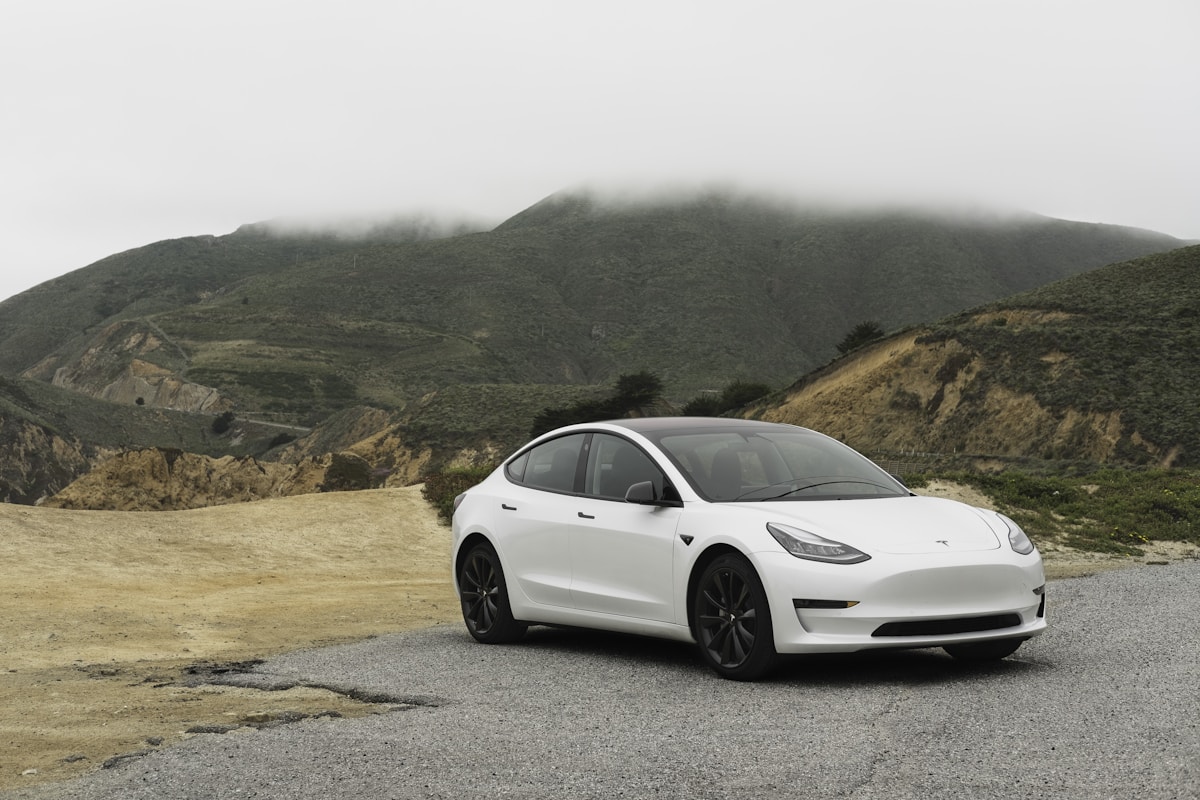
Federal regulators have determined that one-pedal driving in electric vehicles isn't a safety issue, potentially saving Tesla and other EV makers from a major recall. NHTSA's decision validates a feature that's become standard in EVs but remains controversial among drivers trained on a century of two-pedal cars.
One-pedal driving is simple: lift your foot off the accelerator and the car aggressively slows down through regenerative braking, often bringing you to a complete stop without touching the brake pedal. It's more efficient, it captures energy that would otherwise be wasted, and once you're used to it, many drivers prefer it.
But it fundamentally changes how you drive, and that feels dangerous to anyone whose muscle memory expects to coast.
The investigation started because some drivers—particularly those new to EVs—found the deceleration pattern confusing or abrupt. There were concerns that it could lead to rear-end collisions if the brake lights didn't activate appropriately, or that drivers might not react correctly in emergencies because they'd become dependent on regenerative braking.
NHTSA looked at the data and concluded: no significant safety issue. The brake lights activate properly. Accident rates don't show a pattern. The concerns are theoretical, not statistical.
Here's what makes this decision interesting beyond Tesla: it's about how we regulate new driving paradigms. For over a century, cars have worked basically the same way. You press the gas to go, you press the brake to stop, and you coast when you lift off the accelerator. That's muscle memory embedded in hundreds of millions of drivers worldwide.
One-pedal driving breaks that pattern. It introduces new behavior that requires relearning fundamental skills. The regulatory question is: does different mean dangerous?
The Reddit EV community overwhelmingly prefers one-pedal driving. Comments poured in from drivers saying they could never go back to traditional two-pedal cars. Several noted that the learning curve is real but short—a few hours of driving and the new pattern becomes natural. Others pointed out that every new driving technology required adaptation: automatic transmissions, anti-lock brakes, cruise control.
But there's a legitimate concern buried in the enthusiasm: what happens when a driver switches between an EV with aggressive one-pedal mode and a traditional car? Does that mode switching create dangerous confusion? If you've spent six months driving an EV that stops when you lift off the accelerator, will you forget to brake when you borrow your friend's Honda?