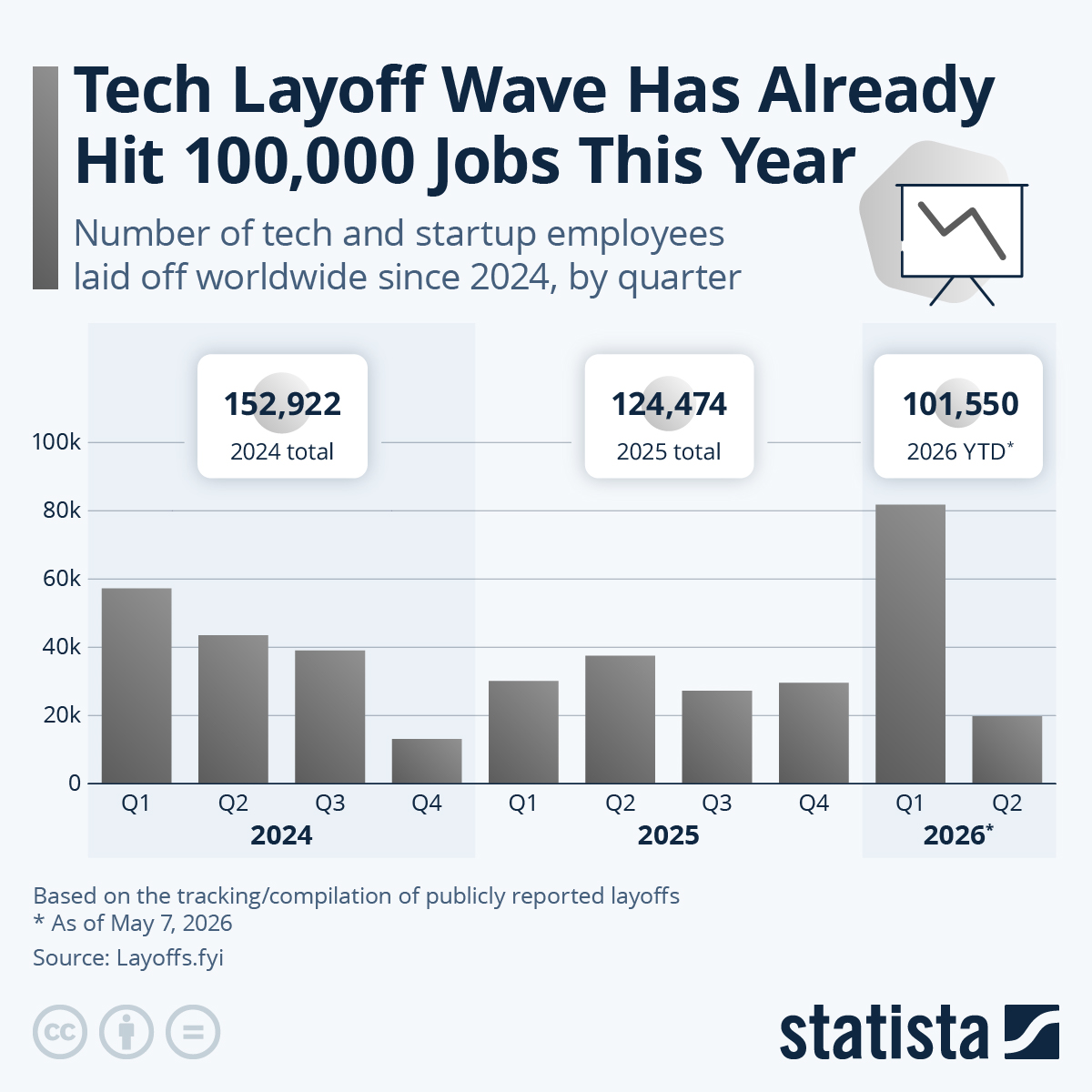
The tech industry has laid off over 100,000 workers in 2026 so far, with LinkedIn announcing 5% cuts and Walmart trimming 1,000 roles. The layoff wave continues despite record AI investments, raising questions about where the productivity gains are actually going.
Tech companies are simultaneously laying off tens of thousands of workers and pouring billions into AI that's supposed to boost productivity. If AI is making everyone so much more efficient, why the continued bloodletting? The math isn't mathing.
The numbers are stark: 81,700 layoffs in Q1 2026 alone, the highest quarterly figure since early 2023. Another 20,000 cuts in the first six weeks of Q2. Meta, PayPal, and Cloudflare announced thousands of job cuts in recent months. LinkedIn, a company whose entire business is helping people find jobs, is cutting 5% of its workforce.
Companies are framing this as pursuing "efficiency" and investing in "artificial intelligence." But from a worker's perspective, the message is clear: AI isn't augmenting your job, it's replacing it.
The disconnect is glaring. We're told that AI coding assistants make developers more productive. Then Amazon, Google, Meta, and others lay off thousands of engineers. We're told that AI customer service tools improve support quality. Then companies cut support teams. We're told that AI will create new jobs and opportunities. Then 100,000 tech workers get pink slips in five months.
The industry narrative about AI has always been that it will augment human workers, not replace them. But the employment data tells a different story. Companies are adopting AI tools and simultaneously reducing headcount. Whether there's a direct causal link or whether these are independent trends responding to economic conditions, the timing is impossible to ignore.
Here's the uncomfortable question: where are the productivity gains going? If AI is genuinely making workers more efficient, we should see either expanding output with stable employment, or stable output with fewer workers but higher wages. Instead we're seeing layoffs without corresponding wage increases for those who remain. The productivity gains, if they exist, are accruing to shareholders, not workers.