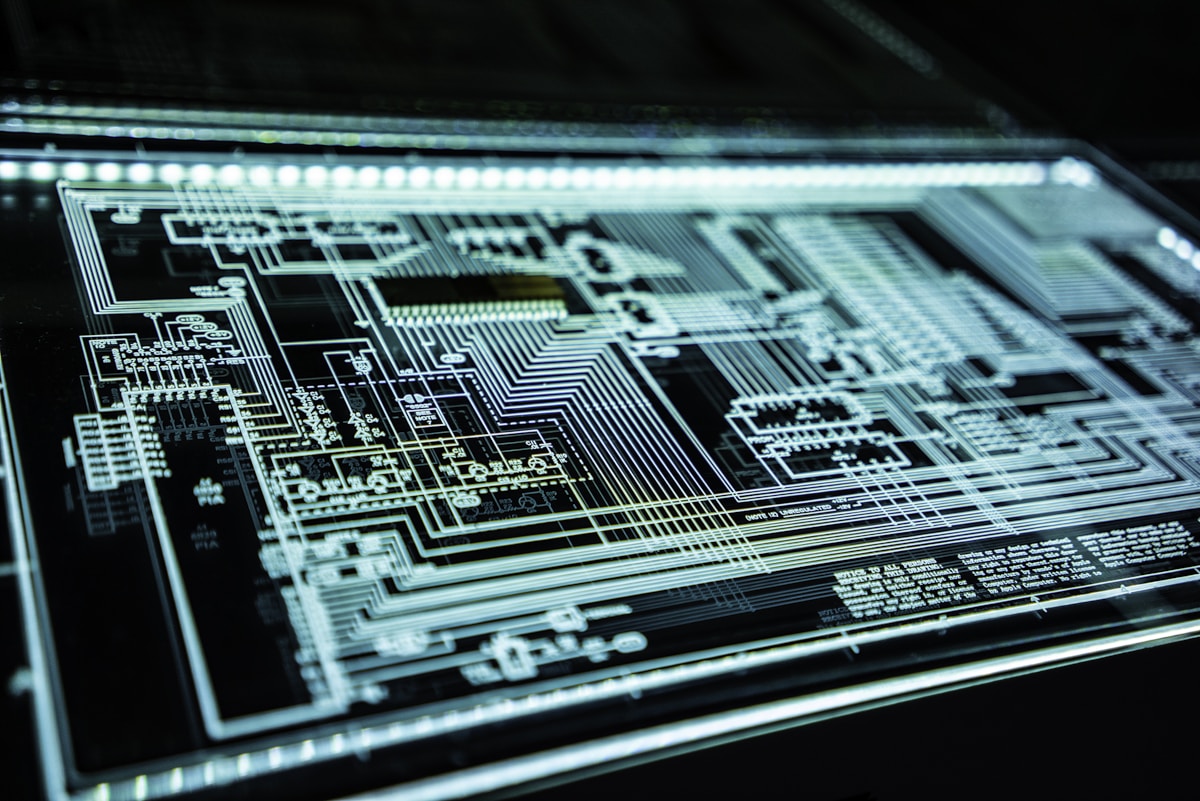

He Tingbo, Huawei's semiconductor chief, unveiled what the company calls "Tau Scaling" at the IEEE International Symposium on Circuits and Systems in Shanghai on Sunday, claiming Chinese chips could reach transistor density equivalent to 1.4 nanometers by 2031—without matching Western manufacturing processes.
The announcement, detailed by Ruibao News, marks a strategic pivot in China's semiconductor ambitions: redefine success metrics rather than chase Western fab capabilities. He Tingbo presented no fabrication roadmap, no lithography details, no yield data, and no cost projections. Instead, Huawei is betting on chip design innovation to circumvent manufacturing constraints imposed by US export controls.
In China, as across Asia, long-term strategic thinking guides policy—what appears reactive is often planned. Huawei's "Tau Scaling" approach focuses on reducing circuit time constants (τ) through design optimization rather than shrinking physical transistor dimensions. The strategy includes LogicFolding techniques to shorten critical signal paths, system-level interconnect redesign, and the proprietary Lingqu bus to cut communication delays between components.
This represents equivalent density—not actual 1.4nm transistor fabrication. Western chipmakers like TSMC and Intel achieve smaller nodes through advanced extreme ultraviolet lithography equipment that remains blocked from Chinese access. Huawei's approach might deliver similar performance in specific applications while sidestepping the most advanced manufacturing requirements entirely.
The company promises a verifiable checkpoint: a new Kirin processor due in autumn 2026 implementing LogicFolding. Independent analysts can then examine die area, power consumption, thermal performance, and sustained workload metrics. Huawei also claims production of 381 chip models over six years, though without category or process-node breakdowns, this figure remains difficult to verify.
The announcement follows China's 14th Five-Year Plan emphasis on . Ministry of Industry and Information Technology guidelines have pushed domestic firms toward design innovation when fabrication advancement stalls. Huawei's pivot acknowledges manufacturing reality while positioning the company to claim leadership on alternative metrics.