
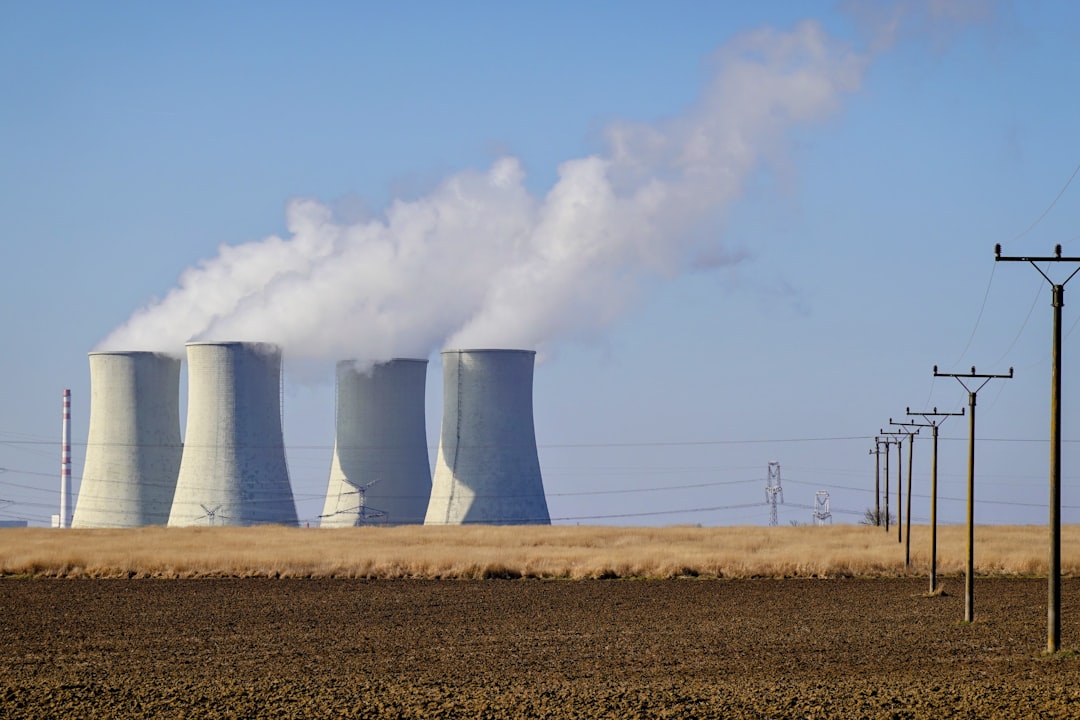
Taiwan's President Lai Ching-te has directed state-owned Taipower to submit proposals for reactivating two decommissioned nuclear power plants, marking a significant policy reversal for the historically anti-nuclear Democratic Progressive Party.
The two facilities under consideration are the Guosheng Nuclear Power Plant (No. 2) in Wanli, New Taipei, and the Maanshan Nuclear Power Plant (No. 3) in Hengchun, Pingtung County. Taipower has been instructed to submit reactivation proposals to the Nuclear Safety Commission by the end of March, with the earliest possible restart date in 2027 if regulatory reviews proceed smoothly.
The move represents a dramatic shift for the DPP, which championed Taiwan's "nuclear-free homeland" policy for years. That goal was achieved just ten months ago in May 2025, when the Maanshan plant shut down, marking the island's complete phase-out of nuclear power generation.
Lai framed the reactivation consideration explicitly in terms of energy security, citing ongoing tensions in the Middle East that threaten global energy supplies. "Taiwan's oil reserves last more than 100 days," Lai noted, "but natural gas reserves last only 12 to 14 days, creating supply concerns until April."
The political context for this reversal extends beyond executive preference. Recent amendments to the Nuclear Reactor Facilities Regulation Act passed by the Legislative Yuan now require the government to implement conditions for nuclear reactivation, effectively obligating the DPP administration to pursue what it once opposed.
Lai stated that the Ministry of Economic Affairs had confirmed both plants "fulfilled the conditions for reactivation," though specific technical and safety details of those assessments were not disclosed.
The semiconductor industry's voracious energy demands have long complicated Taiwan's energy policy. TSMC and other chipmakers require stable, uninterrupted power supplies to maintain production—any voltage fluctuation can destroy billions of dollars worth of silicon wafers. While Lai did not explicitly cite semiconductor manufacturing in his statement, energy analysts have consistently pointed to the industry's needs as a constraint on Taiwan's renewable energy transition.
The timeline suggests a deliberately cautious approach. Even if the Nuclear Safety Commission approves reactivation proposals submitted this month, the plants would not resume operations until 2027 at the earliest. That window allows for comprehensive safety reviews, maintenance assessments, and public consultation—critical steps for facilities that have been offline and would require extensive technical verification before restart.
The DPP's policy evolution on nuclear power reflects a broader East Asian pattern: energy security increasingly trumps ideological positions when faced with geopolitical volatility and industrial demand. South Korea, Japan, and now Taiwan have all reconsidered nuclear phase-outs in light of supply chain vulnerabilities exposed by regional tensions and climate commitments that make fossil fuel alternatives politically untenable.
Watch what they do, not what they say. In East Asian diplomacy, the subtext is the text.
The reactivation proposals will face scrutiny not only from opposition parties but from environmental groups that supported the DPP's original nuclear phase-out. How Lai's administration navigates this political reversal—framing it as pragmatic adaptation rather than policy failure—will test the party's credibility on energy policy ahead of future elections.
For now, the focus shifts to Taipower's technical proposals and the Nuclear Safety Commission's review process, which will determine whether Taiwan's brief experiment as a nuclear-free economy ends before it truly began.