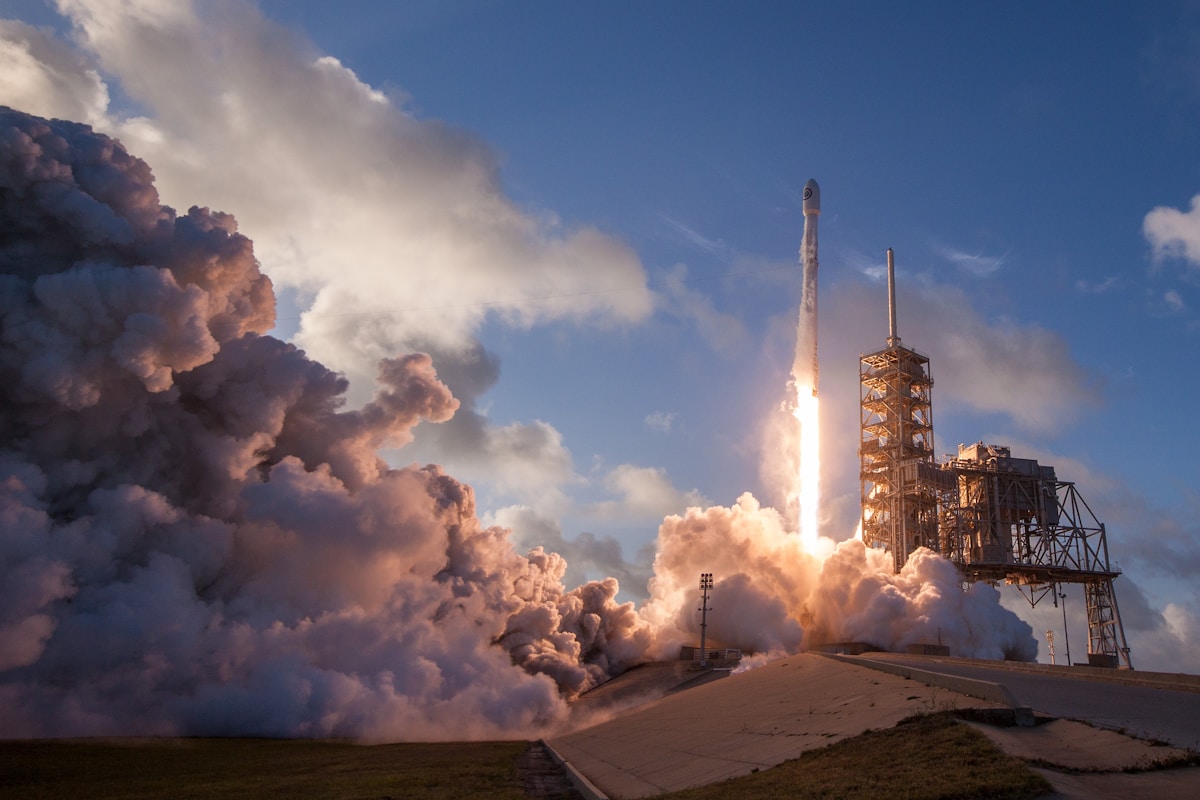
In what could be the most audacious public market debut in history, SpaceX is reportedly weighing a confidential IPO filing that would seek a valuation north of $1.75 trillion—more than triple the size of Saudi Aramco's 2019 record-setting listing.
According to Bloomberg, founder Elon Musk's space venture could file as early as this month, setting up a potential public offering that would dwarf every IPO in Wall Street history. For context, Saudi Aramco raised $29.4 billion at a $1.7 trillion valuation. SpaceX is talking about beating that by orders of magnitude.
The numbers don't lie, but executives sometimes do. And in this case, investors need to ask whether SpaceX's explosive growth trajectory justifies a valuation that would make it larger than Apple was in 2020. The company has revolutionized space launch economics, dominates the commercial satellite deployment market, and holds lucrative NASA contracts worth billions.
SpaceX's Starlink satellite internet service has emerged as a potentially transformative business line, with over 5 million subscribers globally and revenue projections exceeding $15 billion annually by 2027. The company's launch manifest is booked solid through 2028, with customers paying premium prices for access to space that was unthinkable a decade ago.
But here's the catch: SpaceX is capital intensive in ways that would make even semiconductor manufacturers blush. The company is simultaneously developing Starship (its next-generation heavy-lift rocket), expanding Starlink's constellation to 40,000+ satellites, pursuing missions to Mars, and building out ground infrastructure globally. Current cash burn estimates range from $5-8 billion annually.
That's why the IPO makes strategic sense, even if the valuation makes your eyes water. SpaceX needs permanent access to capital markets to fund its ambitious roadmap. Private funding rounds, while successful, can't sustain the scale of investment required for Musk's vision of making humanity multiplanetary.
Wall Street's reception will be fascinating to watch. On one hand, institutional investors are desperate for exposure to space economy growth, which analysts project could reach $1 trillion by 2030. On the other, they're wary of Musk's unpredictability and the company's single-product dependency on launch services, despite Starlink's growth.
Comparisons to other mega-IPOs are instructive. Facebook went public at $104 billion in 2012 and was immediately profitable with clear monetization. Uber debuted at $82 billion in 2019, unprofitable but with massive market penetration. SpaceX would enter public markets at 20x Uber's valuation, with a business model that requires continuous billions in R&D just to maintain competitive advantage.
The geopolitical dimension adds another layer. SpaceX has become critical national infrastructure for the United States, providing launch services for classified military satellites, deploying Starlink terminals in conflict zones, and serving as NASA's primary partner for lunar missions. That government dependency could be a feature or a bug, depending on your perspective.
Investor appetite appears strong, at least among those who've had early access. SpaceX's last private funding round in late 2025 valued the company at $350 billion—meaning the IPO would represent a 5x markup in just months. That's either visionary pricing or exuberance, and the market will decide which.
For the space industry, a successful SpaceX IPO could unlock a new era of investment in orbital infrastructure, deep space exploration, and satellite services. For investors, it's a bet on whether Musk can execute the most capital-intensive business plan in modern history while maintaining the innovation edge that got SpaceX here.
The timing is no accident. With traditional tech IPOs struggling and investors hungry for transformative growth stories, SpaceX represents something genuinely new: a company that's not just disrupting an industry, but creating an entirely new economic domain. Whether that's worth $1.75 trillion is a question that will define 2026's market.