
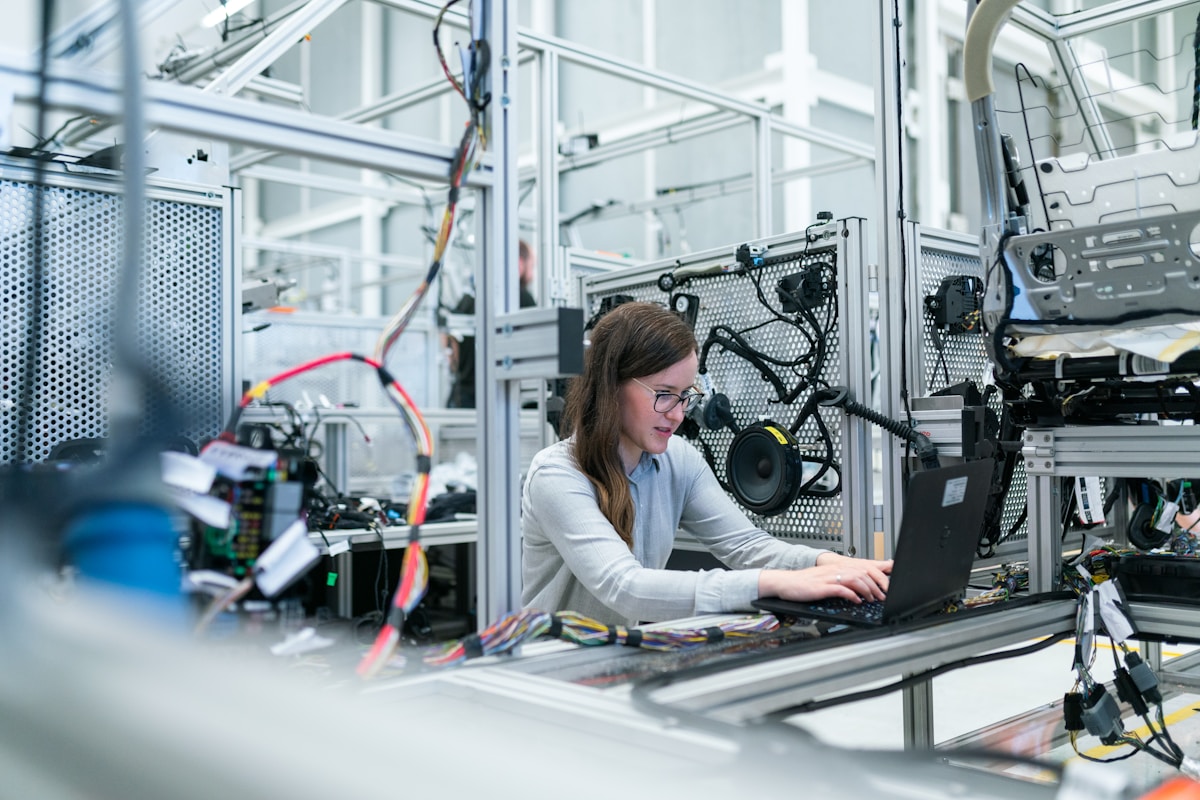
South Korea faces a deepening crisis in its manufacturing sector as the country struggles to cultivate young skilled workers, threatening the industrial foundation that powered its economic miracle.
The shortage echoes Japan's manufacturing decline in the 1990s and 2000s, when the failure to transfer specialized skills to younger generations hollowed out once-dominant industries. For South Korea, the timing could not be worse—the country confronts this challenge while maintaining its position as a global semiconductor powerhouse and navigating intensifying US-China tech competition.
According to the Chosun Ilbo, the nation's manufacturing sector is experiencing a critical shortage of workers with technical expertise in machining, welding, and precision assembly—the very skills that underpin Korea's export-driven economy.
The demographic squeeze compounds the problem. South Korea already records the world's lowest fertility rate, and its rapidly aging population means fewer young people enter the workforce each year. Meanwhile, cultural preferences steer talented youth toward white-collar careers in technology, finance, and entertainment rather than factory floors.
The semiconductor dependency dilemma
The worker shortage poses particular risks for Korea's semiconductor industry, which accounts for roughly 20 percent of total exports. Companies like Samsung Electronics and SK Hynix require not just chip designers but also thousands of skilled technicians to operate and maintain sophisticated fabrication equipment.
Industry observers note that while Korea has successfully automated many manufacturing processes, critical operations still demand human expertise that takes years to develop. "You cannot simply import these workers or train them overnight," manufacturing experts warn. The knowledge transfer from master craftsmen to apprentices traditionally occurred over extended periods—a timeline incompatible with Korea's urgent demographic reality.
The crisis extends beyond semiconductors. Korea's automotive sector, shipbuilding industry, and machinery manufacturers all report difficulty recruiting qualified workers. Small and medium enterprises face even steeper challenges, unable to compete with chaebols for limited talent.
Echoes of Japan's lost decades
The parallel to Japan proves instructive. Japanese manufacturers dominated global markets in the 1980s but failed to renew their skilled workforce as senior technicians retired. By the 2000s, critical manufacturing capabilities had eroded, contributing to Japan's prolonged economic stagnation.
Korean policymakers have studied Japan's experience, yet solutions remain elusive. Government initiatives to enhance vocational training have shown limited results, unable to overcome societal biases favoring university degrees. Immigration remains politically sensitive, despite chronic labor shortages.
Strategic vulnerability
The skilled worker shortage represents more than an economic challenge—it's a strategic vulnerability. As the United States and China compete for technological supremacy, Korea's position as a critical semiconductor supplier gives it leverage and protection. Losing manufacturing competitiveness would diminish that strategic value.
In Korea, as across dynamic Asian economies, cultural exports and technological leadership reshape global perceptions—even as security tensions persist. Yet South Korea's impressive tech sector success may have inadvertently created conditions that undermine its industrial foundation.
The country's emphasis on elite education and white-collar careers, combined with the global K-pop and entertainment phenomenon, has made factory work seem unappealing to young Koreans. The very prosperity that manufacturing generated now threatens to starve it of human capital.
Addressing the crisis will require difficult choices: immigration reform to allow skilled foreign workers, cultural shifts to restore prestige to technical careers, or accelerated automation that may reduce employment opportunities. Each path carries political and social costs that Korean leaders have thus far hesitated to embrace.
Without decisive action, South Korea risks following Japan's trajectory—discovering too late that economic vitality depends not just on cutting-edge technology, but on the skilled hands that make it real.