

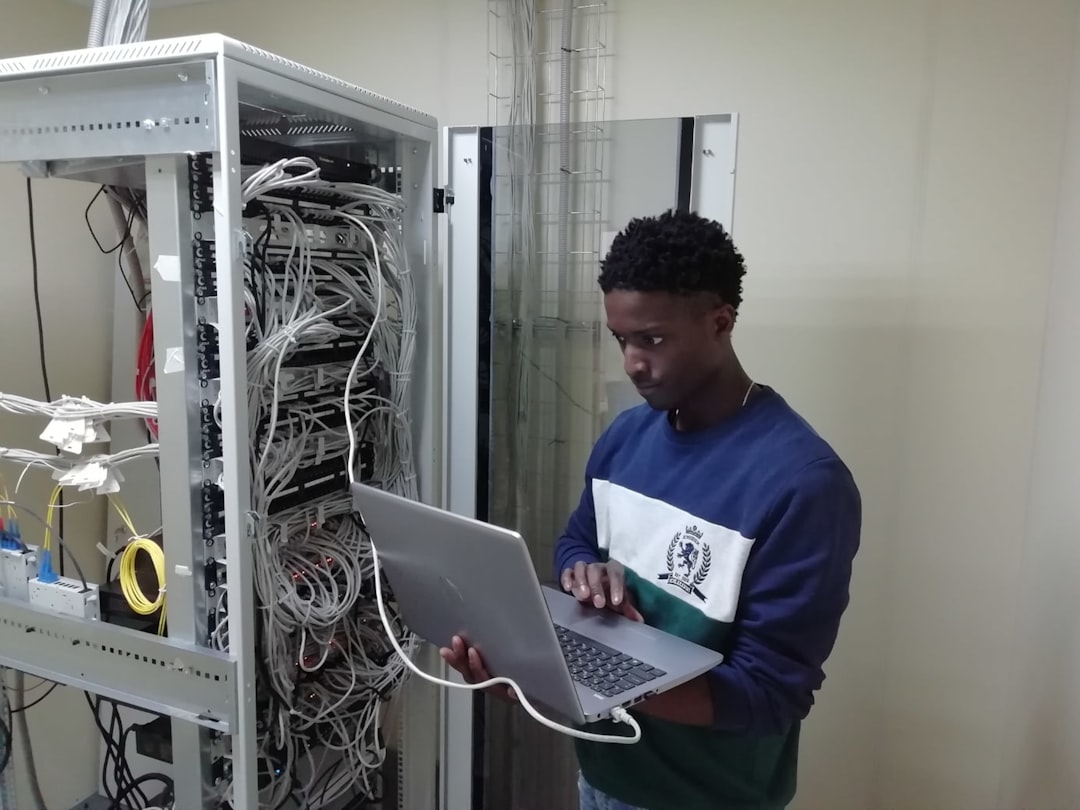
A massive data centre planned for Southland will consume 6% of New Zealand's entire electricity supply to employ just 50 people, prompting questions about whether tech giants are resource-mining the country's cheap renewable power without delivering proportional economic benefits.The Singapore-based tech company behind the project — which has not been publicly named but is reportedly a major Asian cloud provider — defends the facility as adding billions to GDP through digital exports and positioning New Zealand as a global AI hub.Kiwis aren't buying it. The project looks like another case of New Zealand's renewable energy advantage being exploited by offshore capital with minimal local benefit.The numbers don't add upThe proposed data centre would draw 400-500 megawatts of continuous power — roughly 6% of New Zealand's total generation capacity. For context, that's enough to power 350,000 homes or a city the size of Wellington.In return, New Zealand gets 50 permanent jobs — mostly maintenance technicians and engineers. The company claims indirect employment through construction (temporary) and supporting services, but the core operation is minimal staffing by design.That's 8-10 megawatts per job — an astonishingly poor energy-to-employment ratio compared to traditional industries.A dairy processing plant using the same power would employ hundreds. An aluminium smelter — frequently criticized for high energy use — employs 1,000+ workers for similar power draw.The company promises $4-6 billion in GDP contribution over 20 years through digital exports — essentially selling computing power to offshore customers. But that wealth largely accrues to the Singapore-based parent company, not New Zealand.Renewable power as commodity exportNew Zealand's electricity is — hydro, wind, geothermal. That's a genuine advantage in a carbon-constrained world. Tech companies know it.Data centres emit massive carbon if powered by fossil fuels. But if you run them on 's clean grid, you can sell and at a premium.Essentially, the project exports 's renewable energy as compute, not electrons. Instead of selling electricity to local industries that employ thousands, sells it to offshore AI companies that employ dozens.It's a modern version of resource extraction — exporting hydroelectric power as data instead of exporting logs or milk powder.The company benefits by accessing cheap, clean, reliable power. 's wholesale electricity prices are low by global standards because of abundant hydro and geothermal capacity.The region benefits from construction jobs (temporary) and rates revenue (modest). Local politicians are understandably excited about any major investment in a region that's lost jobs and population for decades.But as a whole? The benefit is less clear.The promised GDP contribution comes from exporting digital services — essentially renting out compute power. That generates revenue, but most flows to the offshore parent company as profit. gets corporate tax on local profits (if they declare any locally) and wages for 50 staff.Meanwhile, 6% of the national electricity supply is locked up serving offshore customers rather than local industries. doesn't have infinite clean power. Total generation capacity is about . Demand peaks around in winter when hydro lakes run low and wind is variable.Taking 400-500 megawatts for a single data centre means less available for residential heating, industrial production, electric vehicle charging, and future electrification of transport.If wants to decarbonize transport by switching to EVs and electric trucks, that requires . Where does that power come from if a data centre is using 6% of capacity?New generation projects — wind farms, geothermal plants, solar — take years to build. In the meantime, every megawatt allocated to offshore data centres is a megawatt not available for domestic decarbonization.Data centres also use enormous amounts of water for cooling. The project will reportedly require — exact numbers haven't been disclosed, but large data centres can use as much water as a small city. has abundant water, but it's still a resource being consumed primarily to benefit offshore customers. If climate change reduces rainfall or increases demand from agriculture, water allocation disputes will follow.This dynamic — foreign companies extracting resources with minimal local benefit — mirrors what's happening across the Pacific.Logging companies clear-cut and forests, export raw timber, and leave behind degraded land and minimal royalties.Fishing fleets from , , , and harvest Pacific tuna, process it offshore, and pay small access fees to island nations. is wealthier and more capable of negotiating better terms, but the pattern is similar: foreign capital exploiting local resources (in this case, renewable energy) with limited local value capture.The government could require higher local employment thresholds for projects using large energy allocations. If you want 6% of the grid, you need to employ more than 50 people.It could require tech companies to partner with local universities, training Kiwi AI engineers rather than just hiring overseas talent to run servers.It could prioritize energy allocation for industries with higher employment-to-energy ratios — food processing, manufacturing, green hydrogen production for export.Or it could require data centre operators to pay market rates for electricity without special discounts, ensuring captures more value from its renewable advantage.None of this is happening. The project is proceeding on terms highly favourable to the company because regional politicians are desperate for any investment and the government sees branding as politically attractive.Supporters argue the project diversifies 's economy beyond agriculture and tourism, builds tech sector capabilities, and positions the country as a leader in green AI infrastructure.Fair points. But those benefits accrue mainly to offshore shareholders, not Kiwi workers or communities.If is going to allocate 6% of its clean electricity to AI, shouldn't the country capture more than 50 jobs and modest tax revenue?Mate, when a foreign company takes 6% of your power to employ 50 people, that's not economic development — it's resource extraction with better PR. And there's a whole region of Pacific nations watching how handles this, because they face the same exploitation without the bargaining power to say no.
|



/file/dailymaverick/wp-content/uploads/Becs-roelfmeyer2.jpg)