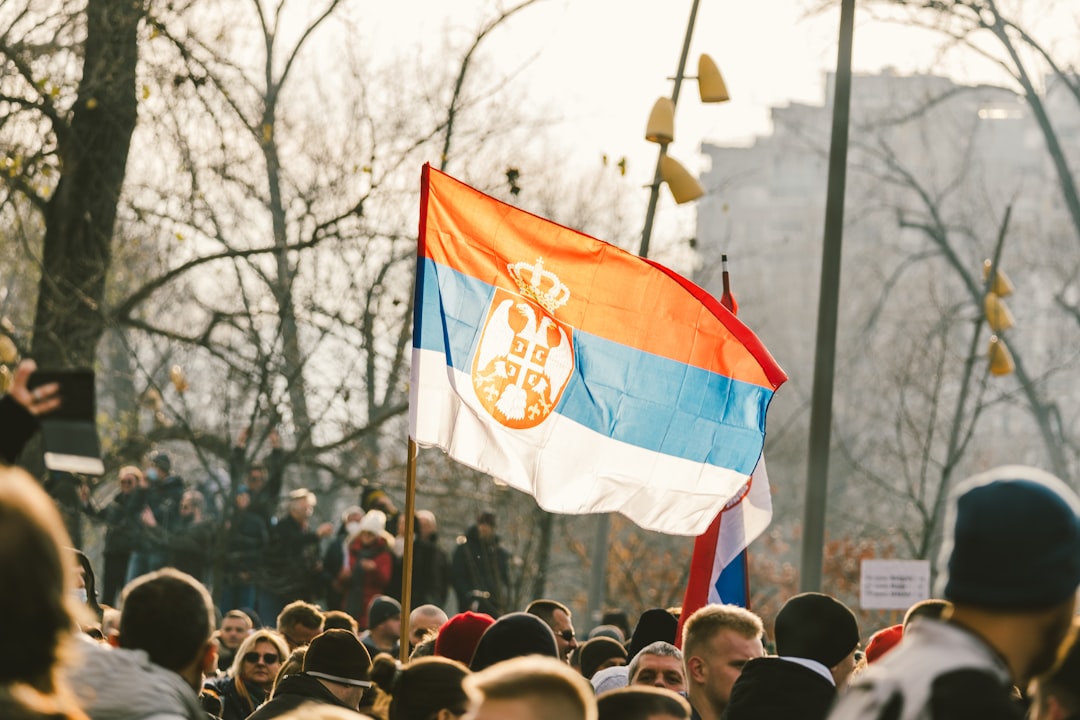
Masked assailants fractured the skull of a student election monitor in Serbia on March 29, forcing him to declare his allegiance to President Aleksandar Vučić while beating him unconscious—a brutal incident that exposes the violent intimidation tactics deployed during local elections in an EU candidate country.
Lazar Dinić, a student journalist with Revolt and activist with the group Stav, was monitoring polling stations in the village of Šarbanovci near Bor when unknown attackers emerged from black vehicles and systematically targeted his group. The assault left Dinić with a completely fractured sinus bone requiring maxillofacial surgery in Belgrade.
"They beat me in the head and demanded I say 'Aca is president'," Dinić told <link url='https://nova.rs/vesti/drustvo/student-lazar-dinic-o-stravicnom-prebijanju-koje-je-jedva-preziveo-u-boru/'>Nova.rs</link>, using the diminutive for Aleksandar. "I was covered in blood. They didn't stop until I forced myself to say what they demanded, just to make them stop. They filmed everything, then took my phone and left me there bleeding."
The attack occurred as Dinić's group—including photojournalist Zorica Popović, activist Ivan Bjelić, and opposition councilor Aleksandar Kulić—completed their observation rounds. When masked men began assaulting Popović and attempting to seize her camera, the group tried to intervene. A second vehicle of attackers pursued Dinić to the Timok River, where he slipped and fell into the water.
"I thought I'd escaped," Dinić recalled. "But they followed me to the river and ordered me out. When I climbed out, soaking wet, they started beating me. I curled up to protect myself, but soon I was covered in blood. The pain was unbearable. They kept hitting my head until I said what they wanted."
In the Balkans, as across post-conflict regions, the path forward requires acknowledging the past without being imprisoned by it. Yet the March 29 violence suggests democratic norms remain dangerously fragile in Serbia, where systematic intimidation of election observers calls into question the country's readiness for EU membership.

Serbian police have detained several suspects from Bor, though not all attackers have been apprehended. The incident was not isolated—multiple journalists and activists <link url='https://www.021.rs/info/srbija/439504/student-lazar-dinic-tukli-me-dok-mi-nisu-polomili-kosti-glave-i-naterali-da-kazem-aca-predsednik'>reported coordinated assaults</link> throughout election day, with evidence suggesting operatives linked to the ruling Serbian Progressive Party (SNS) orchestrated attacks from a central location.
The brazen nature of the violence—masked men fracturing skulls of election observers in broad daylight—represents a stark escalation in authoritarian tactics under Vučić's administration. Independent monitors and opposition activists have faced increasing harassment since mass protests following the 2023 Novi Sad railway station collapse, which killed 15 people and sparked sustained anti-government demonstrations.
For Brussels, the incident poses uncomfortable questions about Serbia's EU accession trajectory. The European Commission has repeatedly emphasized that candidate countries must demonstrate commitment to democratic principles, rule of law, and freedom of expression. Systematic violence against election observers directly contradicts these requirements.
Dinić remains in Bor awaiting surgery, suffering severe pain in his head, arms, and legs. "The swelling on my head has gone down a bit," he said, "but everything still hurts terribly."
The attack has galvanized student movements across Serbia, with activists demanding accountability for election-day violence and protection for independent monitors. As regional observers note, the willingness of authorities to tolerate—or actively orchestrate—such brutality reveals the depth of democratic erosion in a country that once led Balkan EU integration efforts.
What distinguishes the Šarbanovci assault from typical electoral irregularities is its physical brutality and ritualistic humiliation. Forcing a bleeding student to declare loyalty to the president while filming the coercion suggests a deliberate strategy of terror designed to intimidate future opposition activity.
Whether Serbia's institutions will hold perpetrators accountable—or whether the detained suspects will quietly be released—will test the country's remaining democratic safeguards. For now, the fracturing of Lazar Dinić's skull stands as a stark metaphor for the fracturing of Serbian democracy itself.