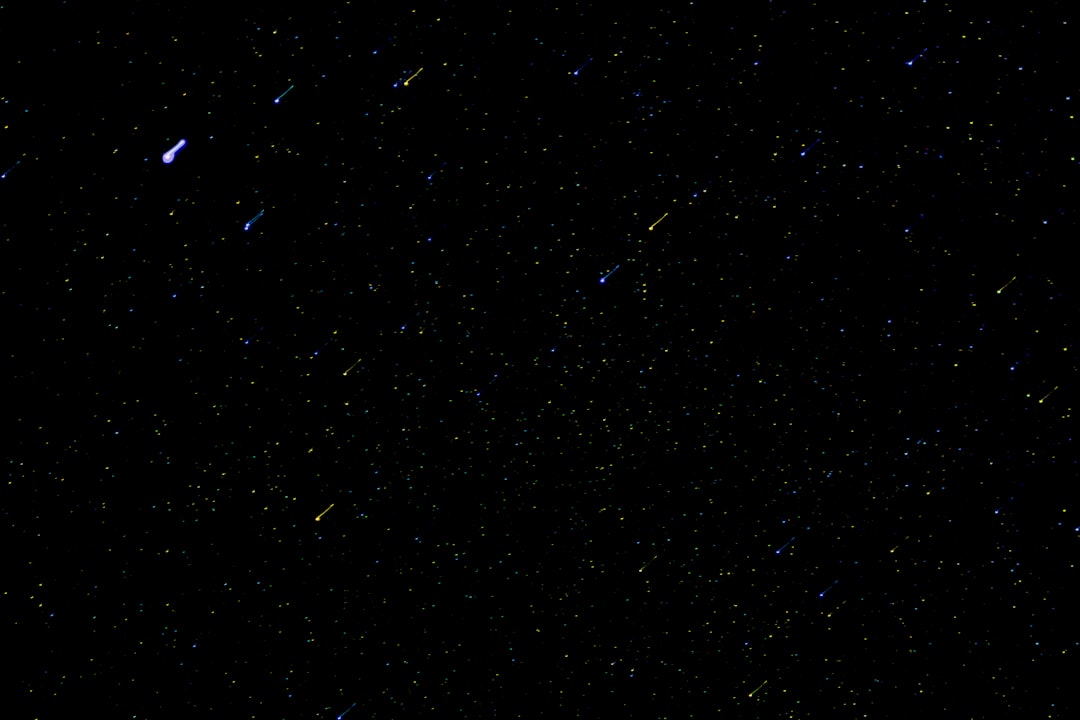
A meteor struck multiple buildings in Koblenz, Germany on March 8th, 2026, following a visible fireball reported across western Europe. The event, while dramatic, represents a relatively rare but not unprecedented occurrence in near-Earth object (NEO) encounters.Witnesses across western Europe reported seeing a bright fireball streak across the night sky before the impact in Rhineland-Palatinate. The meteor struck structures in the German city, causing property damage but no reported injuries. Local authorities are assessing the affected buildings and securing meteorite fragments for scientific analysis.In space exploration, as across technological frontiers, engineering constraints meet human ambition—and occasionally, we achieve the impossible. But Earth's encounter with small celestial objects reminds us that the cosmos operates on its own schedule, indifferent to our plans.The incident highlights ongoing efforts in planetary defense and NEO tracking. NASA's Center for Near Earth Object Studies (CNEOS) monitors approximately 34,000 known near-Earth asteroids, though objects the size that struck Koblenz often go undetected until atmospheric entry due to their relatively small dimensions.Most meteors burn up completely in Earth's atmosphere—the planet encounters roughly 100 tons of dust and sand-sized particles daily. Larger objects capable of reaching the surface and causing damage are far less common. The Chelyabinsk meteor in 2013, which injured over 1,500 people in Russia through shockwave-broken glass, released energy equivalent to approximately 500 kilotons of TNT. By comparison, building-damaging impacts like the Koblenz event represent intermediate-scale encounters.NASA's Planetary Defense Coordination Office, established in 2016, coordinates detection efforts and potential mitigation strategies for larger threatening objects. The agency's successful DART (Double Asteroid Redirection Test) mission in 2022 demonstrated humanity's first capability to deliberately alter an asteroid's trajectory—a proof-of-concept for planetary defense against more substantial threats.Detection remains the primary challenge for smaller objects. Current survey systems prioritize larger asteroids capable of regional or global devastation, while meter-scale objects often evade detection until final approach. The European Space Agency's forthcoming Flyeye telescope, designed for wider-field NEO detection, aims to improve early warning for mid-sized objects.Meteorite impacts occur with surprising frequency on geological timescales, though most strike uninhabited areas or ocean surfaces covering 71% of Earth's surface. The Koblenz strike's urban location makes it statistically noteworthy, similar to the 1992 Peekskill meteorite that struck a parked car in New York or the 2021 fragment that damaged a home in British Columbia.Scientists value meteorite fragments for their pristine extraterrestrial composition, offering insights into solar system formation and asteroid composition. Recovery teams typically work quickly to secure samples before terrestrial contamination compromises their scientific value.The incident serves as a practical reminder of ongoing NEO risks and the importance of continued investment in detection infrastructure—even as humanity focuses on ambitious missions to the Moon and Mars, the most immediate space threats arrive unannounced from the asteroid belt.
|