
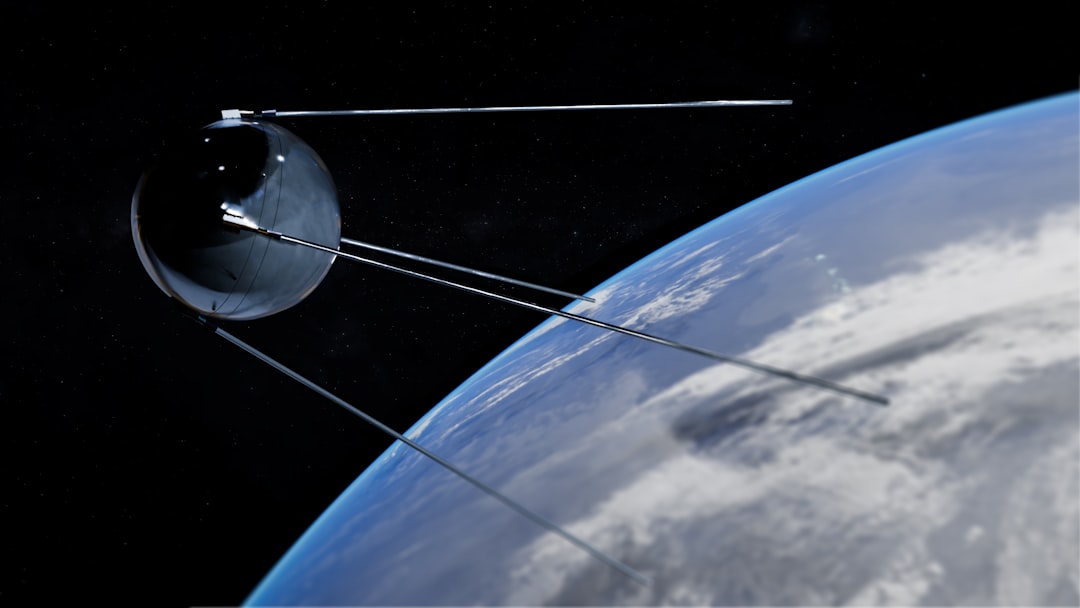
As commercial space companies race to deploy tens of thousands of satellites in low Earth orbit, scientists warn that orbital pollution represents an emerging environmental crisis with consequences extending from astronomical observation to atmospheric chemistry and global light pollution.
More than 9,000 satellites currently orbit Earth, with Elon Musk's Starlink constellation alone planning to deploy up to 42,000. Jeff Bezos's Project Kuiper seeks authorization for 3,236 satellites. Chinese companies propose additional mega-constellations. The combined scale dwarfs the approximately 16,000 satellites launched throughout space history.
Researchers and environmentalists now identify multiple threats from unregulated orbital expansion: disruption of astronomy, light pollution affecting ecosystems and human health, atmospheric contamination from satellite re-entry, and cascading collision risks that could render orbital space unusable.
Light pollution extends beyond ground-based sources. Satellite constellations create artificial moving lights visible across the night sky, interfering with astronomical research and cultural practices. Indigenous communities in Australia, New Zealand, and the Americas report disruption to traditional navigation and storytelling that rely on dark skies.
Astronomers document increasing satellite trails across telescope images, complicating observations of distant galaxies, asteroids, and other phenomena essential for planetary defense and cosmological research. Radio astronomy faces interference from satellite communications, potentially drowning out faint signals from space that reveal cosmic processes.
The environmental impact of satellite re-entry raises particular concern. Satellites have limited operational lifespans, typically 5-7 years in low Earth orbit, before atmospheric drag pulls them toward re-entry. Current mega-constellation plans require continuous satellite replacement, creating a permanent stream of objects burning up in the upper atmosphere.
"We're essentially conducting an uncontrolled experiment on the upper atmosphere," explained Samantha Lawler, an astronomer studying orbital pollution. Satellite re-entry releases aluminum oxide and other compounds into atmospheric layers poorly understood and difficult to monitor. The long-term effects on atmospheric chemistry, ozone dynamics, and climate remain unknown.
Collision risk escalates as orbital space becomes crowded. The 2009 collision between an operational U.S. communications satellite and a defunct Russian satellite created thousands of debris fragments, each capable of destroying additional satellites. As satellite numbers multiply, collision probability increases, raising the specter of Kessler Syndrome, a cascade of collisions that could render certain orbital altitudes unusable for generations.
Current space traffic management relies on voluntary coordination and limited regulatory oversight. No international framework governs mega-constellation deployment or requires environmental impact assessment for orbital activities. Companies self-report satellite positions and maneuver plans, with no enforcement mechanism for violations.
In climate policy, as across environmental challenges, urgency must meet solutions—science demands action, but despair achieves nothing. Space represents a new environmental frontier requiring proactive governance before irreversible damage occurs, not reactive regulation after crisis emerges.
Several solutions could mitigate orbital pollution while preserving space access benefits. Mandatory environmental impact assessments for constellation launches would force consideration of cumulative effects. International agreements could limit satellite numbers in specific orbital zones, preserving regions for astronomy and Earth observation. Satellite design standards requiring rapid deorbiting and minimal re-entry pollution would reduce long-term impacts.
Ground-based alternatives for some satellite services could reduce orbital demand. Fiber optic networks provide internet access without space infrastructure. Regional communication systems could serve many areas currently targeted by global constellations. However, satellite connectivity remains valuable for remote regions, maritime operations, and disaster response.
The space debris problem extends beyond mega-constellations. Military anti-satellite weapon tests create thousands of long-lived debris fragments. Aging satellites from earlier space eras drift in orbit, uncontrolled and untracked. Space stations and rocket bodies contribute additional mass. Comprehensive solutions must address both new constellation deployment and the existing debris population.
Some companies demonstrate willingness to address concerns. SpaceX modified Starlink satellites to reduce reflectivity after astronomical community complaints. Satellite operators increasingly share tracking data to improve collision avoidance. However, voluntary measures prove insufficient without binding international standards.
The tension between space development and environmental protection mirrors terrestrial conflicts over industrial expansion. Space offers genuine benefits: global connectivity, Earth observation for climate monitoring, scientific research advancing human knowledge. However, these benefits don't justify unregulated deployment that degrades orbital space and atmospheric environments.
Moving forward requires recognizing orbital space as a shared environmental commons requiring protection. Just as international agreements govern ocean pollution, atmospheric emissions, and polar regions, space activities demand cooperative governance prioritizing long-term sustainability over short-term commercial advantage. The alternative risks transforming humanity's gateway to space exploration into an inaccessible junkyard.