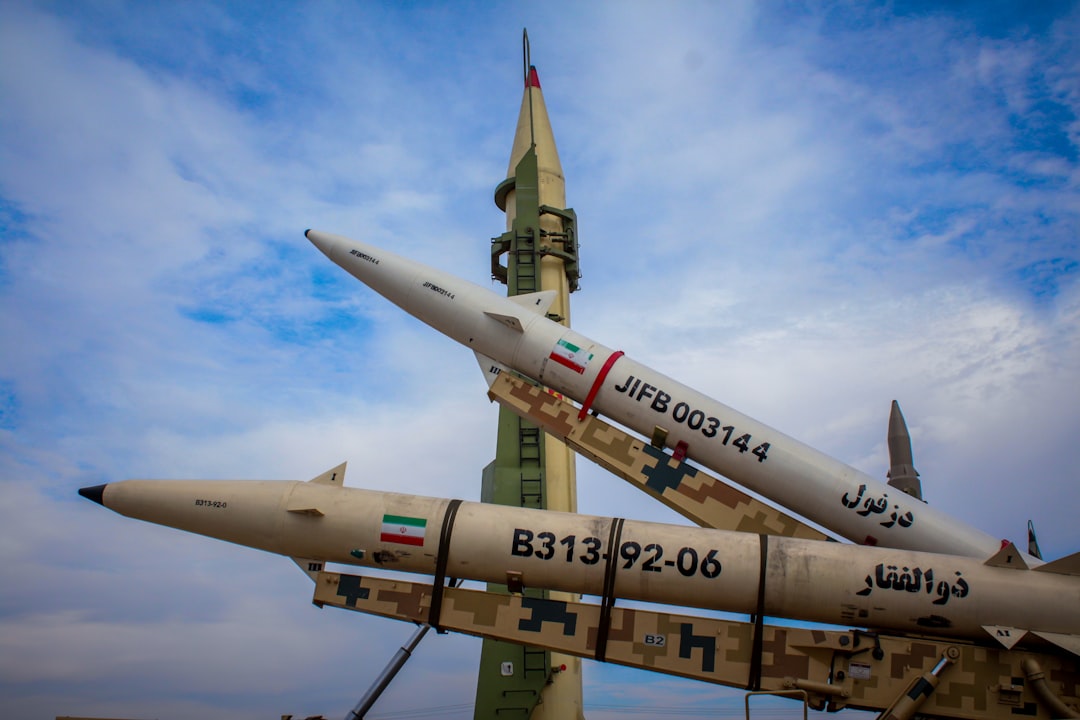
A Washington Post investigation using commercial satellite imagery has revealed that Iran's retaliatory strikes against U.S. military installations inflicted significantly more damage than the Pentagon publicly acknowledged, raising questions about transparency in military communications during a critical period of escalating tensions in the Middle East.
The satellite analysis, first reported by the Washington Post, shows that Iranian missiles and drones struck multiple facilities across bases in the region that were not mentioned in official Pentagon briefings. Defense officials had initially characterized the Iranian response as "largely ineffective" following U.S. strikes on Iranian Revolutionary Guard positions in Syria.
To understand today's headlines, we must look at yesterday's decisions. The discrepancy between satellite evidence and official statements echoes similar transparency gaps during the 2020 Iranian missile attack on Al Asad Air Base in Iraq, when the Pentagon initially downplayed injuries to American service members. That incident eventually led to the recognition of more than 100 traumatic brain injuries among U.S. personnel.
The imagery reveals damage to hardened aircraft shelters, fuel storage facilities, and communications infrastructure at bases in Qatar, the United Arab Emirates, and Jordan. Military analysts examining the commercial satellite data identified blast patterns consistent with precision-guided munitions, suggesting Iranian forces demonstrated improved targeting capabilities.
"What these images show is a deliberate campaign to strike military assets across multiple countries, not the scattered, ineffective barrage initially described," said Michael Knights, a defense analyst at the Washington Institute who reviewed the satellite imagery. "This represents a qualitative shift in Iranian capabilities."
The Pentagon has not issued a comprehensive statement addressing the satellite findings. A senior defense official, speaking on condition of anonymity, told reporters that full damage assessments are ongoing and that initial public statements focused on casualties rather than infrastructure damage.
The revelations come as the Trump administration pursues diplomatic negotiations with Tehran over a potential framework to de-escalate regional tensions. Critics in Congress have questioned whether the administration downplayed the extent of Iranian strikes to preserve diplomatic momentum.
Senator Mark Warner of Virginia, the ranking member on the Intelligence Committee, called for classified briefings on the satellite findings. "The American people and Congress deserve accurate information about threats to our forces," he said in a statement Tuesday.
Iranian officials have not publicly commented on the satellite analysis, though state media has broadcast footage purporting to show successful strikes on U.S. military targets. Tehran has characterized its military response as "proportional" to what it describes as American aggression.
The incident underscores the growing role of commercial satellite imagery in providing independent verification of military claims. Companies like Planet Labs and Maxar Technologies now offer near-daily coverage of conflict zones, making it increasingly difficult for governments to control the narrative around military operations.
For military planners, the Iranian strikes demonstrate an evolution in the Islamic Republic's missile and drone programs. The ability to coordinate attacks across multiple countries simultaneously, while achieving precision strikes on hardened military infrastructure, represents a capability that could reshape U.S. force posture across the Middle East.