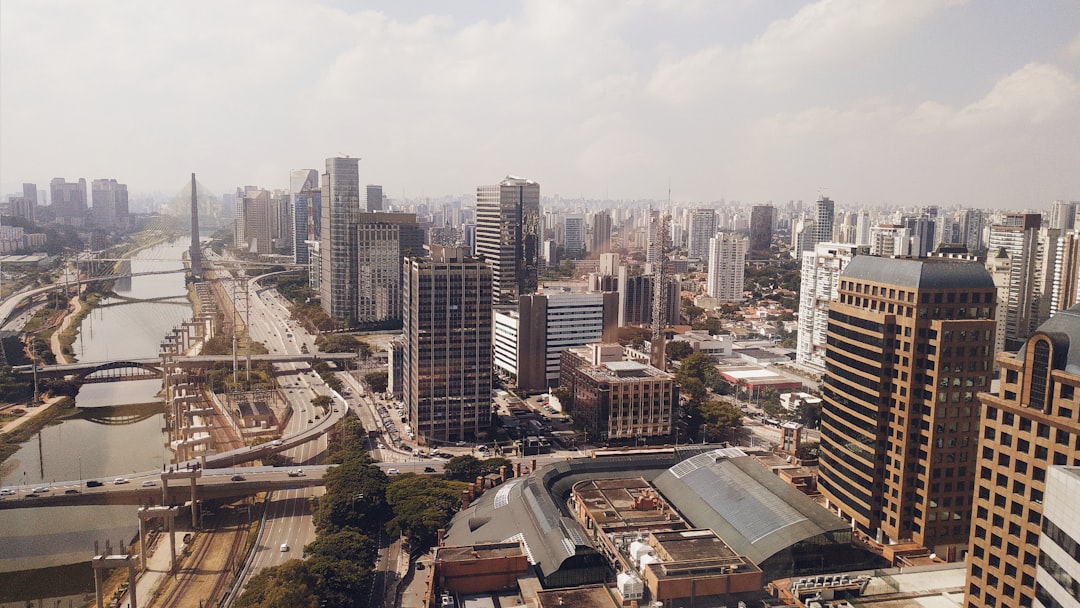
Financial technology companies operating in São Paulo's prestigious Faria Lima district—supposedly Latin America's most sophisticated financial center—laundered R$26 billion (approximately $5 billion USD) for organized criminal networks, according to explosive findings from the São Paulo Public Prosecutor's Office.
The investigation, reported by G1, reveals that multiple fintech firms continued facilitating money laundering operations even after initial investigations began, raising fundamental questions about regulatory oversight in Brazil's booming financial technology sector.
In Brazil, as across Latin America's giant, continental scale creates both opportunity and governance challenges. The country has positioned itself as a regional fintech leader, with São Paulo rivaling Miami and Mexico City as a hub for financial innovation. Brazilian fintechs have revolutionized payments, lending, and banking across South America, serving millions of previously unbanked customers.
But the prosecutor's findings suggest that lax oversight created openings for criminal exploitation on a staggering scale. R$26 billion represents more than the annual GDP of several Brazilian states, money that allegedly flowed through legitimate-seeming fintech platforms operating in gleaming Faria Lima office towers.
The investigation identified a systematic pattern of regulatory evasion. Criminal organizations allegedly used the fintechs to disguise proceeds from drug trafficking, arms smuggling, and other illicit activities, converting dirty money into apparently legitimate digital transactions. The schemes exploited gaps in Brazil's know-your-customer (KYC) and anti-money laundering (AML) frameworks.
What makes the findings particularly damaging is the location: Faria Lima is Brazil's answer to Wall Street or the City of London, home to major banks, investment firms, and Brazil's financial elite. The avenue symbolizes Brazilian economic sophistication and integration with global capital markets. Revelations that criminal enterprises operated through Faria Lima fintechs undermine that carefully cultivated image.
"This isn't about small-scale money laundering," one federal prosecutor told Brazilian media. "This is industrial-scale criminal finance operating through platforms that presented themselves as legitimate financial technology companies."
The timing is particularly awkward for Brazil's financial regulators. The country's Central Bank has promoted fintech innovation as key to financial inclusion, reducing barriers to entry for new payment processors and digital banks. The Pix instant payment system, launched in 2020, became wildly successful with over 150 million users—but also created new money laundering vulnerabilities.
Brazilian authorities now face pressure to demonstrate they can foster fintech innovation while preventing criminal abuse. The challenge is especially acute given Brazil's federal structure: financial crime often crosses state lines, but enforcement capacity varies dramatically between São Paulo, Rio de Janeiro, and less-resourced states in the North and Northeast.
The investigation also highlights Brazil's broader struggle with organized crime penetration of legitimate economy. From construction to logistics to finance, criminal organizations have proven adept at exploiting regulatory gaps and corrupting oversight mechanisms. The PCC (Primeiro Comando da Capital) and other factions increasingly operate like diversified business conglomerates, using violence to control territory while laundering proceeds through sophisticated financial schemes.
For Brazil's fintech sector, the scandal threatens to trigger harsh regulatory backlash. Industry representatives argue that isolated cases shouldn't derail innovation benefiting millions of Brazilians. They point out that traditional banks also face money laundering problems, and that overly restrictive regulations could push financial services back toward exclusionary banking oligopolies.
But prosecutors counter that the scale of the alleged laundering—R$26 billion—suggests systemic failures rather than isolated incidents. They argue that fintech firms prioritized growth and profitability over compliance, creating an environment where criminal organizations could operate with impunity.
The scandal also has international implications. Brazilian fintechs have expanded across Latin America, and major global investors have poured billions into the sector. Revelations about inadequate anti-money laundering controls may prompt foreign partners to reassess exposure to Brazilian financial technology companies.
Several fintech executives now face criminal charges, though no major firms have been publicly identified pending ongoing investigations. Legal experts expect the cases to drag through Brazil's notoriously slow judicial system for years, potentially without definitive accountability.
For President Luiz Inácio Lula da Silva's government, the findings create political complications. The administration has emphasized both financial inclusion through fintech innovation and aggressive anti-crime measures. Reconciling those priorities now requires demonstrating that regulation can prevent criminal abuse without stifling legitimate innovation.
The Central Bank has signaled it will strengthen oversight of fintech operations, including more rigorous licensing requirements and enhanced transaction monitoring. Industry observers expect new regulations within months, though implementation challenges remain significant given Brazil's vast territory and fragmented enforcement.
As São Paulo prosecutors continue their investigation, the scandal serves as a sobering reminder that financial innovation creates opportunities for both legitimate inclusion and criminal exploitation. For Brazil's aspirations to lead Latin American fintech development, proving that sophisticated regulation can match sophisticated technology has become urgent.
The question now is whether Brazilian authorities can build oversight systems that protect the financial sector's integrity while preserving the innovation that has made its fintech industry a regional powerhouse. With R$26 billion laundered through supposedly reputable firms in the country's financial capital, the stakes couldn't be higher.