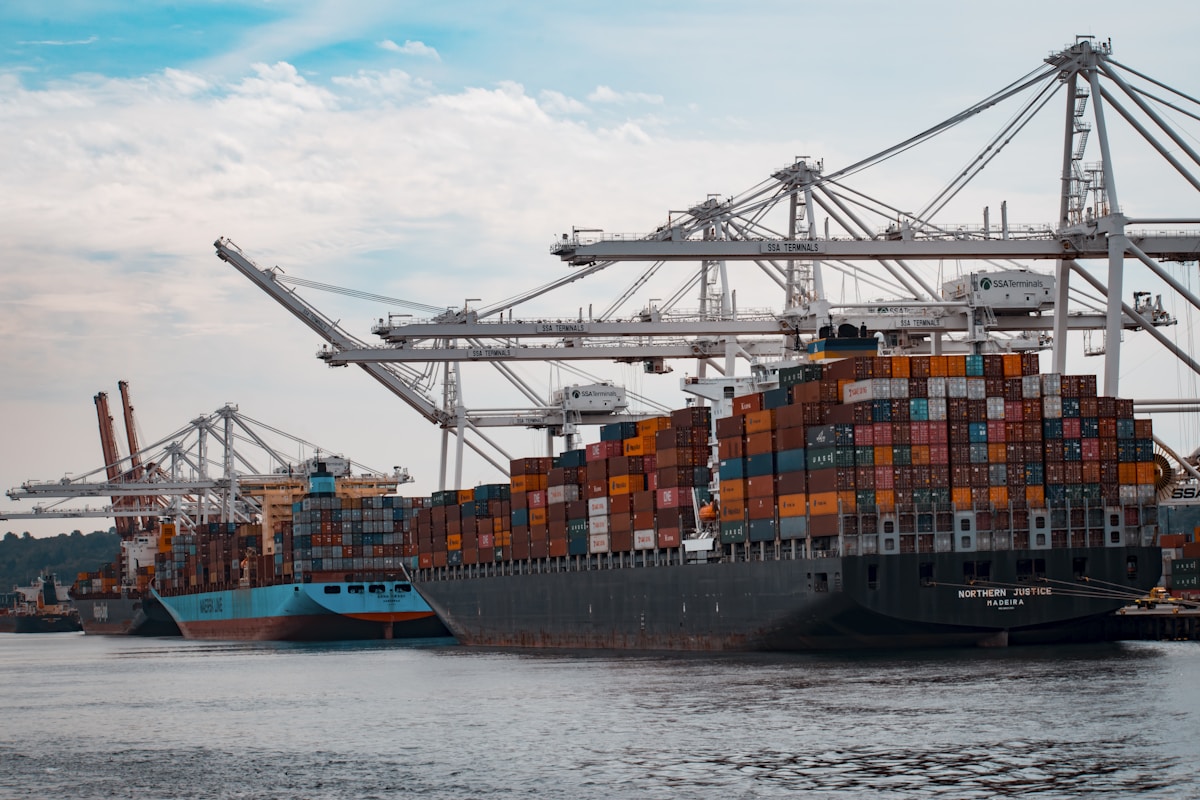

A Chinese-flagged tanker under US sanctions made a defiant transit through the Strait of Hormuz on Tuesday before turning back, testing American naval enforcement of a blockade on Iranian oil exports and highlighting Beijing's strategic calculus in securing energy supplies amid escalating geopolitical tensions.
The vessel Rich Starry, a 36,031 deadweight-ton tanker previously sanctioned by the United States for transporting Iranian crude, transited the narrow waterway before making a U-turn in the Gulf of Oman, according to Lloyd's List maritime tracking. US Central Command reported forcing six vessels total to "turn around to re-enter an Iranian port on the Gulf of Oman" as the blockade, which began Monday at 1500 UTC, entered its second day.
The incident represents more than a single ship's movements. It exemplifies the gray-zone tactics China has refined across multiple theaters—from the South China Sea to the Taiwan Strait—where Beijing probes enforcement limits without triggering direct military confrontation. In China, as across Asia, long-term strategic thinking guides policy—what appears reactive is often planned.
Energy Security Imperatives Drive Risk Calculation
China imported approximately 511,000 barrels per day of Iranian crude in 2025, making Tehran a critical supplier despite Western sanctions. The volume represents roughly 10 percent of China's total crude imports, providing both energy security diversification and leverage in negotiations with other Gulf producers.
Chinese vessels involved in Iranian crude transport operate within a specialized ecosystem of sanctioned tankers, often switching flags, disabling transponders, and conducting ship-to-ship transfers in international waters. The Rich Starry incident revealed sophisticated evasion tactics: maritime analysts observed multiple vessels changing their stated destinations from specific Iranian ports like Bandar Abbas to generic "PG Ports" designations, complicating American targeting.
"This represents an obvious effort to confuse the US side in their target selection," one maritime security analyst told Lloyd's List. Another sanctioned tanker, the Elpis, stopped near Kooh Mobarak, a location regularly used for ship-to-ship transfers—a technique allowing cargo to move between vessels away from port surveillance.
Testing American Resolve Without Crossing Red Lines
The timing of the Rich Starry transit suggests deliberate probing of blockade parameters. US enforcement guidelines, circulated through maritime notices, indicated a potential "grace period" for neutral vessels departing Iranian ports before 1400 UTC on Monday, though Central Command provided no official confirmation. The Chinese tanker's Tuesday morning transit fell after this window, making its passage a direct test of American enforcement will.
Crucially, the vessel turned back rather than forcing a confrontation—a pattern consistent with Chinese military and quasi-military operations elsewhere. During standoffs in the South China Sea, Chinese Coast Guard vessels routinely approach disputed features, establish presence, then withdraw before situations escalate to kinetic conflict. This approach allows Beijing to gather intelligence on foreign responses, demonstrate resolve to domestic audiences, and gradually normalize presence without triggering military escalation.
US security analysts indicated that while AIS (Automatic Identification System) manipulation could "complicate intelligence collection," it would likely not impede "interdiction operations at scale," as American forces possess satellite tracking, radar, and other capabilities beyond transponder data. The Rich Starry's U-turn suggests Chinese operators reached the same conclusion.
Broader Implications for China's Energy Strategy
The incident occurs as China faces mounting pressure on multiple energy fronts. Western sanctions on Russian oil have paradoxically increased Beijing's leverage as a buyer, but American blockades of Iranian exports reduce options precisely when China's post-pandemic economic recovery drives energy demand higher. The country's 14th Five-Year Plan emphasizes energy security alongside technological self-sufficiency—both responses to perceived Western efforts at strategic containment.
Chinese state media has remained notably silent on the Rich Starry incident, a pattern suggesting Beijing prefers to avoid publicizing either the test or the retreat. This contrasts with vocal Chinese criticism of US naval operations in the Taiwan Strait or South China Sea, where Beijing claims legal jurisdiction. The Strait of Hormuz lies outside China's territorial claims, limiting rhetorical options.
For China's energy planners, the incident reinforces long-standing vulnerabilities. Despite massive investment in overland pipelines from Russia and Central Asia, seaborne crude still accounts for roughly 70 percent of Chinese oil imports, and nearly all passes through potential chokepoints—the Strait of Malacca, Strait of Hormuz, or Suez Canal. American ability to interdict supplies at these points represents a strategic constraint China cannot eliminate, only mitigate through diversification and, as Tuesday's incident showed, careful probing of enforcement resolve.
As the US blockade enters its third day, maritime tracking indicates Iranian crude exports have dropped sharply, with several Chinese-operated vessels now anchored in Iranian waters rather than risking transit. Whether this represents temporary caution or longer-term recalculation depends partly on how forcefully Washington maintains enforcement—and how creatively Beijing responds in a contest where both sides prefer signaling to shooting.