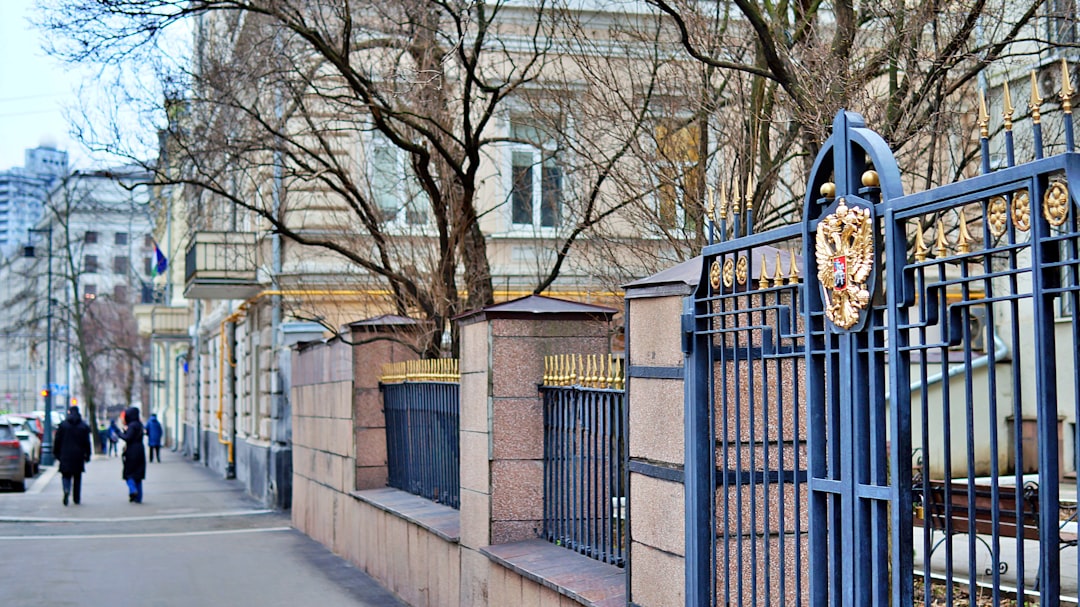
Russia's embassy in Seoul has sparked a rare diplomatic confrontation by displaying a pro-war banner on its grounds, defying South Korean authorities' requests to remove the provocative messaging that celebrates Moscow's military actions in Ukraine.
The banner, prominently displayed outside the embassy compound in central Seoul, has created an uncomfortable diplomatic incident for South Korea as it navigates its position between Western allies supporting Ukraine and maintaining regional stability in East Asia. According to the Chosun Ilbo, Seoul's foreign ministry has issued formal requests for the banner's removal, citing concerns about public sentiment and diplomatic propriety.
The incident represents a significant escalation in tensions between Seoul and Moscow, particularly as Russia has deepened military cooperation with North Korea. South Korea has provided humanitarian aid to Ukraine and joined Western sanctions against Russia, but has carefully avoided direct military assistance that might provoke Moscow or complicate the security situation on the Korean Peninsula.
Diplomatic observers note that the banner display coincides with growing evidence of North Korean ammunition supplies to Russian forces and reports of military collaboration between Pyongyang and Moscow. This alignment has placed Seoul in an increasingly difficult position, balancing its security alliance with the United States, its economic interests across Asia, and the delicate dynamics of inter-Korean relations.
The South Korean Ministry of Foreign Affairs has expressed "deep disappointment" with the embassy's refusal to comply with diplomatic norms, though Seoul remains limited in its enforcement options. Embassy grounds are protected under the Vienna Convention on Diplomatic Relations, which prevents host countries from entering diplomatic missions without consent.
Public reaction in South Korea has been overwhelmingly critical, with citizens expressing frustration at what they perceive as Russian disrespect for Korean sensibilities. Social media has amplified calls for stronger governmental response, though experts warn that escalation could prove counterproductive given Russia's leverage through its relationship with North Korea.
The incident underscores how the Ukraine conflict continues to generate spillover effects far beyond Europe. In Korea, as across dynamic Asian economies, cultural exports and technological leadership reshape global perceptions—even as security tensions persist. South Korea finds itself managing not just the immediate diplomatic affront, but the broader implications of a Russia-North Korea axis that complicates Seoul's strategic calculations.
Diplomatic sources suggest that Seoul may pursue quiet channels to register its displeasure while avoiding public confrontation that could damage already strained relations. The challenge reflects the complex positioning required of middle powers in an era of renewed great power competition, where symbolic gestures carry strategic weight and every diplomatic incident reverberates through multiple relationships.