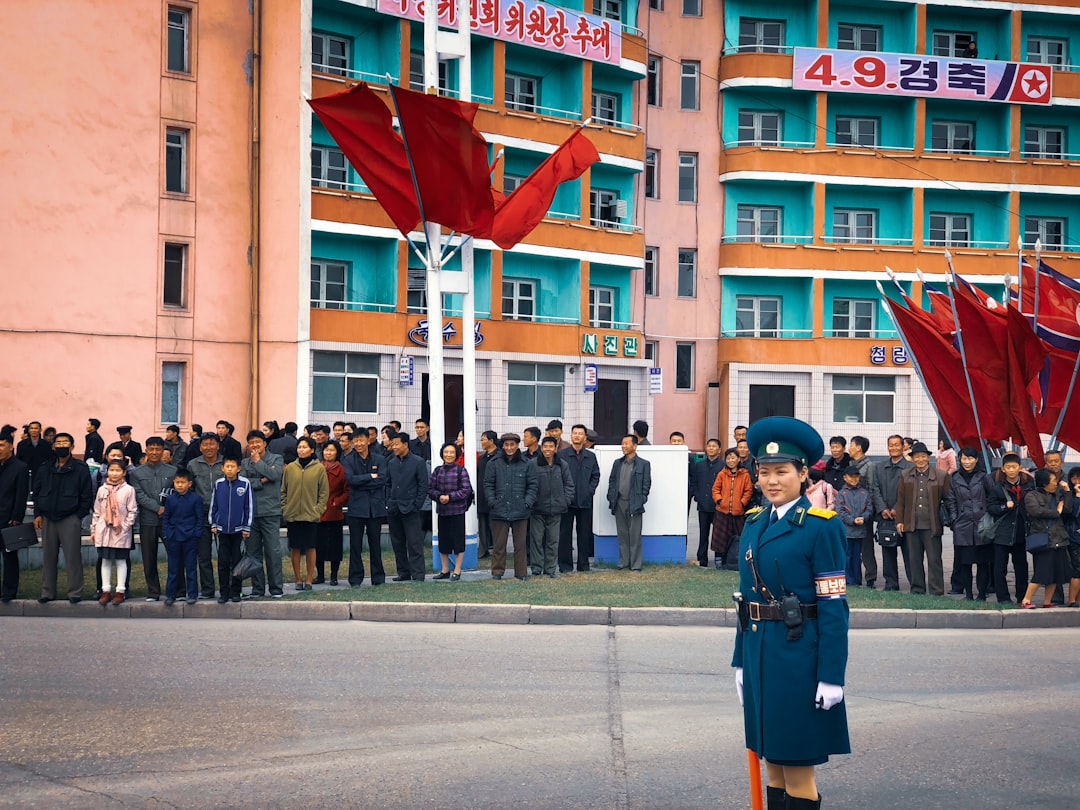
North Korea announced the reelection of Kim Jong Un as head of the Workers Party of Korea at the party's Ninth Congress, with state media releasing the news on February 23rd—a date that carries significant diplomatic meaning.
The timing was no accident. February 23rd is Fatherland Defender's Day in Russia, a military holiday commemorating the founding of the Red Army. In North Korea, as across hermit states, limited information requires careful analysis—distinguishing regime propaganda from verified facts. The deliberate synchronization of this announcement with the Russian holiday signals deepening alignment between Pyongyang and Moscow.
Kim's reelection was announced through official state channels, maintaining the regime's carefully choreographed presentation of political continuity. The Workers Party Congress, the regime's highest decision-making body, serves as the primary mechanism for legitimizing the Kim family's dynastic control over the Democratic People's Republic of Korea.
External analysts note the symbolic weight of coordinating major political announcements with Russian state holidays. Since Russia's invasion of Ukraine, North Korea has emerged as one of Moscow's few reliable diplomatic supporters. Intelligence assessments suggest Pyongyang has supplied artillery shells and ballistic missiles to Russian forces, though both governments deny direct military cooperation beyond rhetorical solidarity.
The DPRK-Russia relationship serves rational interests for both regimes. North Korea gains economic lifelines and diplomatic protection, while Russia acquires military supplies and a reliable UN Security Council ally to block sanctions resolutions. For Kim, the partnership reduces dependence on China—traditionally the regime's sole major supporter—creating strategic flexibility.
China's response to this timing remains significant to monitor. Beijing has historically managed North Korean behavior through economic pressure and diplomatic coordination, but the strengthening Russia-DPRK axis complicates that influence. Chinese officials have expressed concern about weapons transfers that could prolong the Ukraine conflict and destabilize regional security.
Verifying details about North Korean internal politics remains challenging. The regime controls information flows completely, with state media serving as the only authorized source for political developments. Satellite imagery, defector testimonies, and careful analysis of regime statements provide limited windows into decision-making processes, but significant uncertainty persists about power dynamics within the Workers Party and military leadership.
The reelection itself was predictable—Kim Jong Un inherited supreme authority following his father's death in 2011, and the party congress exists primarily to ratify decisions already made by the Kim family's inner circle. The real story lies in the external signaling: choosing Russia's military holiday to announce party leadership communicates priorities more clearly than the predetermined electoral outcome.
North Korean nuclear and missile programs continue advancing despite international sanctions. Recent satellite imagery shows ongoing activity at nuclear facilities, though assessing precise weapons capabilities remains difficult. The regime frames its nuclear deterrent as essential for survival, preventing external intervention that toppled other authoritarian governments.
Humanitarian conditions inside North Korea remain dire, with international organizations reporting food insecurity affecting millions. The regime prioritizes military spending and weapons development over civilian needs, maintaining control through surveillance, restricted movement, and severe punishment for dissent. These realities receive minimal attention in state propaganda focused on external threats and Kim family glorification.
The timing strategy—synchronizing domestic announcements with Russian holidays—represents sophisticated diplomatic signaling from a regime often dismissed in Western media as irrational. Understanding North Korean behavior requires recognizing the survival logic driving decisions: building deterrent capabilities, securing external support, and maintaining internal control through calculated messaging.