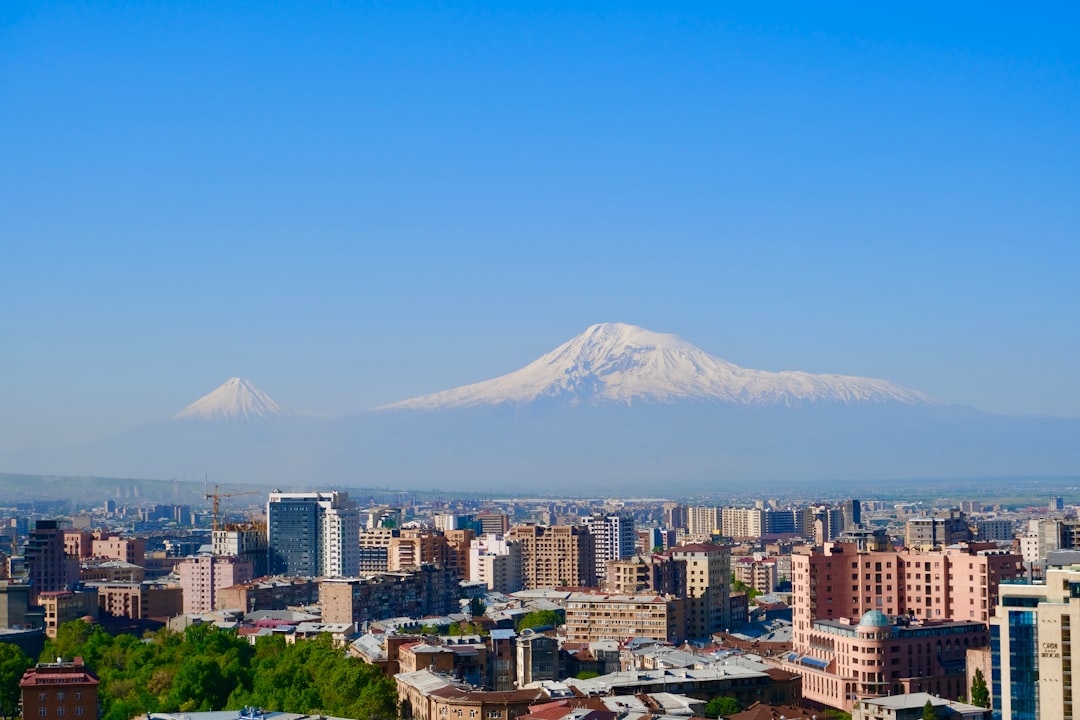
A former Armenian intelligence chief has claimed Russia is deploying 30,000 voters to Armenia ahead of upcoming elections, part of an alleged Kremlin campaign to maintain influence over the former Soviet republic as it seeks to distance itself from Moscow's orbit.
Artur Vanetsyan, who served as director of the National Security Service under former Prime Minister Nikol Pashinyan before breaking with the government, told Shatterbelt that the operation involves granting Armenian citizenship to ethnic Armenians from Russia and transporting them to vote in districts where races are expected to be close.
"This is not about winning through votes," Vanetsyan said in an interview. "Thirty thousand voters cannot change a national election outcome. This is about creating the infrastructure for post-election instability, for challenging results, for claiming fraud. They're not there to win. They're there for what comes after."
To understand today's headlines, we must look at yesterday's decisions. Armenia's relationship with Russia has deteriorated sharply since Azerbaijan's seizure of Nagorno-Karabakh in 2023, which Yerevan viewed as enabled by Moscow's failure to fulfill security commitments under the Collective Security Treaty Organization. Prime Minister Pashinyan has since pursued closer ties with Western Europe and the United States, including discussions about potential EU integration.
The allegations of voter importation come amid broader concerns about Russian interference in the politics of former Soviet states. Georgia experienced massive protests last year over what critics described as Russian-backed efforts to derail its EU accession process. Moldova has documented extensive Russian funding of opposition parties ahead of its own elections.
Armenian government officials have not confirmed Vanetsyan's specific claims but acknowledged awareness of what one official termed "irregular patterns in citizenship applications" processed through Armenian consulates in Russia. The government has announced enhanced scrutiny of recent citizenship grants and voting eligibility verification.
"We are taking reports of potential electoral manipulation very seriously," said Vahagn Hovakimyan, deputy minister of internal affairs, in a statement. "Any evidence of organized efforts to subvert the electoral process will be investigated and prosecuted to the full extent of Armenian law."
The Russian Foreign Ministry dismissed the allegations as "fantasy" and accused Western intelligence services of fabricating the story to justify increased involvement in Armenian politics. Spokeswoman Maria Zakharova said the claims were "part of a broader campaign to vilify normal bilateral relations between Russia and Armenia."
However, independent observers note that Russia has significant capacity to influence Armenian electoral processes through legitimate means. An estimated two million ethnic Armenians live in Russia, many of whom retain Armenian citizenship or are eligible for it through family connections. The ease of acquiring citizenship documents and the affordability of travel between Moscow and Yerevan make large-scale voter mobilization logistically feasible.
"The genius of this approach, if it's happening, is that it's technically legal," said Dr. Nino Evgenidze, a Caucasus specialist at the Carnegie Endowment. "These individuals have legitimate claims to citizenship under Armenian law. The question is whether their political participation is genuine or whether they're being organized and directed as part of a foreign influence operation."
Vanetsyan, who now leads an opposition party, has his own political motivations for making such claims, and some analysts caution against accepting his allegations without independent verification. However, his former position gives his warnings credibility among security professionals who note his insider knowledge of intelligence operations.
The European Union has dispatched an election monitoring mission to Armenia, which will include observers specifically tasked with investigating potential voter fraud or manipulation. The OSCE has also announced an expanded presence for the upcoming elections.
Whatever the truth of the specific allegations, the controversy underscores Armenia's delicate position as it attempts to reorient its foreign policy while managing complex demographic and historical ties to Russia. The coming elections will serve as a test not only of domestic political sentiment but of Moscow's continued capacity to shape political outcomes in its former sphere of influence.