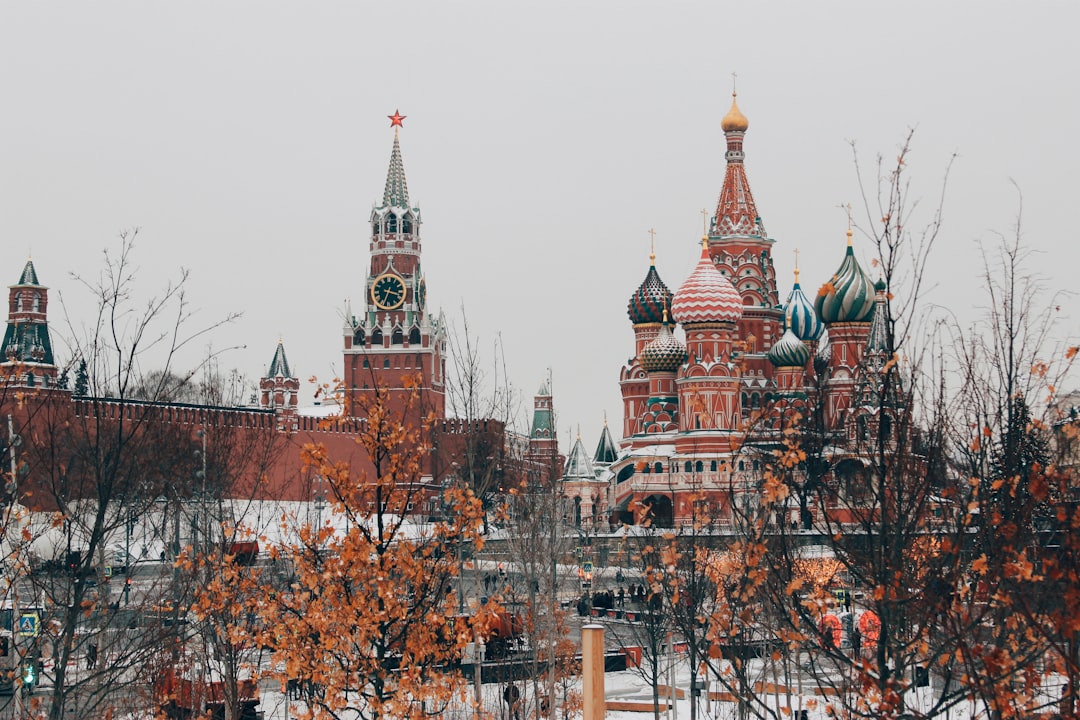
MOSCOW — A Russian court has issued the country's first fine for criticizing the Taliban, one year after Moscow removed the group from its list of terrorist organizations, in what analysts describe as concrete evidence of the Kremlin's strategic pivot toward international pariah states.
According to Novaya Gazeta Europe, the court in Voronezh fined a local resident 50,000 rubles (approximately $550) for social media posts that "discredited" the Taliban. The case, while seemingly minor in financial terms, represents a watershed moment in Russia's diplomatic realignment under international isolation.
To understand today's headlines, we must look at yesterday's decisions. The Taliban ruled Afghanistan from 1996 to 2001, implementing an extreme interpretation of Islamic law that included brutal suppression of women's rights and harboring of terrorist groups. After the September 11 attacks, Russia supported the U.S.-led intervention that toppled the Taliban.
That history makes the current prosecution all the more striking. Russia has not merely normalized relations with the Taliban — it has criminalized domestic criticism of the group. This goes beyond diplomatic expediency into the realm of enforced ideological alignment.
The legal basis for the prosecution stems from Russia's removal of the Taliban from its official list of banned terrorist organizations in June 2025. That delisting was itself controversial, occurring as the Taliban regime in Kabul continued to deny girls access to secondary education and systematically erased women from public life.
Russia's current law prohibits "discrediting" any foreign government or organization with which Moscow maintains official relations. By removing the Taliban's terrorist designation, the Kremlin automatically extended this protection to criticisms of the group — a decision with clear chilling effects on domestic free speech.
The geopolitical implications matter more than the individual prosecution. Russia, facing comprehensive Western sanctions over its invasion of Ukraine, has deliberately cultivated partnerships with states and entities that the West shuns. This includes deeper ties with Iran, North Korea, and now the Taliban.
Diplomatic engagement with the Taliban is not unique to Russia. China, Pakistan, and several Central Asian states maintain working relationships with the Afghanistan regime out of practical necessity — border management, counterterrorism coordination, and regional stability concerns.
But prosecuting citizens for criticizing the Taliban represents a qualitatively different level of alignment. It suggests Russia views the Taliban not merely as a practical interlocutor but as a partner whose reputation must be defended domestically.
The timing is significant. Russia has been expanding its presence in Afghanistan, with reports of increased intelligence cooperation and discussions about potential basing rights. Moscow positions this as pragmatic engagement with the de facto government of a neighboring region.
Analysts note that Russia's strategy serves multiple purposes. It positions Moscow as a power willing to engage where the West refuses, potentially gaining influence in Central Asia. It demonstrates to other sanctioned or isolated states that Russia can be a reliable partner despite international opprobrium. And it signals that Moscow will not be constrained by Western human rights concerns.
"This prosecution is symbolic rather than substantive," said Ekaterina Schulmann, a political scientist based in Berlin. "It's about sending a signal domestically and internationally that Russia has fully embraced its role as the leader of an alternative international order."
That alternative order increasingly consists of states excluded from or at odds with the Western-led system: the Taliban's Afghanistan, North Korea, Iran, Syria's Assad regime, and various military juntas in Africa. Russia and China provide the economic and diplomatic scaffolding for this parallel system.
The case also highlights the Kremlin's domestic crackdown on any form of dissent. Russia's laws against "discrediting" the armed forces, "fake news" about military operations, and now criticism of foreign partners create an environment where virtually any political expression can be criminalized.
Human rights organizations condemned the prosecution. "This is yet another example of how Russia's foreign policy alignment with authoritarian regimes is being enforced through repression of its own citizens," said a statement from Memorial, the Nobel Prize-winning human rights group now operating in exile.
The financial penalty in this case is modest compared to the prison sentences handed down for more serious "offenses" under Russia's expanding repressive legal framework. But the precedent is what matters. If criticizing the Taliban is now punishable, what other foreign actors will gain similar protection?
For the Taliban, Russia's legal protection of their reputation provides a form of international validation they have struggled to achieve. No country formally recognizes the Taliban government, but Russia's willingness to criminalize domestic criticism comes close to de facto recognition.
The broader pattern is clear: as Russia faces sustained isolation from the West, it is building a coalition of convenience with other isolated actors. These are not ideological allies in any traditional sense — the Taliban's theocracy shares little with Russia's autocratic nationalism. But they share a common adversary in the Western-led international order.
This first fine for criticizing the Taliban will likely not be the last. As Russia deepens ties with international pariahs, the Kremlin will continue using its legal system to enforce that alignment domestically. The message is unmistakable: in Putin's Russia, the enemy of the West is a friend, and friends must not be criticized.
What was once unthinkable — Russia punishing its citizens for opposing the Taliban — has become routine. That transformation captures the distance Russia has traveled from any pretense of alignment with international human rights norms or Western values. The fine is small, but the geopolitical signal is profound.