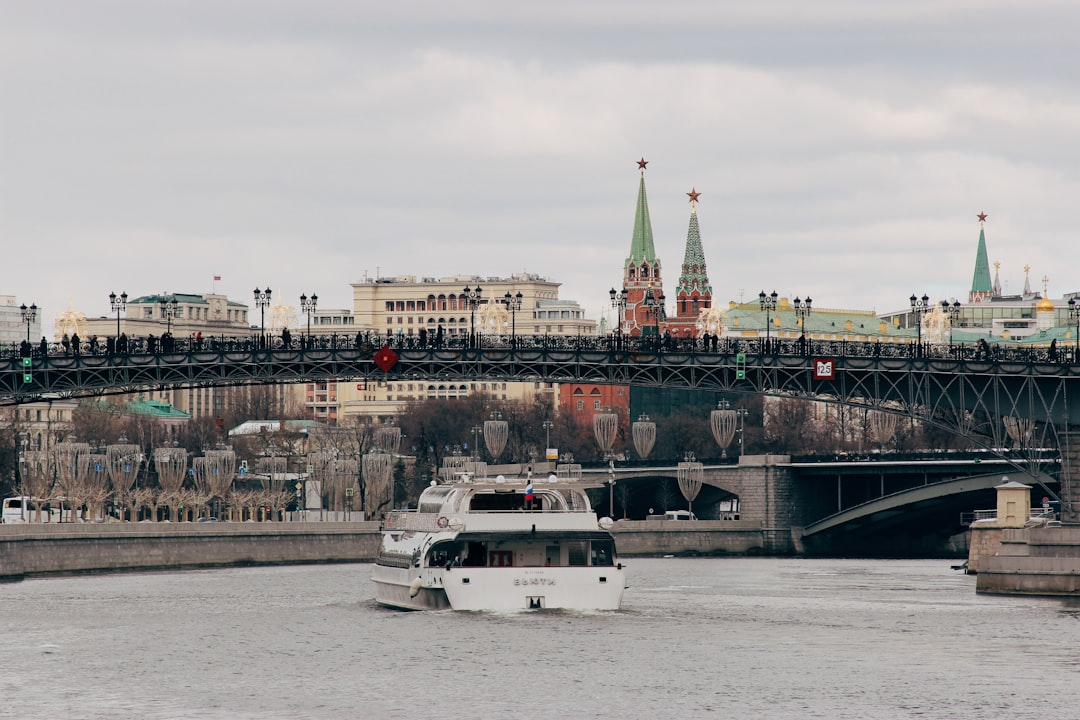
Russia's Federal Security Service (FSB) announced Monday that it has expelled a British diplomat from Moscow, accusing him of intelligence gathering and providing false information during the accreditation process. The move continues a pattern of tit-for-tat diplomatic expulsions that has reduced official channels between Moscow and Western capitals to historic lows.
The expelled official, identified by the FSB as Edward Wilkes, served as a second secretary at the British Embassy in Moscow. Russian authorities claim he was observed conducting surveillance operations and meeting with Russian citizens suspected of providing classified information to foreign intelligence services.
The UK Foreign Office rejected the allegations as "completely baseless" and said the expulsion represents "another example of Russia's attempts to distract from its actions in Ukraine and its broader campaign of malign activity." London is expected to expel a Russian diplomat in response, perpetuating a cycle that has hollowed out diplomatic missions on both sides.
To understand today's headlines, we must look at yesterday's decisions. The current diplomatic breakdown recalls the aftermath of the 2018 Skripal poisoning in Salisbury, when Britain and its allies expelled over 150 Russian diplomats in a coordinated response. Moscow retaliated in kind, and diplomatic relations have never recovered. But the context today is far more dangerous—with an active war in Ukraine, rising tensions with Iran, and multiple flashpoints where miscalculation could trigger direct confrontation.
The reduction of diplomatic channels comes at precisely the moment they are most needed for de-escalation. With Russia, the United States, and European powers engaged in multiple simultaneous crises, the absence of robust diplomatic communication mechanisms increases the risk of miscalculation.
"We're sleepwalking into a situation where there's no one to pick up the phone," said Sir Rodric Braithwaite, former British ambassador to Moscow. "During the Cold War, even at the height of tensions, both sides maintained substantial diplomatic presences precisely because they understood the stakes. Today's leaders seem to have forgotten those lessons."
The British Embassy in Moscow now operates with a skeleton staff of fewer than 50 diplomats and support personnel, down from over 200 before the Ukraine invasion. The Russian Embassy in London has been similarly reduced, limiting its ability to provide consular services to Russian citizens in Britain or to engage in the routine diplomatic business that keeps bilateral relations functioning.
Intelligence experts note that the expulsion of declared diplomats rarely affects actual intelligence gathering, which is increasingly conducted through cyber operations and technical means rather than traditional human intelligence. The real impact is on diplomatic functioning and the ability to manage crises through direct communication.
The timing of the expulsion may be connected to recent developments in Ukraine, where Britain has been one of Kyiv's strongest military backers. Moscow has repeatedly accused London of encouraging Ukrainian intransigence and blocking potential peace negotiations. The expulsion could be intended as a signal to Britain to moderate its support for Ukraine—though past attempts at such signaling have proven ineffective.
For Britain, the incident represents another data point in a relationship that has moved from rivalry to outright hostility. Prime Minister Keir Starmer's government has maintained the hardline approach toward Moscow established by previous Conservative governments, viewing Russia as the most acute threat to European security.