
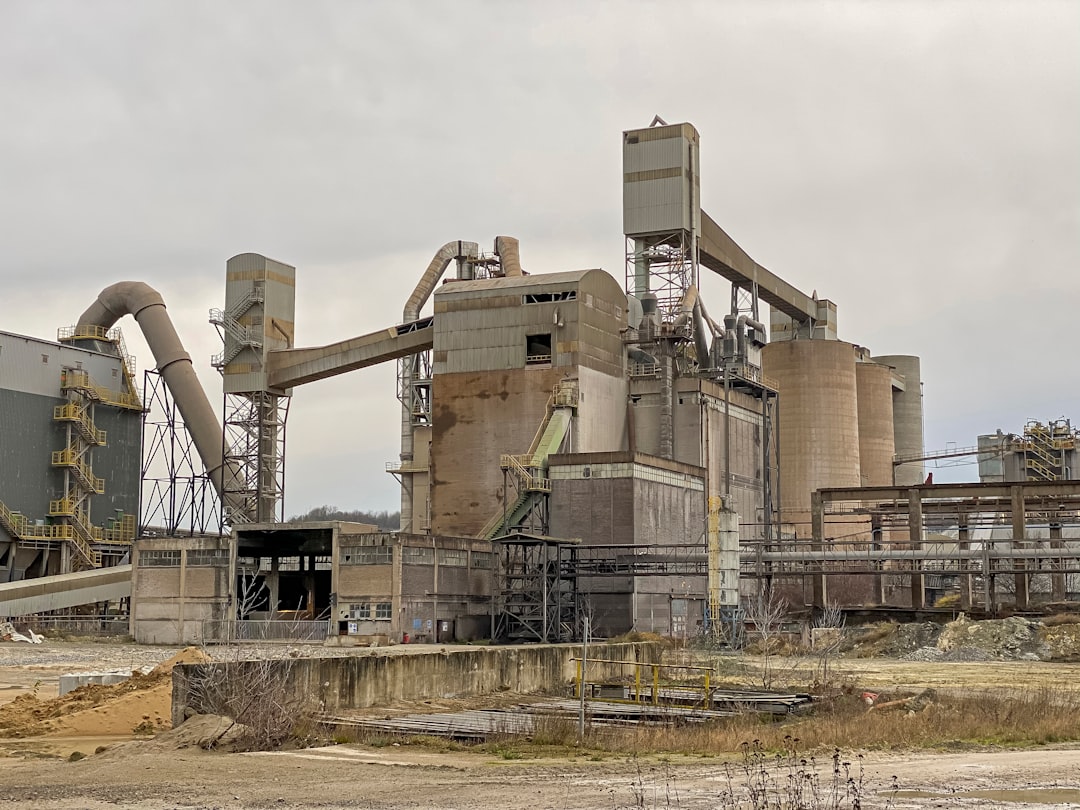
The construction industry has a carbon problem of staggering proportions. Cement production alone accounts for 8% of global CO2 emissions - more than the entire aviation industry. But researchers at the University of British Columbia have just published a potential game-changer: an electrochemical process that slashes emissions by 98% while cutting energy demand by 70%.
The breakthrough, published in ACS Energy Letters, represents a fundamentally different approach to making cement. Traditional cement production requires heating limestone to around 1,450°C in massive kilns - an energy-intensive process that releases enormous quantities of carbon dioxide both from burning fossil fuels and from the limestone itself.
The new electrochemical method operates at much lower temperatures and can incorporate recycled cement directly into the process. That recycling capability is particularly elegant: construction waste that would otherwise head to landfills becomes feedstock for new building materials.
Now, before we get carried away: this is laboratory-scale work. The paper demonstrates the chemistry and thermodynamics work beautifully, but scaling from beakers to the industrial volumes needed to build bridges and skyscrapers is notoriously difficult. Many promising lab results have stumbled at exactly this stage.
That said, the physics here are fundamentally sound. Electrochemistry offers precise control that high-temperature kilns simply can't match. And the timing couldn't be better - the construction sector is under enormous pressure to decarbonize, with many countries now requiring carbon accounting for new buildings.
The cement industry is deeply conservative for good reason: building codes demand absolute consistency, and experimental materials don't get approval easily. But with 8% of global emissions on the line, even a conservative industry has to pay attention to a 98% reduction.
What's particularly interesting here is the convergence of multiple sustainability benefits: lower emissions, lower energy demand, and a pathway to incorporate waste materials. That kind of multi-dimensional improvement suggests the chemistry isn't just incrementally better - it's operating on different principles entirely.
The researchers are now working on demonstrating the process at pilot scale. If they can maintain those performance numbers as they scale up, this could be one of those rare moments when materials science genuinely reshapes an entire industry.
The universe doesn't care about our climate targets. But sometimes, the chemistry aligns perfectly with what we need.