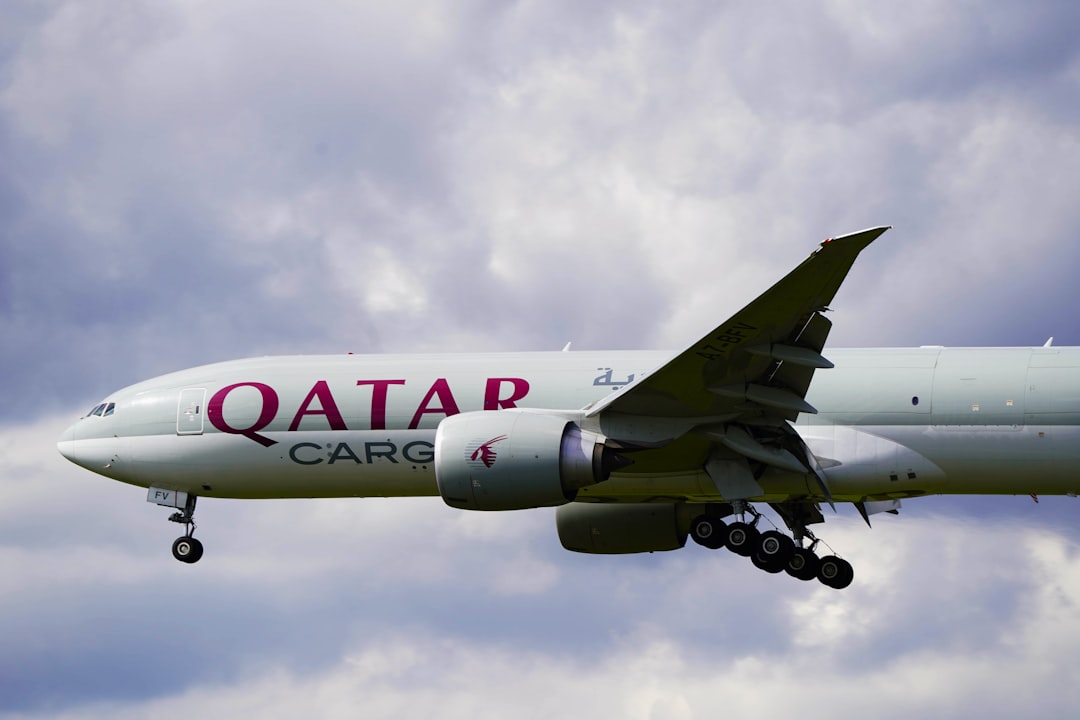
Qatar shot down two Iranian Su-24 fighter jets on Sunday in the first direct air combat between an Arab Gulf state and Iran, marking a dramatic expansion of the conflict beyond Tehran's immediate borders.
The downings, confirmed by Qatari military officials, occurred as the jets approached Qatari airspace amid heightened tensions following U.S.-Israeli strikes on Iran. Both pilots were reported killed, though Tehran has yet to officially acknowledge the losses.
To understand today's headlines, we must look at yesterday's decisions. This is the first time an Arab state has directly engaged Iranian military aircraft, crossing a threshold that regional powers have carefully avoided for decades. The incident recalls the 1991 Gulf War coalition, but the dynamics are fundamentally different—Qatar hosts the largest U.S. military base in the Middle East at Al Udeid, positioning it at the center of American operations in the region.
Qatar's military, equipped with advanced French Rafale fighters and American F-15s, has capabilities far exceeding those of its small population. The country has invested billions in defense modernization over the past decade, partly in response to the 2017 blockade by Saudi Arabia and the UAE.
According to the Jerusalem Post, which first reported the incident, Qatari officials stated the jets were shot down after ignoring multiple warnings and approaching restricted airspace. The Su-24, a Soviet-era attack aircraft still in service with the Iranian Air Force, is typically used for ground strikes rather than air superiority missions, suggesting the aircraft may have been attempting a strike on Qatari territory or the Al Udeid base.
The downing comes as Iran faces mounting pressure from coordinated U.S.-Israeli strikes that have killed more than 555 people, according to Tehran's latest casualty figures. The Islamic Republic has threatened to close the Strait of Hormuz, through which a fifth of the world's oil passes, and appears to be expanding its military response beyond retaliatory missile strikes.
For the Gulf states, the calculus is complex. While most have historically sought to maintain working relationships with both Washington and Tehran, the current conflict is forcing choices. Qatar has long pursued an independent foreign policy—maintaining ties with Iran while hosting U.S. forces—but Sunday's engagement suggests those balancing acts are becoming impossible.
The incident also raises questions about Iranian intentions. Were the Su-24s attempting to strike Qatari facilities in retaliation for Doha's hosting of U.S. forces? Or was this an intelligence-gathering mission gone wrong? Tehran has yet to issue a statement, unusual silence for a regime that typically responds rapidly to military losses.
This is not the first time Iranian aircraft have approached Gulf airspace during times of tension. In 2019, as U.S.-Iranian tensions spiked following attacks on tankers in the Gulf of Oman, Iranian drones repeatedly probed the airspace of neighboring states. But actual combat between Iran and an Arab state is unprecedented in the modern era.
The regional implications are significant. If Iran is now willing to risk direct confrontation with Arab states hosting U.S. forces, the conflict could rapidly metastasize across the Gulf. Saudi Arabia, the UAE, Kuwait, and Bahrain all host American military installations. Each could now be considered a target by Tehran.
For Washington, the incident validates the decision to maintain robust air defenses in the region. Al Udeid houses the Combined Air Operations Center, which coordinates all U.S. and coalition air operations in the Middle East. Any successful strike on the base would be catastrophic for American power projection.
The downings also demonstrate that despite decades of sanctions and isolation, Iran maintains the capability to project air power beyond its borders—even if that power proved inadequate against modern Qatari defenses. The Su-24s were likely attempting to exploit what Tehran perceived as a moment of confusion and opportunity amid the broader conflict.
As the conflict enters its fourth day, the shooting down of Iranian jets by Qatar marks a dangerous new phase. What began as a targeted U.S.-Israeli operation against Iranian nuclear and military facilities has now drawn in regional actors who had hoped to remain on the sidelines. The question now is whether other Gulf states will face similar Iranian probes—and whether they will respond with similar force.