In a bizarre display of parallel realities, President Vladimir Putin and President Volodymyr Zelensky have each unilaterally declared two-day ceasefires to mark the anniversary of Victory Day, the most sacred date on the Russian calendar, even as Ukraine threatens to strike Moscow's annual military parade with drones.
The dueling announcements, which cover different 48-hour periods and make no mention of each other, underscore the degree to which this war has descended into a propaganda battle as intense as the artillery exchanges along the front lines.
President Putin declared a ceasefire from midnight May 8 through May 9, the day Russia commemorates the Soviet Union's victory over Nazi Germany in 1945. The Kremlin statement warned that Russia would respond with "massive missile strikes on Kyiv" if Ukrainian forces violated the pause.
Hours later, Ukraine announced its own ceasefire, from midnight May 5 through May 6, a full three days before the Russian observance. President Zelensky's office made no reference to Russia's announcement and explicitly stated that Ukrainian air defense forces would remain "fully operational."
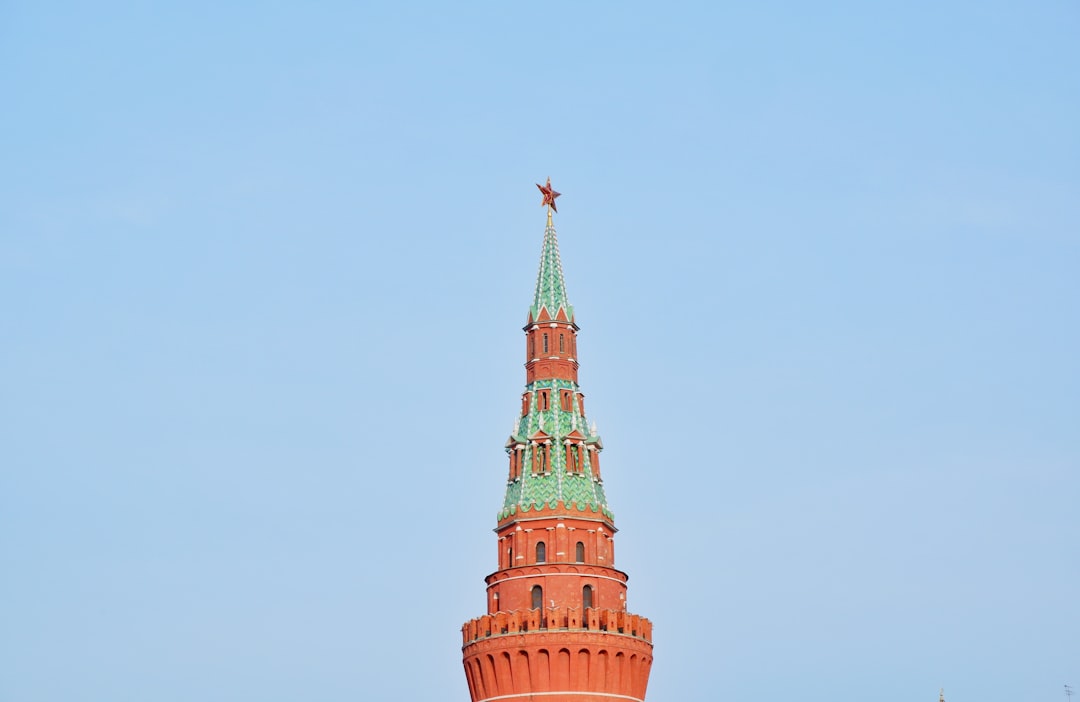
To understand today's headlines, we must look at yesterday's decisions. Victory Day holds profound significance for Russia, serving as the cornerstone of the Kremlin's historical narrative and national identity. The annual parade in Moscow's Red Square, featuring tanks, missiles, and marching soldiers, is watched by millions and represents the regime's most important propaganda spectacle.
That makes Ukraine's threat to target the parade all the more provocative. "We have the capability, and we have every right to respond to an aggressor on his own territory," said Mykhailo Podolyak, a senior adviser to President Zelensky, in comments to TVP World. "Moscow should not feel safe while Ukrainian cities are under bombardment."
The warning comes as Ukrainian long-range drone capabilities have expanded dramatically. In recent months, Ukrainian-designed drones have struck targets more than 1,000 kilometers inside Russia, including oil refineries, military airbases, and, on at least two occasions, luxury high-rise buildings in central Moscow.
"This is psychological warfare at its finest," said Michael Kofman, director of Russia studies at CNA, speaking from Washington. "Neither side expects these ceasefires to hold. They're messaging exercises designed for domestic and international audiences. Putin wants to appear as the peacemaker honoring a sacred holiday. Zelensky wants to demonstrate that Ukraine won't be dictated to."
The conflicting ceasefires highlight the fundamental disconnect between the two sides. Russia continues to frame the war as a defensive operation against Western aggression and Nazi sympathizers, while Ukraine views it as an existential struggle for national survival against an imperial aggressor.
For Russian officials, the possibility of drones over Red Square during the Victory Day parade represents a nightmare scenario. The event typically draws tens of thousands of spectators, including elderly veterans, and is attended by the entire Russian political elite. A successful strike would represent both a security failure and a devastating symbolic blow.
Moscow has already deployed additional air defense systems around the capital and announced that the parade route will be shortened. Some Western intelligence officials believe the Kremlin may cancel portions of the celebration entirely, though doing so would itself be seen as a victory for Kyiv.
The propaganda dimension of this confrontation cannot be overstated. Victory Day serves as the foundation myth of the modern Russian state, the moment when Soviet heroism and sacrifice defeated fascism. President Putin has consistently invoked this legacy to justify the war in Ukraine, claiming to fight modern "Nazis" in Kyiv.
For Ukraine, disrupting that narrative strikes at the heart of the Kremlin's legitimacy. "Our grandfathers fought against Hitler," President Zelensky said in his nightly address. "Now we fight against those who dishonor their memory by waging wars of conquest."
Whether either ceasefire will be observed remains to be seen. Historical precedent offers little hope. Previous attempted pauses, including Orthodox Christmas truces in 2024 and 2025, collapsed within hours amid mutual accusations of violations. Both sides have powerful incentives to continue operations regardless of announcements from distant capitals.
As May 9 approaches, residents of Moscow face an unfamiliar anxiety. For the first time since 1945, the city that celebrates victory over an existential threat now finds itself potentially in the crosshairs. It is an irony that would not be lost on the Soviet veterans who defeated the Nazis eight decades ago, only to see their descendants locked in another catastrophic European war.