The European Union has issued formal guidance recommending that member states exclude Chinese telecommunications giants Huawei and ZTE from critical digital infrastructure, marking a significant hardening of Brussels' position on cybersecurity and technological sovereignty.
The non-binding recommendation, published Monday by the European Commission's Directorate-General for Communications Networks, stops short of an outright ban but strongly urges the bloc's 27 member states to phase out equipment from the two Chinese firms in sectors deemed essential to national security, including energy grids, transportation systems, and government communications networks.
"We are not mandating specific vendors be excluded," said Thierry Breton, the EU's Internal Market Commissioner, at a press conference in Brussels. "However, our assessment is clear: in critical infrastructure, the risks associated with vendors subject to non-EU legal frameworks, particularly those lacking democratic accountability, are unacceptable."
To understand today's headlines, we must look at yesterday's decisions. The recommendation represents the culmination of a five-year debate within Europe over how to balance economic ties with China against national security concerns amplified by Washington. The United States has long pressed its allies to ban Huawei and ZTE, arguing that Chinese law compels companies to cooperate with intelligence services, creating backdoor vulnerabilities.
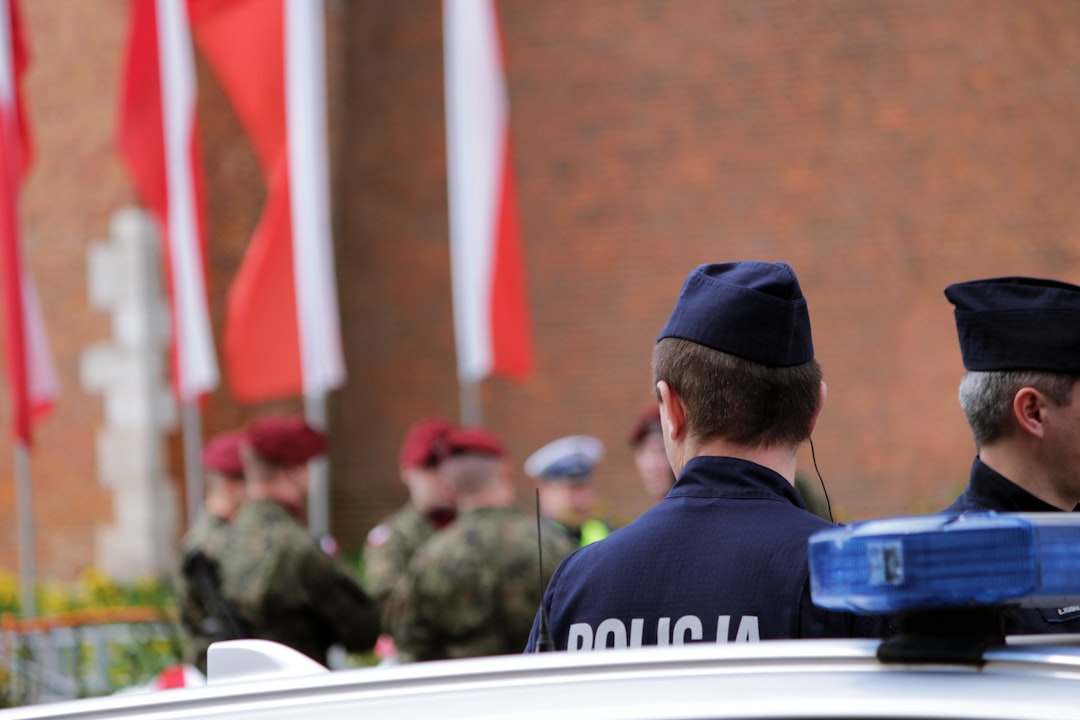
European nations have responded unevenly. Poland, the Czech Republic, and the Baltic states moved early to restrict Chinese telecom equipment, citing security threats. Germany, France, and Italy, with deeper commercial ties to Beijing, have been more hesitant, implementing partial restrictions while allowing Huawei to participate in non-core network components.
The new guidance attempts to create a unified European approach without trampling on member states' sovereignty over national security decisions. It identifies ten categories of "critical digital infrastructure" where high-risk vendors should be avoided, while leaving implementation timelines and enforcement mechanisms to individual governments.
"This is classic EU bureaucracy," said Georgina Wright, deputy director for international studies at the Institut Montaigne in Paris. "They want to appear tough on China without actually mandating anything that might trigger Beijing's retaliation against European companies operating in China."
Indeed, China's response was swift and pointed. Foreign Ministry spokesperson Mao Ning accused the EU of "discriminatory practices" and warned that European companies could face "reciprocal measures" if member states implement bans. Chinese state media characterized the move as evidence of Brussels "kowtowing to American pressure."
Huawei, which has repeatedly denied posing security risks and claims its equipment undergoes rigorous testing, issued a statement expressing "deep disappointment" with the recommendation. "We have served European customers for 20 years without a single proven instance of malicious activity," the company said. "This decision is based on geopolitics, not evidence."
The financial implications are substantial. European telecommunications operators have invested heavily in Huawei and ZTE equipment, attracted by lower costs compared to European competitors like Nokia and Ericsson. Replacing installed gear could cost operators an estimated €15 billion across the bloc, expenses likely to be passed on to consumers through higher prices.
For Huawei, Europe represents one of its largest markets outside China. The company generated approximately €18 billion in European revenue in 2025, with significant operations in Germany, Spain, and France. A widespread ban would deliver a serious blow to its global ambitions, already damaged by U.S. sanctions that have curtailed access to advanced semiconductor technology.
The recommendation also reflects Europe's evolving strategic calculus. The Ukraine war, tensions in the Taiwan Strait, and China's deepening partnership with Russia have accelerated a reassessment of economic dependencies on authoritarian regimes. European officials increasingly frame technological sovereignty as a matter of existential importance.
"We learned the hard way with Russian gas that over-reliance on strategic rivals is dangerous," said Radosław Sikorski, Poland's foreign minister. "We cannot make the same mistake with Chinese technology that controls our critical systems."
Yet divisions within the EU remain. Hungary, which has cultivated close economic ties with Beijing, has already indicated it will not follow the guidance. Germany's new coalition government is split, with the Greens pushing for tougher measures while the business-friendly Free Democrats warn against jeopardizing trade relations.
The ultimate test will be implementation. Without binding enforcement, the recommendation risks becoming what Brussels is often accused of producing: well-intentioned paperwork with limited real-world impact. For Huawei and ZTE, however, the signal is clear: Europe's doors are closing, slowly but decisively.