
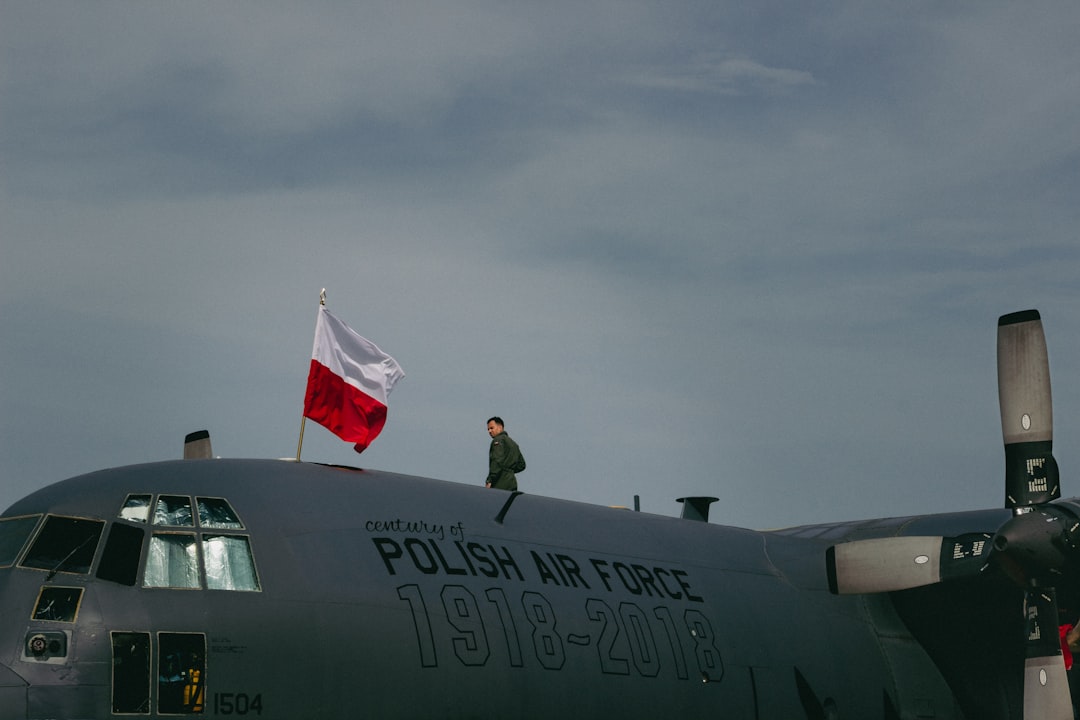
Donald Tusk announced Monday that Poland will eventually pursue its own nuclear weapons capability, marking a dramatic shift in Polish defense policy and sending shockwaves through Europe's security architecture.The Polish Prime Minister's statement, <link href="https://www.bloomberg.com/news/articles/2026-03-03/poland-will-eventually-seek-its-own-nuclear-weapons-tusk-says">reported by Bloomberg</link>, came just days after French President Emmanuel Macron offered to extend France's nuclear umbrella to Poland and other European allies. Tusk's response suggests that while Warsaw welcomes French protection, Polish leaders have concluded that only sovereign nuclear capability can truly guarantee the nation's security."We are arming ourselves together with our friends so that our enemies do not dare to attack us," Tusk said, acknowledging France's nuclear cooperation offer while making clear Poland's long-term strategic calculus. The statement represents a fundamental reassessment of Polish security doctrine in the face of persistent Russian threats and growing uncertainty about Western defense commitments.In Poland, as across Central Europe, history is never far from the surface—and neither is the memory of occupation. The decision to pursue nuclear weapons reflects decades of Polish experience with security guarantees that failed to materialize when needed most, from the betrayal at Yalta to the long years under Soviet domination.Macron's proposal, announced from France's nuclear submarine base at Île Longue, would deploy French nuclear-capable Rafale aircraft across Europe, potentially including Polish territory. But the French president emphasized a critical limitation: "There will be no sharing of the ultimate decision." Only Paris would control whether nuclear weapons are actually deployed—a constraint that appears to have convinced Tusk that Poland cannot rely solely on borrowed deterrence.The timing of Tusk's announcement is significant. Russian President has repeatedly threatened nuclear escalation over , while questions persist about American commitment to European security under changing administrations. For Polish leaders, who live on NATO's eastern frontier and maintain a 210-kilometer border with Russian , these are not abstract concerns but matters of national survival. has already embarked on Europe's most ambitious conventional military buildup, with defense spending reaching 4 percent of GDP—nearly double the NATO target. The country has ordered hundreds of tanks, artillery systems, and fighter aircraft, transforming itself into a regional military power. Adding nuclear weapons would complete this transformation and fundamentally alter European security dynamics.The move carries substantial risks. Pursuing nuclear weapons would place in violation of the Nuclear Non-Proliferation Treaty, potentially triggering international sanctions and diplomatic isolation. It would almost certainly provoke Russian countermeasures, including expanded nuclear deployments in and . And it would test the limits of NATO solidarity, as some Western European allies may view Polish nuclear ambitions as destabilizing.Yet from Warsaw's perspective, these risks may be preferable to remaining dependent on security guarantees from distant capitals. Polish leaders remember that and declared war on in 1939 to defend Polish sovereignty but could provide no meaningful military assistance. They remember that Western leaders negotiated Poland's postwar fate with without Polish participation. These historical experiences shape how contemporary Polish leaders assess the reliability of alliance commitments.The question now is whether Tusk's statement represents serious policy intent or negotiating leverage. Some analysts suggest may be using the nuclear threat to extract stronger security commitments from NATO allies, including permanent deployment of American nuclear weapons on Polish soil or full participation in NATO's nuclear sharing arrangements currently limited to five Western European countries.But the Prime Minister's language suggests a genuine strategic shift. By saying will seek nuclear weapons rather than immediately, Tusk leaves room for Western allies to demonstrate their commitment through concrete actions. If those actions prove insufficient, however, appears prepared to join the nuclear club—whether the West approves or not.The announcement has already sparked intense debate across . Germany's defense minister declined to comment, while officials in warned against nuclear proliferation. In , however, there appears to be broad political consensus that Poland's security cannot depend indefinitely on the goodwill of others.For a nation that spent much of the 20th century as the battleground of greater powers, the appeal of nuclear deterrence is understandable. Whether actually follows through remains uncertain. But Tusk's statement ensures that European security debates can no longer ignore the question of whether Eastern European nations will seek their own nuclear arsenals—and what it means if they do.
|