
**WARSAW** — Poland has entered the ranks of the world's 20 largest economies, according to recent economic data, marking a watershed moment in the nation's post-communist transformation and underscoring the remarkable journey from Soviet satellite state to European economic powerhouse.
The achievement places Poland alongside established Western economies and represents more than just numbers on a balance sheet. It reflects three and a half decades of economic restructuring, painful reforms, strategic EU integration, and the resilience of a society that remembers breadlines and martial law.
In Poland, as across Central Europe, history is never far from the surface—and neither is the memory of occupation. The country's economic ascent carries particular weight for a nation that, within living memory, experienced both Nazi and Soviet domination, followed by decades of communist economic mismanagement.
## From Solidarity to Economic Success
The transformation began in 1989, when Poland became the first Soviet bloc country to break free from communist rule. The Solidarity movement, led by Lech Wałęsa, negotiated a peaceful transition that would reshape not only Poland but inspire democratic movements across Eastern Europe.
What followed was what economists call "shock therapy"—rapid privatization, market liberalization, and painful economic restructuring. Unemployment soared. State enterprises collapsed. Entire industrial cities faced devastation as inefficient communist-era factories closed.
Yet Poland persevered. Unlike Russia, which saw its GDP collapse in the 1990s, Poland maintained relatively steady growth. By 1992, it was already seeing positive economic expansion. The country was creating a market economy from scratch, building institutions, establishing rule of law, and integrating with Western economic structures.
"What Poland achieved is historically unprecedented," said Dr. Marcin Piątkowski, an economist at the World Bank and author of books on Poland's economic transformation. "No other large economy has grown so consistently for so long after emerging from communism."
## The EU Dividend
Poland's accession to the European Union in 2004 proved transformative. EU structural funds poured into infrastructure—highways, railways, airports. Polish workers gained access to Western European labor markets. Polish companies integrated into European supply chains.
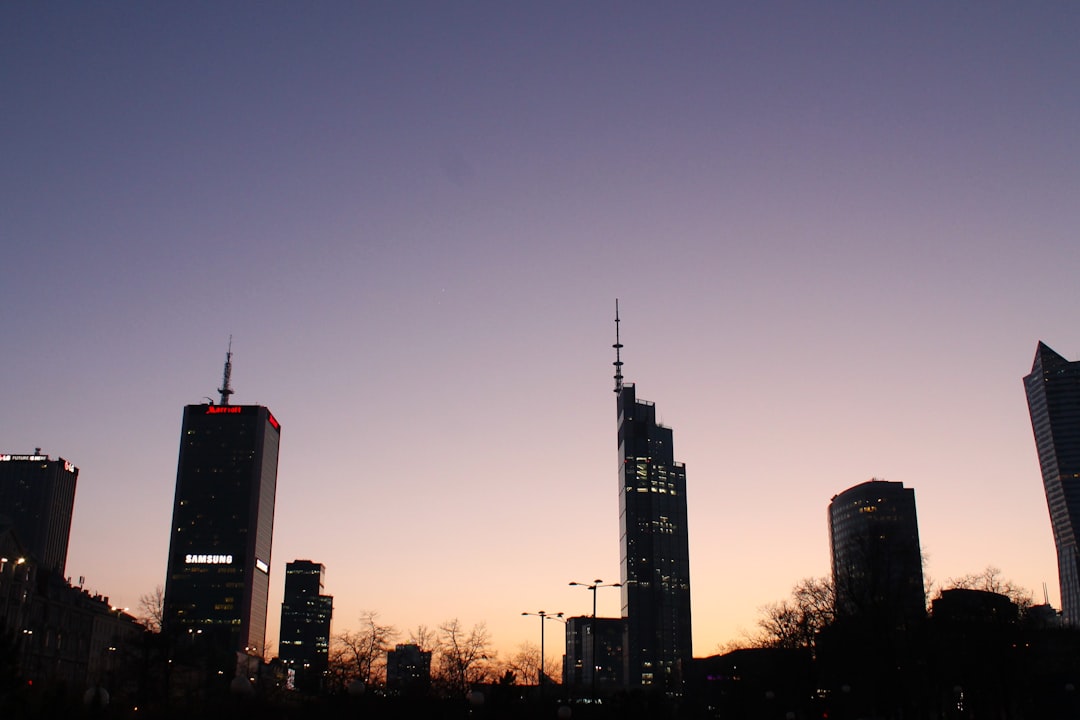
The results are visible. Drive from the German border toward Warsaw and modern highways stretch across the landscape where rutted roads once dominated. Cities like Kraków and Wrocław have transformed into technology hubs. Warsaw's skyline now bristles with glass towers housing multinational corporations and Polish financial institutions.
Between 2004 and 2024, Poland was the fastest-growing economy in the EU. It was also the only EU member to avoid recession during the 2008-2009 global financial crisis—a remarkable achievement that earned it the nickname "Green Island" amid a sea of economic contraction.
EU membership brought not just funds but institutional frameworks, regulatory standards, and access to the world's largest single market. Poland absorbed more EU structural funds than any other member state, investing heavily in infrastructure and human capital development.
## The Democratic Tension
Yet economic success has not resolved Poland's internal tensions. The very period of Poland's fastest growth coincided with increasing concerns about democratic backsliding under the Law and Justice (PiS) government, which governed from 2015 to 2023.
While GDP grew, PiS implemented controversial judicial reforms that the EU deemed violations of rule of law. Brussels froze billions in recovery funds. The tension illustrated a fundamental challenge: Poland benefited enormously from EU integration while significant portions of the population embraced nationalist politics skeptical of Brussels.
The dichotomy reflects Poland's regional divide. Warsaw, Wrocław, and Kraków—cosmopolitan, prosperous, EU-oriented—voted for liberal, pro-European parties. Smaller towns and rural areas, where economic transformation often meant factory closures and emigration, supported PiS's conservative nationalism and generous social spending.
"Poland's economic success story is real, but it's unevenly distributed," noted Dr. Anna Gromada, a sociologist at the Polish Academy of Sciences. "You have islands of prosperity in major cities and regions that still struggle with unemployment and depopulation."
The election of Donald Tusk's coalition government in 2023 represented a shift back toward EU alignment, with judicial reforms and release of frozen EU funds now underway. Yet the political tensions that defined the PiS era remain.
## Challenges Ahead
Poland's entry into the top 20 economies comes amid significant challenges. The country faces labor shortages as birth rates decline and emigration continues. Its energy sector remains heavily dependent on coal, creating tension with EU climate commitments. The war in neighboring Ukraine has brought both economic opportunities—Poland serves as a logistics hub for Western aid—and security concerns.
Inflation has proven stubborn, reaching double digits in recent years before moderating. Housing costs in major cities have soared beyond the reach of young Poles. The social contract that sustained Poland's transformation—the promise that hard work and education would deliver prosperity—faces new strains.
Yet Poland's advantages remain substantial. It has a highly educated workforce, strategic location at the crossroads of Europe, and strong industrial base in automotive, IT, and business services sectors. Foreign direct investment continues to flow, attracted by skilled workers and EU market access.
## Historical Reckoning
For Poles old enough to remember communism, the achievement carries profound emotional weight. They remember the empty shops of the 1980s, the queues for basic goods, the sense of economic hopelessness.
Janusz Lewandowski, who served as Poland's first privatization minister in the 1990s and later as EU Budget Commissioner, reflected on the transformation: "We built a market economy and democratic institutions simultaneously while maintaining social cohesion. It wasn't perfect, but it worked."
The question now is whether Poland can maintain this success while addressing its democratic challenges, energy transition, and regional inequalities. The country that emerged from communism to join the world's economic elite must now prove it can sustain that achievement while preserving the democratic values that made the transformation possible.
In Poland, as across Central Europe, history is never far from the surface—and neither is the awareness that economic success, however remarkable, remains fragile without strong democratic institutions to sustain it.