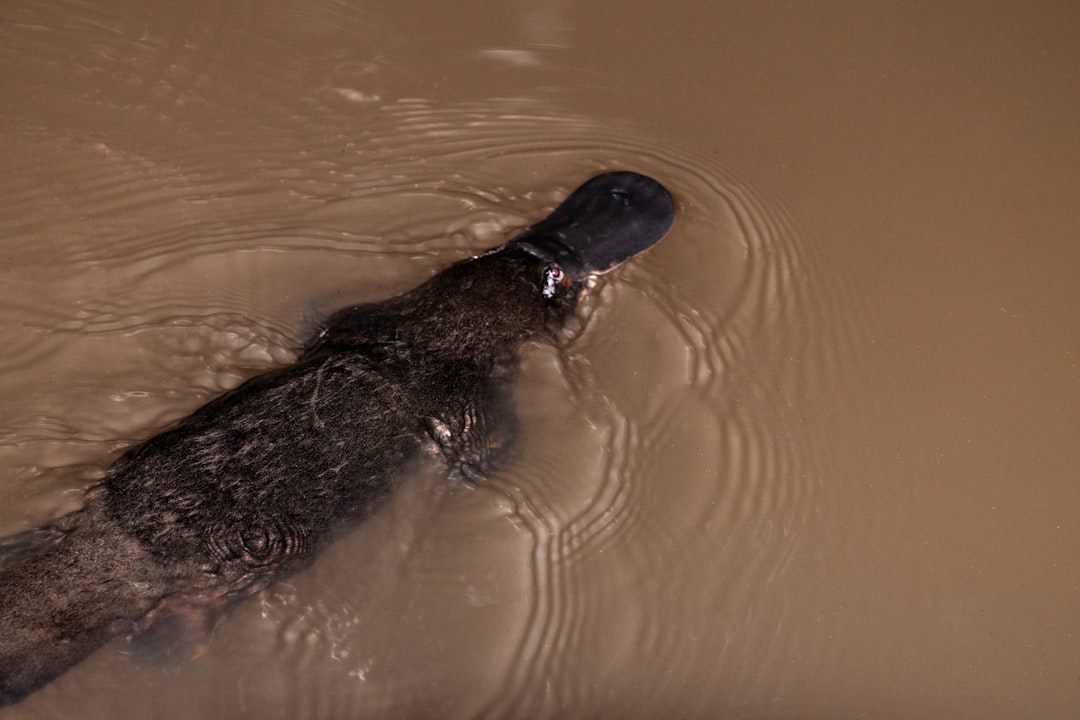
Just when you thought the platypus couldn't get any stranger, it has delivered again. Researchers examining platypus fur under electron microscopes have discovered hollow melanosomes - the cellular structures that contain color pigments - a feature previously found only in birds and never before seen in any other mammal.
For the uninitiated: platypuses are already the weirdos of the mammal world. They lay eggs. They have venomous spurs. They sense prey using electroreception. They have ten sex chromosomes. And their genome is a bizarre mosaic of bird, reptile, and mammal genes. Finding yet another bird-like feature in their biology is both surprising and, somehow, perfectly on-brand.
Melanosomes are tiny organelles inside pigment cells that contain melanin, the molecule responsible for coloration in hair, skin, and feathers. In most mammals, melanosomes are solid, roughly oval-shaped structures packed with melanin granules. But in birds - particularly those with iridescent feathers - melanosomes can be hollow, with melanin arranged in layers that create structural color through light interference.
The research team, publishing in Biology Letters, found that platypus hair contains these hollow melanosomes interspersed among the normal solid ones. Importantly, they checked echidnas - the only other living monotremes (egg-laying mammals) - and found no such structures. This is a platypus-specific trait.
Why would a platypus evolve hollow melanosomes? That's the fascinating part - we don't know yet. In birds, the hollow structure often relates to producing iridescent colors, which are used in display and communication. Platypuses aren't exactly known for flashy coloration; their fur is a practical brown. They're also semi-aquatic and largely nocturnal, which doesn't seem to favor visual display.
One possibility is that the hollow structure affects the physical properties of the fur itself, rather than just color. Hollow structures can be lighter while maintaining strength - think of bird bones, which are hollow and remarkably strong for their weight. Perhaps hollow melanosomes make platypus fur more efficient for thermoregulation in water, or affect its water-repellent properties.
Another angle: this could be an evolutionary remnant. Platypuses split from other mammals around 166 million years ago, before the extinction of most dinosaurs. They retain a mosaic of ancient traits. Perhaps hollow melanosomes were present in early mammalian ancestors and were lost in the lineages that became modern placental and marsupial mammals, but retained in the platypus lineage.