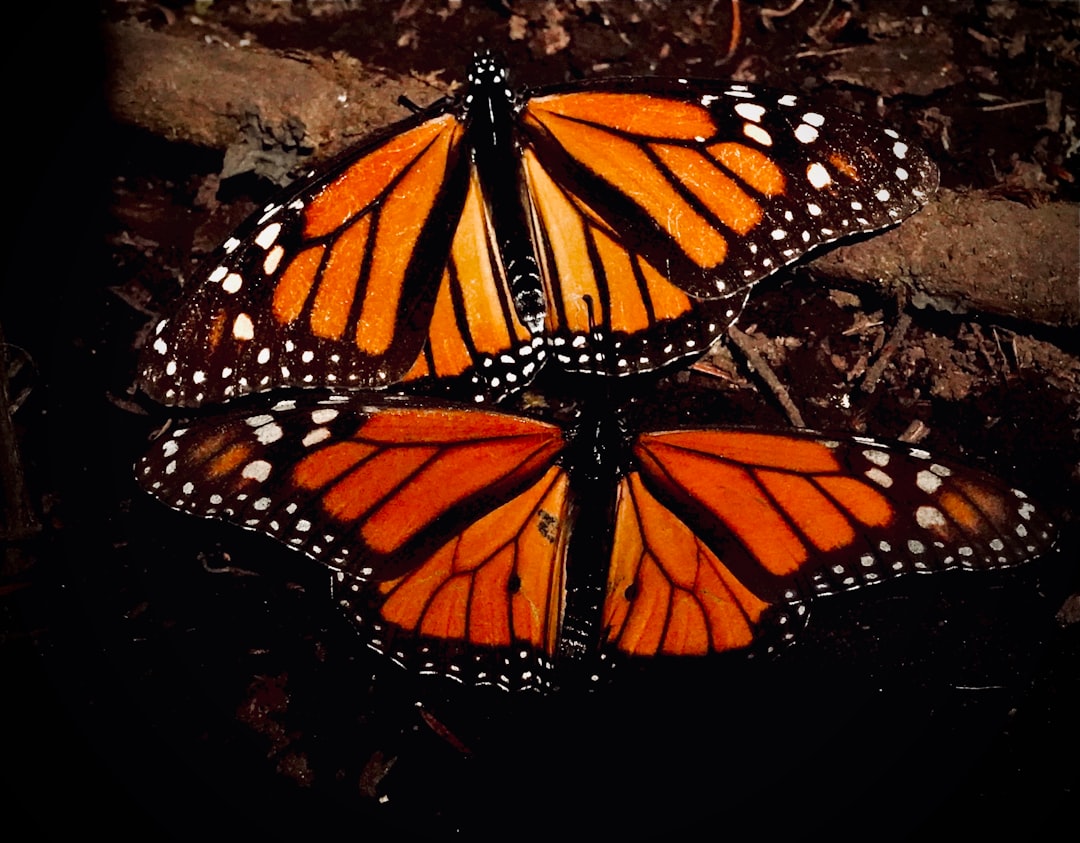
The epic journeys of migratory animals have long captured human imagination—caribou crossing Arctic tundra, wildebeest thundering across the Serengeti, monarch butterflies traveling thousands of miles. Yet billions of insects undertake migrations we barely understand, crossing oceans and navigating by celestial patterns in journeys that rival any vertebrate odyssey.
New research reveals that insect migration operates on a scale and sophistication previously underestimated. Moths navigate using star patterns, butterflies cross open ocean, and dragonflies undertake multi-generational journeys spanning continents. These movements, documented by researchers combining radar tracking, genetic analysis, and field observations, demonstrate navigation capabilities that challenge our understanding of insect cognition.
The painted lady butterfly (Vanessa cardui) epitomizes this hidden marvel. These delicate creatures undertake round-trip migrations between Europe and sub-Saharan Africa, traversing the Mediterranean Sea and Sahara Desert. Some populations cross the Atlantic Ocean, arriving in South America after journeys exceeding 4,000 miles. Unlike monarch butterflies, which complete their migration over multiple generations, individual painted ladies survive the entire journey—a feat requiring precise navigation and extraordinary endurance.
Moths employ stellar navigation systems worthy of ancient mariners. Silver Y moths (Autographa gamma) migrate at high altitudes during moonlit nights, orienting themselves using star positions and the Milky Way. Radar studies reveal these insects maintain remarkably straight flight paths across hundreds of miles, adjusting their heading to compensate for wind drift—behavior suggesting sophisticated spatial awareness.
Dragonfly migrations rival those of birds in distance. Globe skimmer dragonflies (Pantala flavescens) undertake a multi-generational migration spanning 11,000 miles across the Indian Ocean, from India to East Africa and back. Individual dragonflies may travel 4,000 miles, breeding en route and passing migration responsibilities to offspring—a relay system spanning continents and generations.