
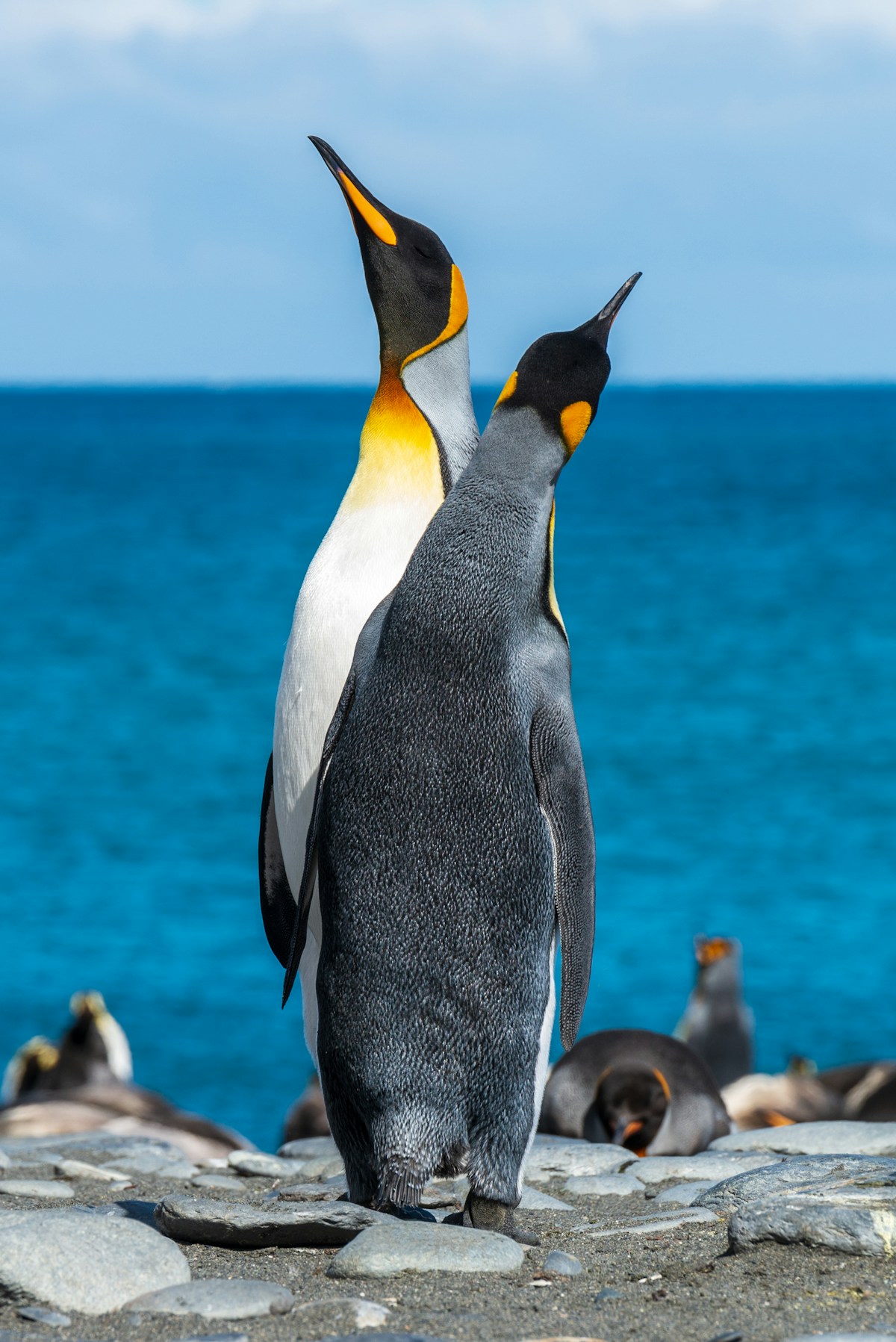
Emperor penguins waddling across Antarctic ice might seem far removed from industrial pollution, yet these charismatic birds have become unwitting sentinels of global contamination, revealing that synthetic forever chemicals have reached even Earth's most isolated ecosystems.
Scientists analyzing penguin blood and tissues discovered measurable levels of PFAS—per- and polyfluoroalkyl substances known as "forever chemicals" for their environmental persistence—in populations thousands of miles from any industrial source. The findings demonstrate that nowhere on Earth remains untouched by human chemical pollution, even regions with virtually no local human activity.
PFAS are synthetic compounds used in everything from non-stick cookware to firefighting foam, prized for their resistance to heat, water, and degradation. Those same properties make them environmental nightmares—they don't break down naturally, accumulate in living organisms, and have been linked to cancer, immune system problems, and developmental issues in humans.
Penguins serve as effective "toxicologists" because they occupy high positions in Antarctic food webs, consuming fish and krill that accumulate chemicals from lower trophic levels. By analyzing penguin tissues, researchers can assess contamination throughout entire ocean ecosystems without sampling thousands of individual species.
The research team found PFAS compounds in penguins from multiple Antarctic locations, indicating widespread distribution throughout Southern Ocean waters. The chemicals likely reach Antarctica through atmospheric transport—evaporating from industrial regions, traveling in air currents, and depositing via precipitation—and through ocean currents carrying contaminated water from lower latitudes.
In nature, as across ecosystems, every species plays a role—and humanity's choices determine whether the web of life flourishes or frays. The presence of industrial chemicals in Antarctic penguins reveals how thoroughly human activity has transformed global biogeochemical cycles, spreading synthetic compounds to places no human has manufactured anything.
The Antarctic findings carry implications beyond penguin conservation. If PFAS contamination reaches the planet's most remote ecosystems, it confirms these chemicals' truly global distribution. Humans everywhere face exposure through drinking water, food chains, and environmental contact, making PFAS contamination a universal health concern rather than a localized industrial problem.
Penguins face enough challenges without adding chemical pollution. Climate change is rapidly transforming Antarctic ecosystems, melting sea ice that penguins depend on for breeding and foraging. Emperor penguins recently experienced catastrophic breeding failures when ice platforms collapsed prematurely, drowning entire cohorts of chicks. Adding toxic chemical exposure to climate stress compounds threats to already vulnerable populations.
The research also demonstrates wildlife's value for environmental monitoring. Penguins provide early warning of contamination that will eventually affect humans. Traditional monitoring requires expensive equipment and extensive sampling, while analyzing wildlife tissues offers cost-effective assessment of ecosystem-wide pollution.
Regulatory efforts to restrict PFAS use are expanding globally, but legacy contamination will persist for decades or centuries given these chemicals' resistance to degradation. The compounds already released will continue circulating through air, water, and food webs regardless of future manufacturing restrictions.
Scientists are calling for expanded monitoring of PFAS in polar regions and marine ecosystems, better understanding of how these chemicals transport globally, and research into their ecological effects at the levels detected in wildlife. They're also pushing for stronger international agreements restricting PFAS production and use.
For emperor penguins, already classified as vulnerable to extinction due to climate change, chemical contamination represents another stressor in an increasingly challenging world. Their role as unwitting toxicologists reveals truths about planetary contamination that demand urgent attention—not just for penguins, but for the global ecosystems, and human health, we all share.