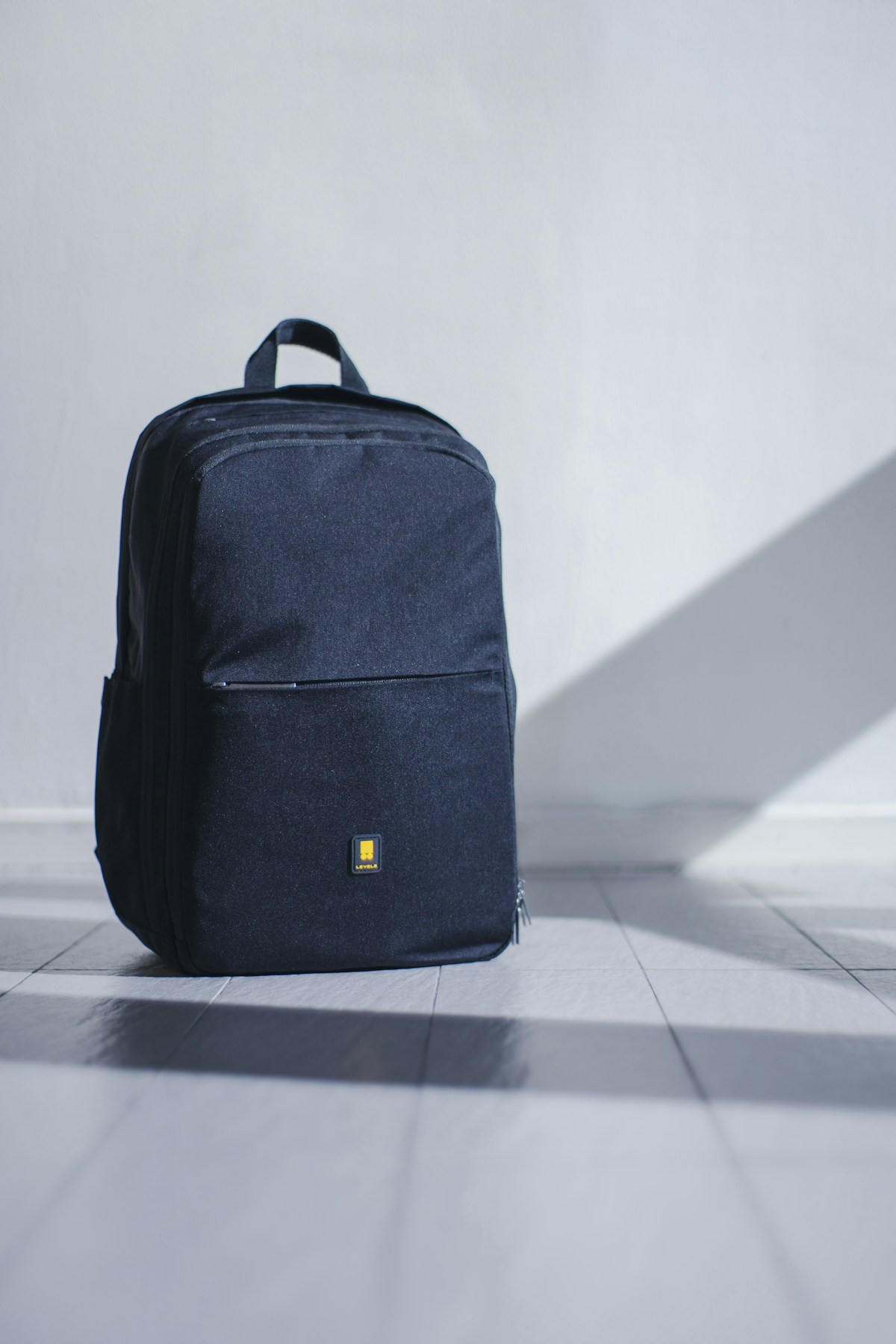
If you bought a backpack labeled "45 liters" and discovered it actually holds 25.5 liters, would you feel misled? One traveler's careful measurements suggest that's exactly what's happening with Patagonia's popular Black Hole MLC 45L—and it's raising questions about how outdoor brands calculate and advertise pack capacity.
In a detailed post on r/onebag, a one-bag traveler measured the internal dimensions of the Patagonia Black Hole MLC 45L and the Cotopaxi Allpa 42L to understand why other threads suggested the Cotopaxi could fit more gear despite having a smaller advertised capacity.
The findings are striking: Patagonia's "45L" bag measures approximately 25.5L in the main compartment, while Cotopaxi's "42L" Allpa holds about 33.75L total across its compartments.
The methodology
The traveler measured the largest internal compartments with a ruler, using length × width × height to calculate volume. For the Patagonia MLC 45L, with "all the buckle ties relaxed," the main compartment measured 15cm × 50cm × 34cm = 25.5 liters. The remaining compartments were "basically flat" and added minimal capacity.
The Cotopaxi Allpa 42L had two main compartments: one measuring 15cm × 50cm × 30cm (22.5L) and another measuring 10cm × 45cm × 25cm (11.25L), totaling 33.75 liters.
To verify these measurements against advertised exterior dimensions, the poster checked Patagonia's website. The MLC 45L's full exterior size is listed as 56cm × 37cm × 19cm = 39.4 liters—not even the advertised 45L.
The same discrepancy appears with Patagonia's 55L Black Hole Duffel, which measures 58cm × 34cm × 24cm externally = 47.3 liters, not 55L as advertised.
Why this matters
For travelers buying bags based on advertised capacity—especially those trying to maximize carry-on space or meet airline requirements—these discrepancies are significant. If you're choosing between a 45L and a 42L bag assuming the 45L will hold more, but the 42L actually has greater capacity, you're making a purchasing decision based on misleading information.
The one-bag travel community obsesses over capacity because it directly impacts what you can carry. A few liters can mean the difference between fitting everything or needing to check a bag. When advertised capacities don't reflect actual usable space, it undermines informed purchasing.
How are pack capacities measured?
The outdoor industry doesn't have a standardized method for measuring pack capacity. Some brands measure exterior dimensions and calculate volume. Others measure interior space with the pack fully expanded. Some stuff packs with foam peanuts or beans to measure actual capacity. Some use computer modeling.
Patagonia hasn't publicly detailed their methodology, but the discrepancy suggests they may be calculating based on exterior dimensions or theoretical maximum capacity rather than realistic usable space.
Cotopaxi's numbers, while closer to measured capacity, also show variance—the bag holds less than its exterior dimensions suggest, likely due to padding, structure, and unusable corner space.
What commenters said
The post generated 23 comments, mostly from one-bag travelers sharing similar frustrations. Several people noted they'd noticed the Patagonia MLC felt smaller than advertised but hadn't measured it precisely.
One commenter pointed out that different brands definitely use different measurement standards: "Osprey tends to be accurate, but some brands just make up numbers. I've had 'liter' bags that were clearly nowhere close."
Another noted: "This is why I always look at actual dimensions now, not just the liter rating. Do the math yourself."
Several users shared experiences where they bought bags based on capacity claims only to discover they held significantly less than expected. One traveler bought a "50L" bag from a budget brand that measured out to around 35L actual capacity.
The consumer advocacy angle
This isn't just gear-nerd pedantry. When outdoor brands advertise specific capacities that don't match reality, it's a consumer protection issue. Travelers make purchasing decisions—sometimes spending $200-300 on premium bags—based on specifications that turn out to be inaccurate.
If a "45-liter" bag actually holds 25.5 liters, that's not a rounding difference or measurement variance—it's a fundamental misrepresentation of the product.
Patagonia has built a reputation on quality and ethical business practices. Discovering that their capacity ratings appear significantly inflated undermines that trust, even if the bags themselves are well-made.
The Cotopaxi comparison
Based on the measurements and other specs, the poster concluded: "the Cotopaxi Allpa 42L seems to be the clear winner." It holds more despite being advertised as smaller, and it meets carry-on requirements.
This aligns with frequent recommendations in the one-bag community, where the Allpa is praised for maximizing usable space. Apparently that reputation is backed by actual capacity, not just clever packing design.
What travelers should do
Until the outdoor industry adopts standardized capacity measurement, travelers should:
Check actual dimensions, not just liter ratings. Calculate volume yourself using length × width × depth.
Read reviews from one-bag travelers who've actually packed the bags and can speak to real capacity.
Compare across brands carefully. A "40L" from one manufacturer might hold more than a "50L" from another.
Prioritize brands known for accuracy. Osprey, for example, has a reputation for honest capacity ratings.
Buy from retailers with good return policies so you can test capacity at home before committing.
The best gear isn't about the number on the label—it's about what actually works when you're packing for a trip. Apparently with Patagonia's MLC 45L, what works is significantly less than the name suggests.
The best travel isn't about the destination—it's about what you learn along the way. Including learning that "45 liters" doesn't always mean 45 liters.