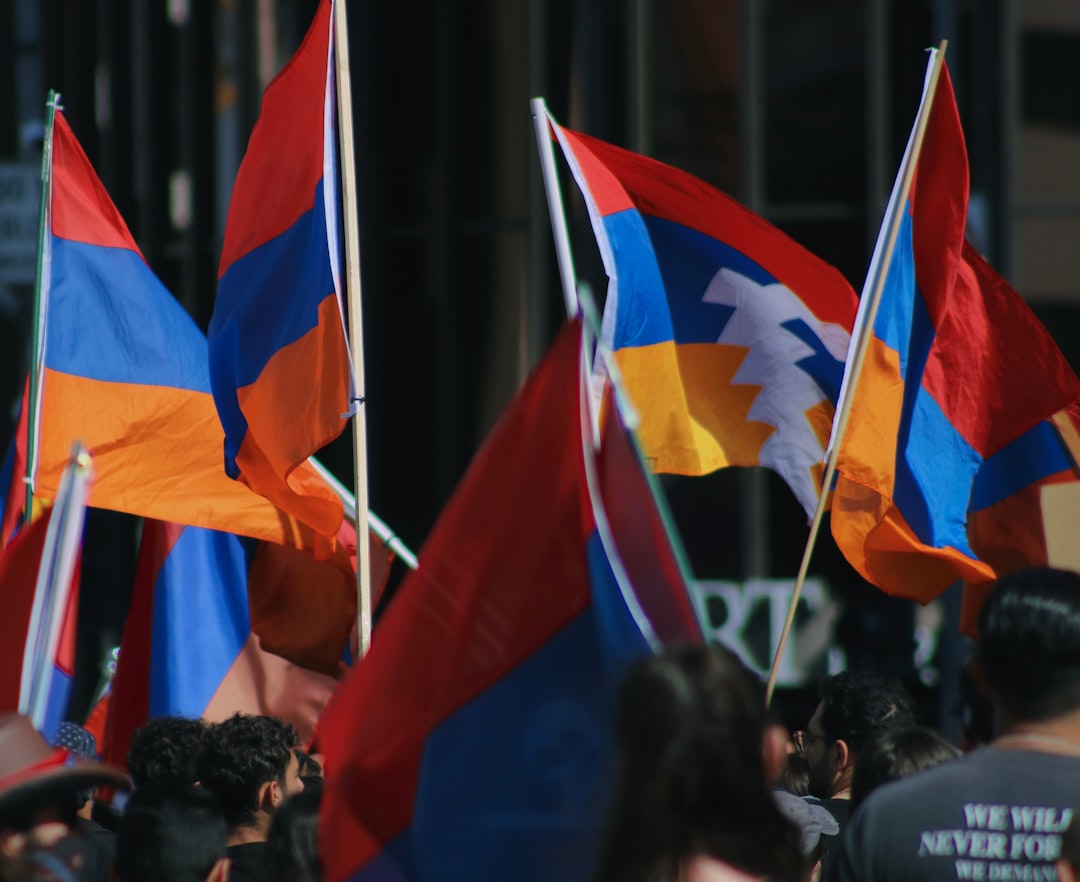
Armenia's Prime Minister Nikol Pashinyan warned Thursday that the country could face imminent war with Azerbaijan if opposition forces win the June 7 parliamentary elections, escalating pre-election rhetoric in a nation still reeling from territorial losses.
Speaking to reporters following a cabinet meeting, Pashinyan accused unnamed opposition parties of being "controlled from abroad" and seeking to revise the fragile peace established with Azerbaijan. "I want to say this very directly, without any pretense, that if the opposition wins it will be a war with the loss of not only territory but also sovereignty of the Republic of Armenia," the prime minister stated.
The warning comes as Armenia prepares for elections under the shadow of its 2020 military defeat in Nagorno-Karabakh and the subsequent September 2023 Azerbaijani offensive that led to the exodus of the region's ethnic Armenian population. Pashinyan has positioned himself as the architect of a "peace agenda" while facing criticism from opposition forces who accuse him of capitulating to Azerbaijani and Turkish demands.
Pashinyan claimed opposition parties have billions in assets in Russia and Belarus, suggesting they were pressured by foreign powers to undermine Armenian sovereignty. "They see that Armenia has become independent and have a problem with that because they are determined not to allow Armenia to be independent," he said, arguing that opposition leaders would preserve Armenia as a "peripheral state" rather than an independent nation.
The prime minister specifically criticized opposition rhetoric referencing Mount Ararat—a sacred Armenian symbol now in Turkey—and Dadivank monastery in Nagorno-Karabakh. "If we say 'Ararat is ours, Dadivank is ours,' what should prevent them from saying the same thing the opposite way?" Pashinyan argued, in an apparent reference to Azerbaijani claims to Armenian territory under the "Western Azerbaijan" narrative.
The European Union announced Monday it will send a "hybrid rapid response" team to Armenia in April to help counter potential foreign interference ahead of the elections. EU foreign affairs chief Kaja Kallas stated that "supporting the resilience of democracy in the region remains of paramount importance."
The mission, comprising nine to fourteen experts, will assist Armenia's National Security Council in developing crisis management plans and regulatory mechanisms to address cyberattacks and foreign information manipulation, according to documents obtained by Azatutyun.am. The team is expected to remain in Armenia for 10 to 15 days.
Pashinyan expressed confidence that his Civil Contract party would secure a constitutional majority, which he said would make regional peace processes "fully irreversible." However, his framing of the election as a choice between peace and war has drawn criticism from opposition supporters who view it as authoritarian fearmongering.
The June elections will serve as a referendum on Pashinyan's handling of relations with Azerbaijan and Turkey, his pivot toward Europe and away from traditional ally Russia, and his acceptance of territorial concessions that many Armenians consider national humiliation. The prime minister has initialed a peace treaty recognizing Azerbaijani territorial integrity based on the 1991 Almaty Declaration, a move opposition forces characterize as surrender.
In the Caucasus, as across mountainous borderlands, ancient identities and modern geopolitics create intricate patterns of conflict and cooperation. Armenia's election unfolds against competing pressures from Russia, Turkey, Azerbaijan, and Europe—each with distinct visions for the region's future. Whether voters will embrace Pashinyan's pragmatic peace or demand a harder line on territorial and historical claims remains the central question facing the South Caucasus nation.