
The relentless warming of the world's oceans is driving a "staggering" collapse in marine biodiversity, with cascading impacts threatening global food security and coastal livelihoods, according to new research that quantifies the devastating ecological toll of chronic ocean heating.
The study, reported in leading journals, documents accelerating losses across marine ecosystems as ocean temperatures continue their unprecedented climb. The research underscores that sustained thermal stress—not just extreme heatwave events—fundamentally disrupts marine food webs, reproduction cycles, and species distributions.
Ocean temperatures have absorbed more than 90% of excess heat trapped by greenhouse gas emissions since the 1970s, providing a crucial buffer against atmospheric warming but at enormous cost to marine ecosystems. The past decade saw the five hottest ocean years on record, with 2025 marking another record high. This chronic heating compounds acute marine heatwave events that now strike with increasing frequency and intensity.
The ecological consequences manifest across trophic levels. Phytoplankton—microscopic organisms forming the base of marine food chains—show distribution shifts toward cooler waters, disrupting nutrient cycles that support fisheries. Zooplankton populations exhibit similar migrations, creating mismatches between predators and prey that evolved over millennia.
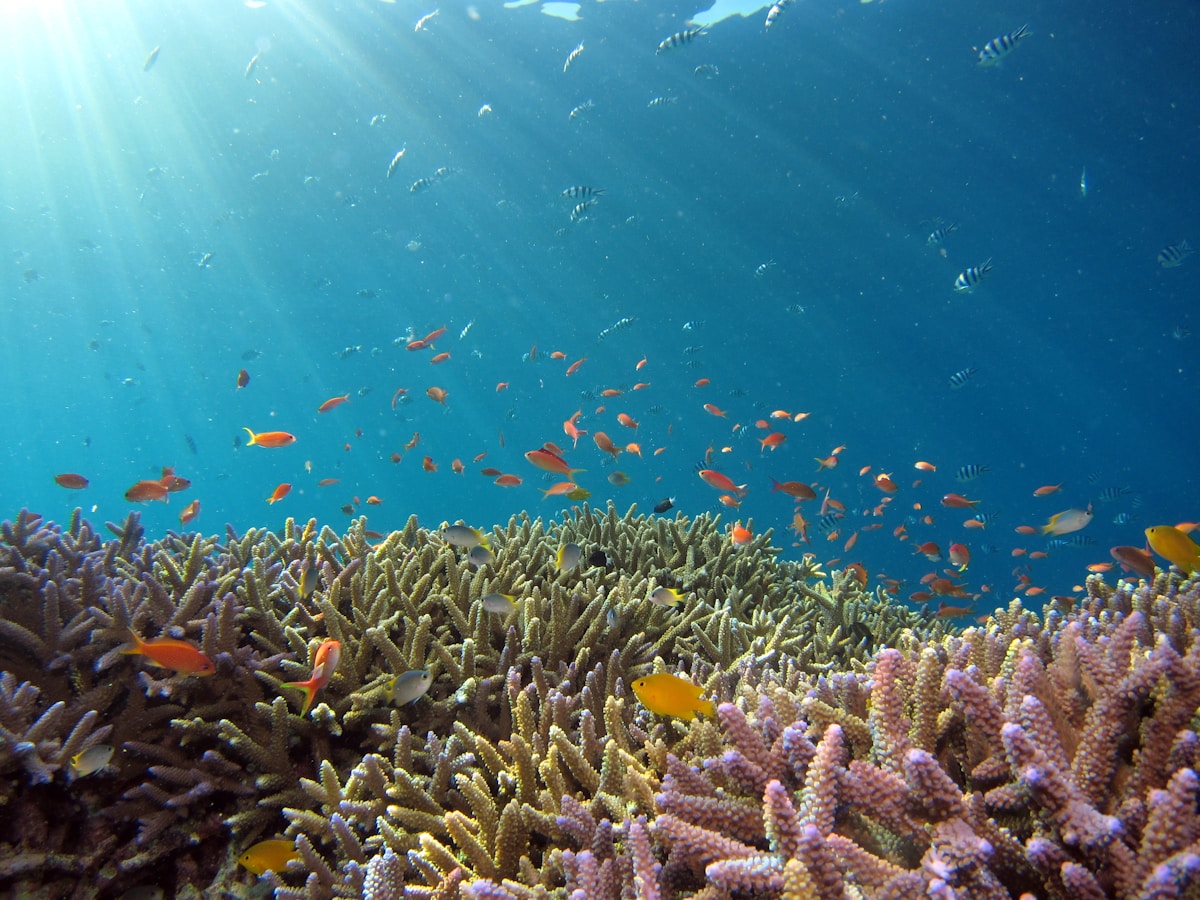
Coral reef systems face existential threat. The research documents that consecutive bleaching events now occur too frequently for reef recovery, particularly across the Great Barrier Reef, Caribbean, and Indian Ocean systems. When water temperatures exceed corals' thermal tolerance, symbiotic algae essential for coral survival are expelled, leaving bleached skeletons vulnerable to disease and death. These "rainforests of the sea" support 25% of marine species despite occupying less than 1% of ocean area.
Fish populations critical to food security show alarming declines and distribution shifts. Species migrate poleward and into deeper waters seeking cooler temperatures, disrupting traditional fishing grounds and threatening the 3.3 billion people who depend on seafood for protein. Small island developing states and coastal African and Asian communities face disproportionate impacts, amplifying existing vulnerabilities.
The research emphasizes that oxygen depletion—hypoxia—increasingly suffocates marine life as warming reduces oxygen solubility. "Dead zones" expand across coastal areas and open ocean, creating uninhabitable regions where fish cannot survive. The phenomenon particularly affects nutrient-rich upwelling zones off West Africa, Peru, and California that historically sustained productive fisheries.
In climate policy, as across environmental challenges, urgency must meet solutions—science demands action, but despair achieves nothing. The ocean biodiversity crisis demands immediate emissions reductions alongside marine protection strategies that build ecosystem resilience.
Marine protected areas (MPAs) covering at least 30% of oceans by 2030—the target agreed at the 2022 UN Biodiversity Conference—can provide refugia where ecosystems rebuild resilience against thermal stress. The High Seas Treaty, entering force this year, finally enables conservation in international waters comprising two-thirds of the ocean.
Innovative solutions show promise. "Blue carbon" ecosystems—mangroves, seagrasses, salt marshes—sequester carbon while providing nursery habitat for fish. Restoring these coastal ecosystems delivers climate mitigation and adaptation benefits simultaneously. The Coral Restoration Foundation and similar organizations pioneered coral gardening techniques that plant heat-tolerant coral varieties, though scalability remains challenged by warming pace.
Fisheries management reforms can ease pressure on stressed populations. Science-based catch limits, gear restrictions reducing bycatch, and seasonal closures during spawning periods all enhance population resilience. The European Union's reformed Common Fisheries Policy and Chile's strengthened management frameworks demonstrate that political will can reverse overfishing.
The research ultimately confirms what climate scientists have warned: ocean warming's ecological consequences unfold rapidly and catastrophically without immediate emissions cuts. The Paris Agreement's 1.5°C target remains physically possible but requires global emissions peaking immediately and declining 43% by 2030.
Every fraction of warming matters. The difference between 1.5°C and 2°C global heating translates to vastly different marine futures—the difference between damaged but recovering ecosystems and irreversible collapse. For the billions depending on ocean health for sustenance and survival, that difference is everything.