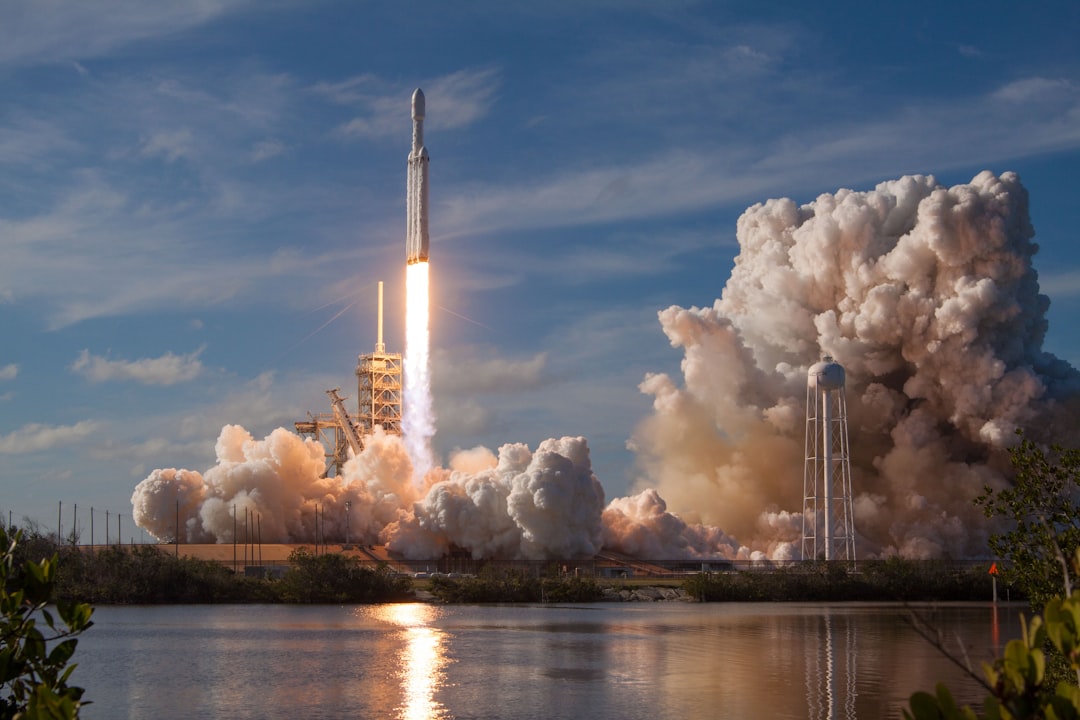
NASA formally announced plans for a $20 billion permanent lunar base at the Moon's south pole, marking humanity's transition from exploration to colonization of another world. Three uncrewed cargo missions—the first launching within months—will deliver critical infrastructure before astronauts set foot on the lunar surface.
The agency selected Jeff Bezos's Blue Origin to fly the first of three robotic landing missions this year, confirmed by NASA officials in a press briefing Monday. The announcement represents a milestone for Blue Origin, which has long competed against SpaceX for major NASA contracts but until now had not secured a marquee lunar mission.
"We're not just visiting the Moon anymore—we're moving in," said Nicky Fox, NASA's associate administrator for science missions. "These cargo flights will pre-position power systems, life support, and radiation shielding. By the time our astronauts arrive on Artemis III, the lights will already be on."
<h2>From Footprints to Foundations</h2>
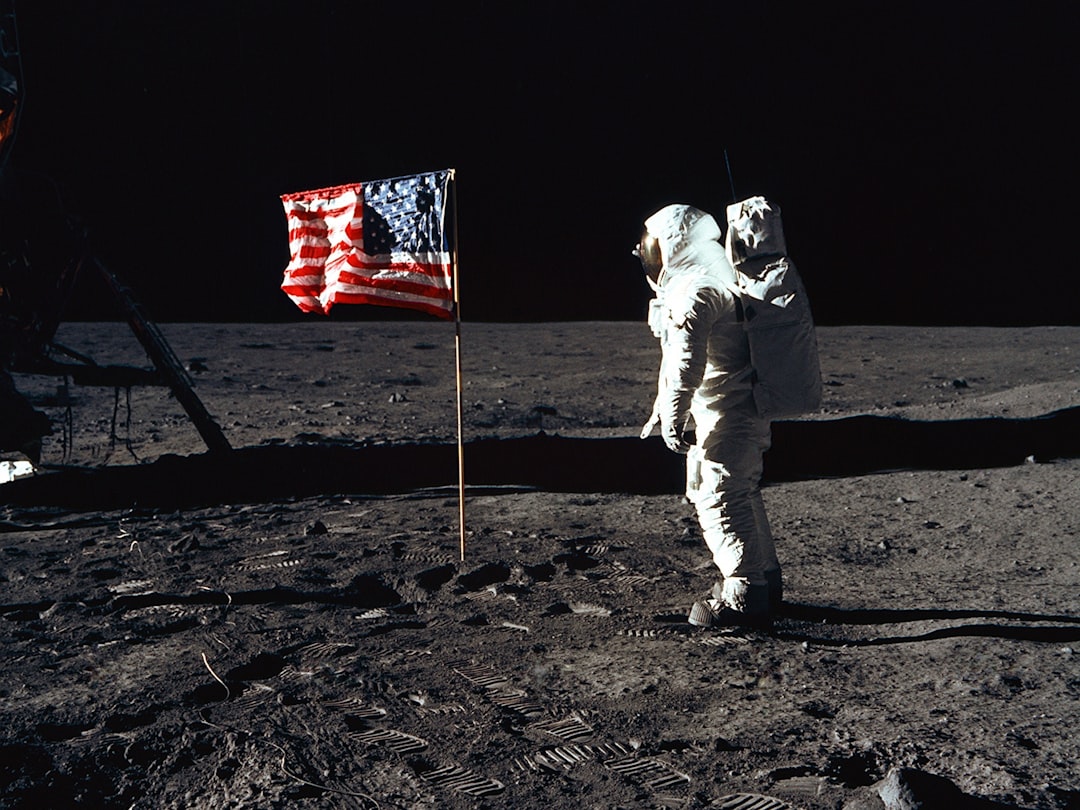
The lunar base plan differs fundamentally from the Apollo program's brief surface visits. Instead of flags and footprints, NASA aims to establish continuous human presence at the Moon's south pole, where permanently shadowed craters contain water ice deposits critical for sustaining long-duration missions.
NASA outlined what it calls an "Artemis Base Camp"—a network of pressurized habitats, power stations, and resource extraction facilities. The plan includes establishing a "perimeter" around the base site, raising immediate questions about territorial claims and the Outer Space Treaty of 1967, which prohibits national appropriation of celestial bodies.
"We're obviously very mindful of the Outer Space Treaty," acknowledged Jim Free, NASA's associate administrator for exploration systems. "What we're discussing is operational safety zones, not sovereignty. But yes, this is new legal territory—literally."
<h2>Commercial Partnerships Drive New Architecture</h2>
The lunar base strategy relies heavily on commercial partnerships, a sharp departure from Apollo's government-only approach. Blue Origin will deliver cargo using its Blue Moon lander, while SpaceX's Starship will transport crew and heavy equipment. Multiple commercial providers will compete for logistics contracts—essentially creating a lunar cargo delivery service.
This public-private model aims to reduce costs while accelerating development. NASA estimates the base will require 40-50 cargo missions over the next decade, creating sustained demand for commercial lunar transportation.
The first uncrewed mission, scheduled for late 2026, will deliver a nuclear fission power system capable of generating 40 kilowatts—enough to support a small outpost. Subsequent flights will carry habitat modules, excavation equipment for mining water ice, and a pressurized rover for long-range exploration.
<h2>Technical Challenges and Engineering Constraints</h2>
Establishing a permanent lunar presence poses unprecedented technical complexity. The Moon's south pole experiences two-week nights where temperatures plunge to -230°F (-150°C), requiring robust thermal management systems. The fine, abrasive lunar dust—electrostatically charged and impossible to fully exclude—threatens mechanical systems and human health.
Radiation exposure remains a critical concern. Unlike Earth, the Moon lacks a protective magnetic field and thick atmosphere. The base's habitat modules will incorporate regolith shielding—essentially burying structures under lunar soil to block cosmic rays and solar particle events.
Water ice extraction presents its own challenges. While orbital instruments detected water signatures in permanently shadowed craters, the actual concentration, depth, and accessibility remain uncertain. Early missions will drill core samples to characterize deposits before committing to large-scale extraction infrastructure.
<h2>Mars Ambitions and Geopolitical Context</h2>
NASA explicitly frames the lunar base as a stepping stone to Mars. Technologies demonstrated on the Moon—in-situ resource utilization, closed-loop life support, autonomous construction—will prove essential for eventual Red Planet missions, which cannot rely on rapid resupply from Earth.
The announcement also carries geopolitical weight. China announced plans for its own lunar research station, potentially launching as early as 2030. The race for lunar resources and strategic positioning mirrors historical competition, though international law prohibits military installations on celestial bodies.
In space exploration, as across technological frontiers, engineering constraints meet human ambition—and occasionally, we achieve the impossible. Whether NASA's timeline proves realistic depends on funding stability, technological readiness, and political will. But the agency's commitment to permanent lunar infrastructure marks a genuine inflection point in human spaceflight.
The Artemis III crew, scheduled to land in 2028, will become the first humans to live and work at a lunar base rather than merely visit. That distinction—subtle but profound—separates exploration from settlement.