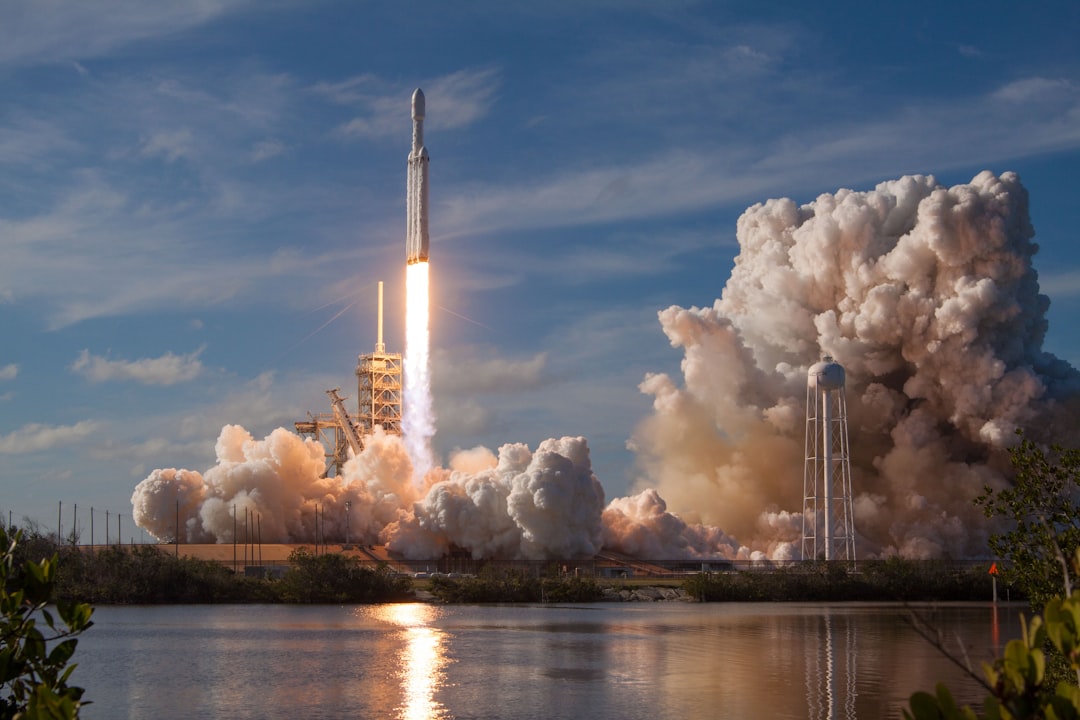
NASA will add missions to SpaceX's Commercial Crew contract, the agency announced, explicitly "protecting NASA from the possibility that Boeing's spacecraft is never certified" for crewed International Space Station operations. The expansion represents NASA's clearest acknowledgment yet that Boeing's Starliner may not achieve operational status.
The contract modification adds up to six additional Crew Dragon missions beyond SpaceX's current manifest, extending the company's ISS transportation monopoly potentially through the station's planned deorbiting in 2030. While NASA officials maintain public support for Boeing's program, the move provides insurance against continued Starliner delays and technical setbacks.
"We're committed to having two independent crew transportation systems," said Steve Stich, NASA's Commercial Crew Program manager. "But we also have a responsibility to ensure continuous access to ISS regardless of any single provider's timeline. This contract modification addresses that reality."
<h2>Starliner's Troubled Development</h2>
Boeing's path to ISS certification has encountered repeated obstacles since NASA awarded the company a $4.2 billion Commercial Crew contract in 2014—nearly $1 billion more than SpaceX received for developing Crew Dragon. An uncrewed test flight in December 2019 suffered software failures that prevented the spacecraft from reaching ISS, requiring a costly reflight in May 2022.
The first crewed test flight, originally scheduled for 2017, finally launched in June 2024 with astronauts Butch Wilmore and Suni Williams aboard. The mission revealed helium leaks and thruster malfunctions that extended what should have been a ten-day flight to over eight months. NASA ultimately deemed Starliner unsafe for crew return, bringing the astronauts home on a SpaceX vehicle instead.
Boeing has not committed to a timeline for Starliner's next flight. The company faces pressure to complete certification before ISS retirement, but each delay increases costs borne by Boeing under the fixed-price contract. Industry analysts estimate Boeing has absorbed over $1.5 billion in overruns beyond the original contract value.
<h2>SpaceX Monopoly and Resilience Questions</h2>
The contract expansion creates a situation NASA explicitly sought to avoid: dependence on a single commercial provider for critical crew access. After retiring the Space Shuttle in 2011, NASA relied exclusively on Russian Soyuz vehicles for nearly a decade—an arrangement that proved diplomatically awkward and technically risky.
SpaceX has executed 14 crewed flights to ISS since 2020 without major incidents, establishing Crew Dragon as the most reliable human spacecraft currently operational. The vehicle's track record provides confidence, but NASA's Commercial Crew strategy always envisioned redundancy through competition.
"If you only have one provider and they experience a problem that grounds the fleet, you're stuck," explained Phil McAlister, NASA's director of commercial spaceflight. "That's not hypothetical—we've seen it with Shuttle after Challenger and Columbia. Two independent systems provide resilience."
The irony is stark: Boeing, the legacy aerospace giant with decades of government contracting experience, has struggled where SpaceX—founded less than 25 years ago with no prior human spaceflight heritage—succeeded. Cultural differences between the companies partly explain divergent outcomes: SpaceX's rapid iteration and risk tolerance versus Boeing's process-heavy, risk-averse approach.
<h2>Financial and Political Implications</h2>
The contract modification increases SpaceX's Commercial Crew revenue while Boeing continues hemorrhaging money on Starliner. Each Crew Dragon mission costs NASA approximately $260 million, meaning the additional six flights represent over $1.5 billion in potential SpaceX revenue.
Congressional appropriators have questioned Boeing's program management, though the company retains political support due to its workforce footprint across multiple states. Some lawmakers argue NASA should provide additional funding to help Boeing complete certification, while others suggest cutting losses and fully committing to SpaceX.
Boeing's broader space business faces headwinds beyond Starliner. The Space Launch System rocket, developed by Boeing for NASA's Artemis program, experienced cost overruns and schedule delays. The company's commercial satellite division struggles against SpaceX's Starlink. Once dominant in space, Boeing now appears vulnerable.
<h2>ISS Retirement and Future Access</h2>
The contract extension covers potential missions through ISS's currently planned deorbiting in 2030. NASA intends to transition to commercial space stations operated by private companies, which may require different crew transportation systems optimized for non-ISS orbits.
If Boeing abandons Starliner before certification, the vehicle's development will rank among the most expensive failures in spaceflight history—billions spent with no operational capability delivered. Boeing executives have not publicly discussed that possibility, insisting the company remains committed to completing the program.
In space exploration, as across technological frontiers, engineering constraints meet human ambition—and occasionally, we confront the reality that ambition alone doesn't guarantee success. NASA's contract expansion with SpaceX represents pragmatic acknowledgment that backup plans prove necessary when primary plans falter.
Whether Boeing ultimately certifies Starliner remains uncertain. What's clear is that NASA no longer expects it to happen on any specific timeline—and has planned accordingly.