
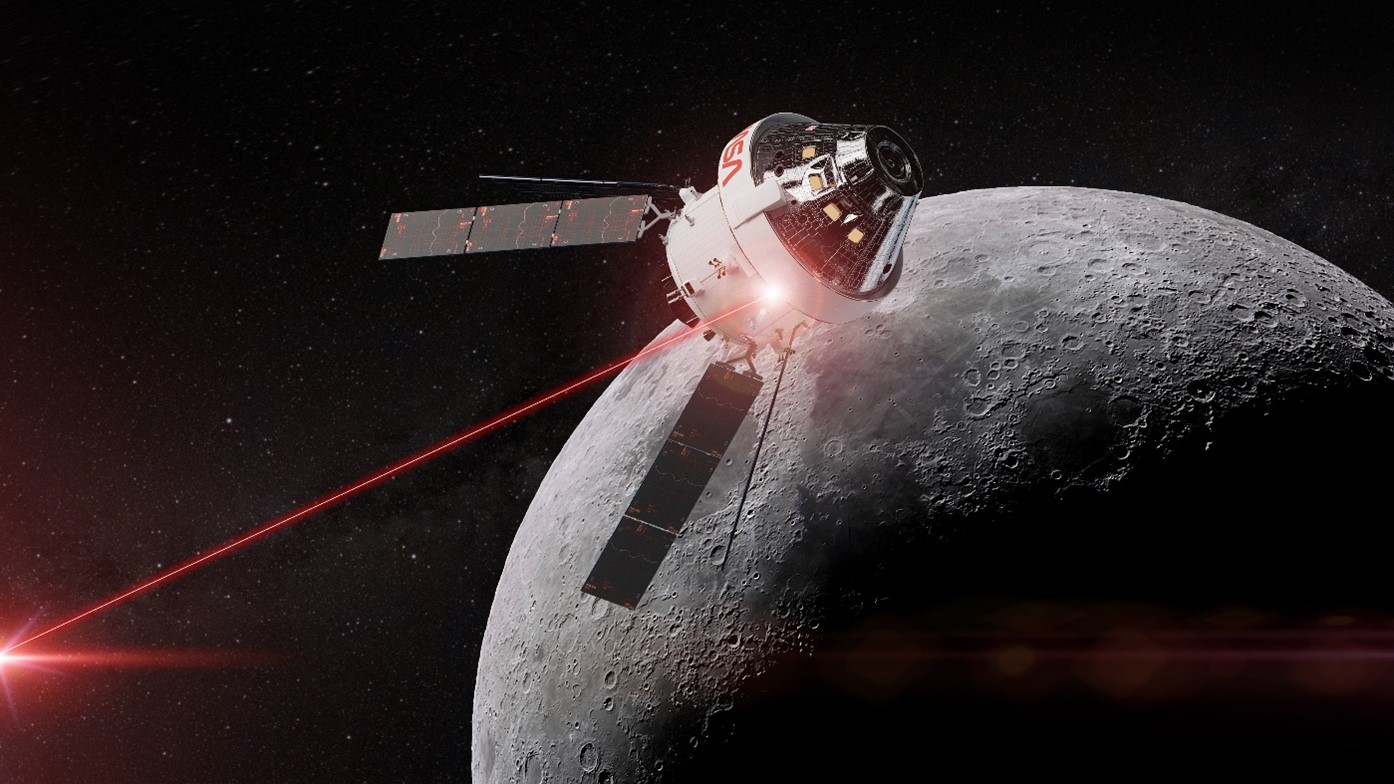
NASA's Artemis II mission achieved a breakthrough in deep-space communications that quietly revolutionized how humanity monitors crewed missions beyond Earth orbit, transmitting 484 gigabytes of data during the 10-day lunar flyby—equivalent to roughly 100 high-definition movies.The optical communications terminal, developed by MIT Lincoln Laboratory, marked the first laser-based communications support for a crewed mission at lunar distances, achieving download rates of 260 megabits per second compared to traditional radio frequency systems limited to single-digit megabits per second at similar ranges.The performance gap between laser and radio communications represents more than incremental improvement—it's a fundamental shift in deep-space mission architecture. Where Apollo-era communications could transmit grainy black-and-white television and limited telemetry, Artemis II streamed dual high-definition video feeds, flight procedures, engineering data, and voice communications simultaneously."It means faster insights, better science decision-making to support the crew as they're completing science exploration, and a mission with a more integrated science presence," explained Dr. Kelsey Young, Artemis II Lunar Science Lead, in NASA's mission summary.The system demonstrated remarkable reliability during the mission's most critical phases. Ground stations—including a facility operated by Australian National University—maintained dual-stream video with the Orion spacecraft for over 15.5 hours continuously, contributing to live mission feeds that brought the lunar journey into millions of homes with unprecedented clarity.In space exploration, as across technological frontiers, engineering constraints meet human ambition—and occasionally, we achieve the impossible. The optical terminal represents one such achievement, overcoming challenges that have plagued laser communications for decades including atmospheric interference, precise pointing requirements, and maintaining lock across hundreds of thousands of miles.Perhaps most impressive: a record 26 gigabytes of data was received, downloaded, and transmitted to mission control in under one hour—surpassing typical home internet speeds despite the quarter-million-mile distance. This capability transforms mission operations from data-limited trickle feeds to bandwidth-rich environments where real-time decision-making becomes possible.The implications extend far beyond Artemis. As NASA plans increasingly complex lunar surface operations—including extended stays at the lunar south pole and construction of the Gateway space station—high-bandwidth communications become mission-critical infrastructure rather than nice-to-have capabilities.Mars missions present even more demanding requirements. At Martian distances ranging from 34 to 250 million miles, radio communications face delays of 3 to 22 minutes each way, making real-time troubleshooting impossible. Laser communications won't eliminate light-speed delay, but exponentially higher bandwidth allows transmission of detailed engineering data, high-resolution imagery, and comprehensive telemetry that could prove decisive during emergencies.The technology builds on NASA's Laser Communications Relay Demonstration (LCRD), which has operated in Earth orbit since 2021, and the Deep Space Optical Communications experiment that transmitted data from beyond Mars aboard the Psyche spacecraft. Artemis II's success proves the technology scales to crewed missions with their stringent reliability requirements.Commercial space companies are watching closely. SpaceX's planned Starship lunar missions, Blue Origin's Blue Moon lander, and international partners developing lunar infrastructure will all benefit from NASA's pioneering work establishing optical communications as viable deep-space technology.The Australian ground station's performance particularly highlighted the global nature of deep-space communications infrastructure. As spacecraft orbit the Moon or travel to Mars, they disappear from view of any single ground station. Worldwide networks of optical terminals—complementing traditional Deep Space Network radio antennas—will enable continuous coverage.For Artemis III and beyond, laser communications will transition from experimental technology to operational capability. Future lunar astronauts will conduct geology investigations with real-time video consultation from Earth-based experts, transmit gigabytes of scientific data daily, and maintain communications quality that makes the quarter-million-mile distance feel almost routine.The technology represents NASA at its best: developing foundational capabilities that enable entire new mission architectures. Just as Apollo's communications infrastructure enabled the Space Shuttle and International Space Station programs, Artemis optical communications lay groundwork for permanent human presence beyond Earth orbit.
|