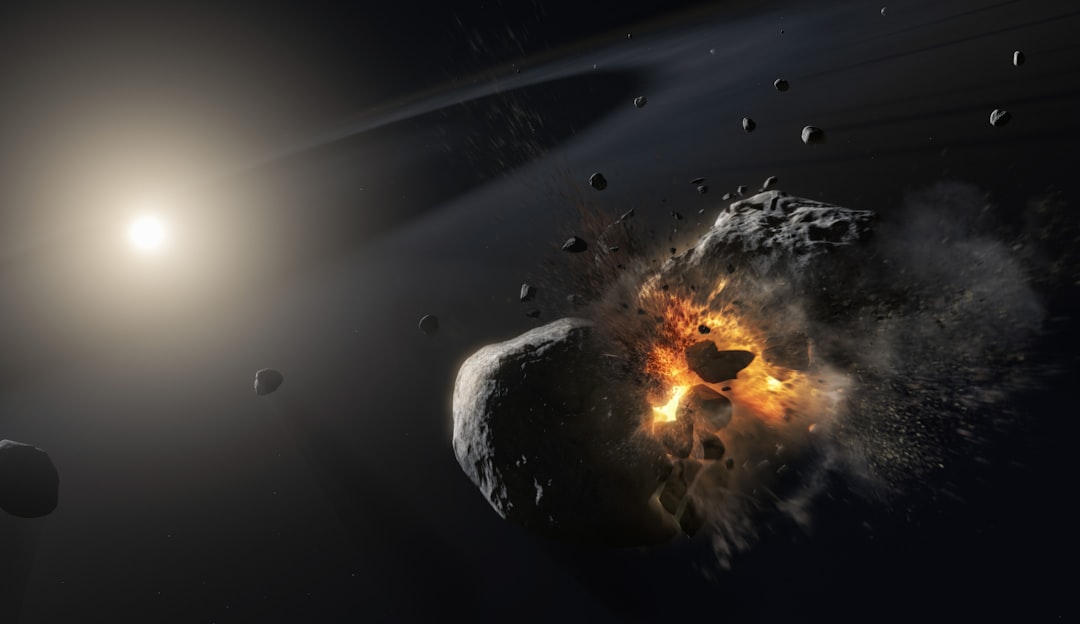
NASA successfully smashed a spacecraft into an asteroid at 14,000 mph, and the results are better than anyone predicted. This isn't science fiction — it's a working planetary defense system.
The DART (Double Asteroid Redirection Test) mission launched a refrigerator-sized spacecraft at the asteroid Dimorphos, a small moon orbiting the larger asteroid Didymos. The impact ejected significant debris and altered both asteroids' orbits.
Why It Worked So Well
The key surprise was how much material the impact ejected. When you hit an asteroid at high speed, you're not just nudging it with the spacecraft's mass — you're creating an explosion that throws off chunks of rock. That debris acts like a rocket exhaust, adding extra momentum to the deflection.
Think of it as playing billiards where the cue ball explodes on contact. You get way more movement than simple collision physics would predict.
NASA knew this effect would happen, but the magnitude exceeded their models. The orbit of Dimorphos changed by 33 minutes — far more than the minimum success threshold of 73 seconds they were aiming for.
This Is Real Planetary Defense
Let's be clear about what this means: humanity now has a demonstrated capability to deflect asteroids. This isn't theoretical. It's not a movie plot. We can actually do this.
The caveats matter, though. This only works if you have years of warning. You can't deflect an asteroid you don't see coming. And the further out you catch it, the smaller the nudge you need — a tiny change in velocity now becomes a huge change in position over millions of miles.
That's why asteroid detection is just as important as deflection capability. You need both halves of the system.
The Engineering Achievement
What impresses me as someone who understands the technical challenges: they hit a target 7 million miles away while it was moving. The autonomous navigation system worked flawlessly. The impact was dead center.
This is hard. Space is big, things move fast, and you only get one shot. The team nailed it.