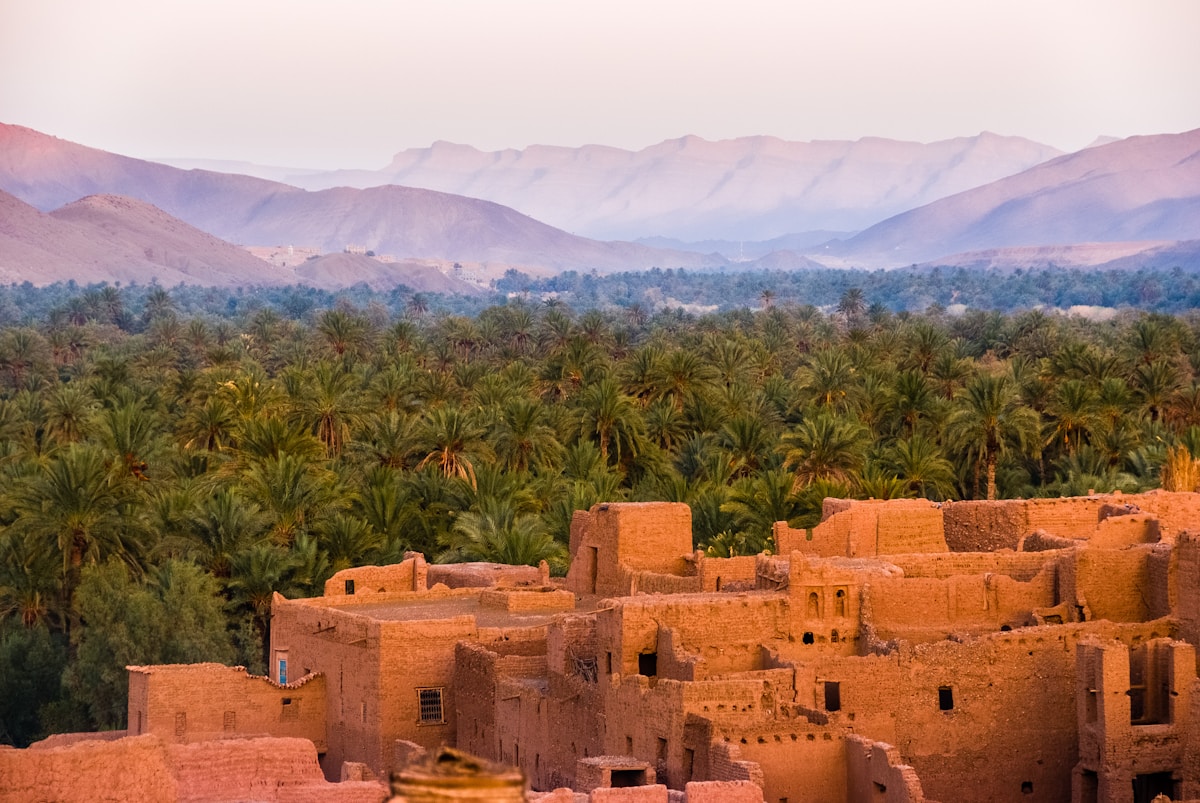
A recent road trip through Morocco showcased the country's stunning geographic diversity, revealing landscape changes that many travelers don't expect from a single nation.
The route—Marrakesh to Skoura to Merzouga to Fes to Casablanca and back to Marrakesh—delivered "snow covered peaks to vast plains, sand dunes in a black desert and truly exceptional cities" within a 10-day journey.
This geographic variety is Morocco's secret weapon as a road trip destination. Within hours of driving, you transition from North African medinas to Alpine-style mountains to Saharan dunes—diversity that would require crossing multiple countries in most of the world.
Key stops that showcase this range:
Dades Valley offers dramatic gorge scenery with red rock formations and traditional Berber villages perched on hillsides. It's the kind of landscape that makes you pull over every few kilometers for photos.
Aït Benhaddou, a UNESCO World Heritage fortified village, features mud-brick architecture that's appeared in countless films from Lawrence of Arabia to Gladiator. Arrive early or late to avoid tour bus crowds—the golden hour light transforms the kasbahs.
Merzouga serves as the gateway to the Erg Chebbi dunes. These aren't ordinary sand dunes—they're massive formations in an unusual black desert, creating striking contrast photography opportunities. Most travelers book overnight desert camps, but the town itself offers budget guesthouses with dune access.
The Atlas Mountains crossing delivers the trip's most dramatic elevation changes. Snow-capped peaks in spring and early summer provide surreal contrast to the desert landscapes you've just left. The winding mountain roads require confident driving but reward with spectacular vistas.
Fes represents Morocco's cultural anchor—a medieval city with the world's oldest continuously operating university and a medina that feels genuinely untouched by time. Unlike Marrakesh, which has become heavily tourist-oriented, Fes still functions as a living city where locals outnumber visitors.
What makes this route work particularly well is the logical flow. You're not backtracking or making awkward detours. Each day's drive builds on the previous landscape, creating a sense of journey rather than just hitting checkpoints.
Practical considerations for this route:
Rental cars in Morocco are straightforward for foreign drivers, though navigation through medinas requires patience. Most travelers rent in Marrakesh or Casablanca and return to the same city. Budget around €30-50/day for a compact car suitable for mountain roads.
Accommodation ranges from budget riads (traditional houses) at €30/night to luxury properties at €200+. The sweet spot is often family-run guesthouses in the €50-70 range that include breakfast and genuine hospitality.
Road conditions are generally good on main routes, though mountain passes can be challenging. The route from Marrakesh to Merzouga via the Dades Valley is longer but far more scenic than the direct highway route.
Timing matters significantly. Spring (April-May) and fall (September-October) offer ideal temperatures. Summer brings extreme heat in desert sections, while winter adds genuine snow to mountain passes, requiring winter tires.
One traveler emphasized the landscape diversity: "From snow covered peaks to vast plains, sand dunes in a black desert"—a range that surprises visitors expecting a single climate zone.
This variety makes Morocco particularly appealing for photographers and travelers who tire quickly of scenery sameness. You're not seeing variations on the same theme for 10 days—you're experiencing genuinely different ecosystems.
The road trip format also solves one of Morocco's frustrations: aggressive touts in tourist areas. While Marrakesh's Jemaa el-Fnaa square can be overwhelming, much of this route takes you through areas where tourism is welcome but not the primary economy. Interactions feel more genuine, less transactional.
For travelers considering Morocco but overwhelmed by organized tour options, the self-drive route offers freedom and flexibility while still hitting the country's geographic and cultural highlights. You control the pace, choose your accommodation tier, and stop wherever the landscape commands attention—exactly what makes road trips compelling anywhere in the world.