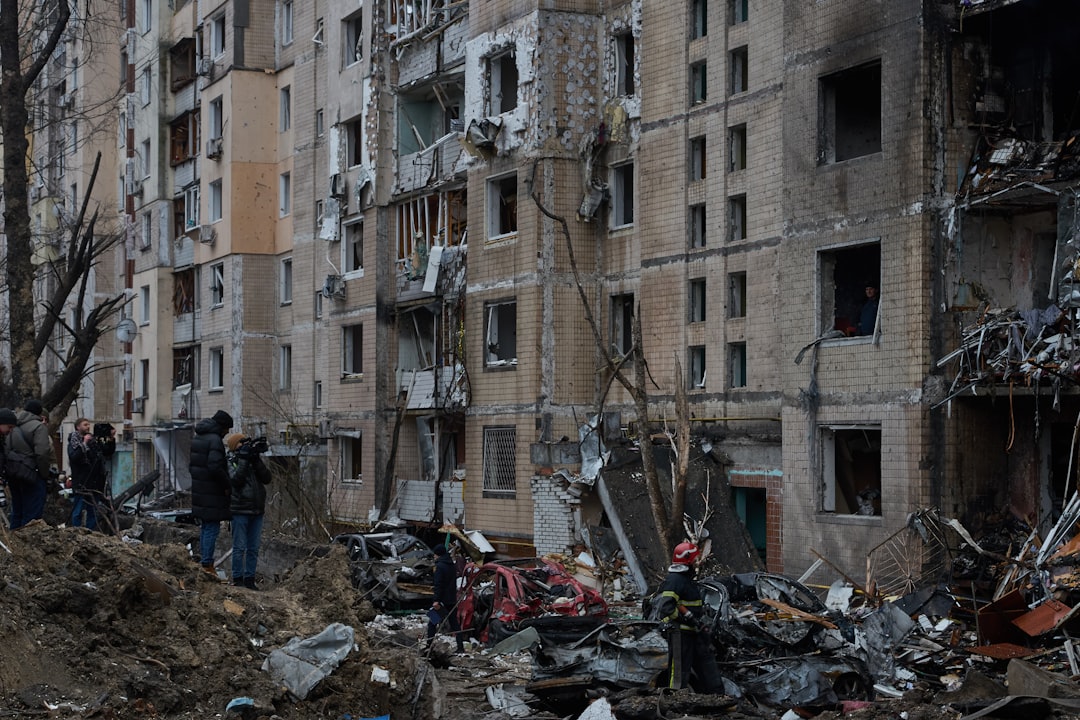
Eight people, including a 12-year-old child, died in one of the war's most devastating Russian missile attacks on Kyiv early Saturday morning, as rescue workers continue searching through rubble in the Darnytskyi district. Forty-five others were injured in strikes that officials describe as among the most intense aerial assaults on the Ukrainian capital since the full-scale invasion began.
Among the buildings destroyed was the National Chornobyl Museum, a repository of artifacts and memories from Ukraine's 1986 nuclear disaster. The symbolic weight was not lost on Ukrainians who immediately drew connections between two Russian-caused catastrophes separated by four decades. "Both destroyed. Both due to Russia," one Kyiv resident wrote on social media, capturing a sentiment echoed across the capital.
The attack came as Ukrainian boxer Oleksandr Usyk fought for the world heavyweight championship in Saudi Arabia. Videos circulated showing Ukrainians watching the match from bomb shelters, their cheers for Usyk's victory mixing with the sounds of air raid sirens and distant explosions—a surreal testament to Ukrainian determination to maintain normal life even under bombardment.
At a funeral for two sisters killed in the strikes, a teenage friend delivered a raw, anguished message that cut through the statistics of war. "This should not be happening. Hear me!" she said, her voice breaking. The younger victim was just beginning adolescence; her sister had barely started adult life.
Emergency services reported that search and rescue operations continue in multiple districts of Kyiv, with teams working around the clock to ensure no victims remain trapped in collapsed structures. The scale of the attack required mobilization of rescue units from across the capital region.
In Ukraine, as across nations defending their sovereignty, resilience is not just survival—it's determination to build a better future. The juxtaposition of devastation and defiance played out across Kyiv on Saturday: rescue workers digging through rubble while cafes reopened between air raid alerts, families mourning loved ones while others celebrated Usyk's boxing triumph.
The Chornobyl Museum's destruction carries particular symbolic resonance. The facility housed irreplaceable documentation of the Soviet nuclear disaster, including personal items from evacuees and technical records of the catastrophe. Its loss represents not just material damage but an attack on Ukrainian historical memory—much like Russia's broader campaign has sought to erase Ukrainian identity itself.
Military analysts note that such massive strikes on civilian areas serve limited tactical purpose but aim to break Ukrainian morale and force the government to divert air defense resources to cities rather than frontline positions. Yet as Saturday's events demonstrated, the strategy appears to strengthen rather than weaken Ukrainian resolve.
President Volodymyr Zelenskyy renewed calls for additional air defense systems from Western partners, emphasizing that preventing such attacks requires capabilities Ukraine currently lacks. "Every life lost to these strikes is a reminder that air defense saves lives," he stated in evening remarks.
For ordinary Kyivans, Saturday represented the cruel arithmetic of modern war: eight families shattered, forty-five lives altered by injury, and an entire city reminded that normalcy remains fragile. Yet in shelters and streets across the capital, the dominant sentiment was not fear but fury—and an unshaken determination that Ukraine's story will not end in submission.