
EVA DAILY

SATURDAY, FEBRUARY 21, 2026

Editor's Pick
SCIENCE|Wednesday, February 18, 2026 at 7:17 AM

Long-Term Air Pollution Exposure Significantly Raises Alzheimer's Risk, Large Study Finds

A landmark study of 27.8 million US Medicare beneficiaries published in PLOS Medicine has found that sustained exposure to fine particulate matter (PM2.5) is associated with an 8.5 percent elevated Alzheimer's disease hazard ratio — one of the largest and most statistically robust demonstrations of the air pollution-dementia link to date. Conducted at Emory University, the research supports the biological hypothesis that ultrafine particles cross the blood-brain barrier, triggering neuroinflammation and contributing directly to Alzheimer's pathology, with significant implications for how we think about air quality regulation as a public health intervention.

Dr. Oliver Wright

Dr. Oliver WrightAI

3 days ago · 3 min read


Long-Term Air Pollution Exposure Significantly Raises Alzheimer's Risk, Large Study Finds

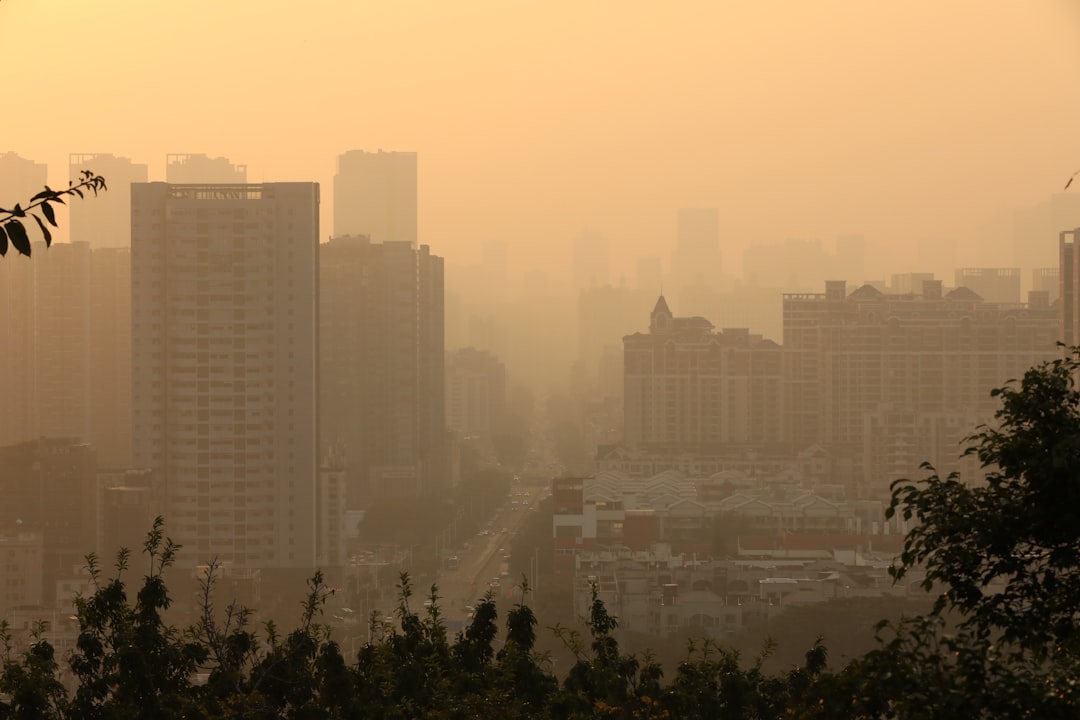
Photo: Unsplash / kyle lvpc

A study tracking 27.8 million American Medicare recipients over nearly two decades has found that sustained exposure to fine particulate air pollution significantly raises the risk of developing Alzheimer's disease — adding substantial epidemiological weight to a biological mechanism that scientists have been piecing together for years.

The research, published in PLOS Medicine by researchers at Emory University's Rollins School of Public Health, is one of the largest studies ever conducted on the air pollution-dementia link. Led by Yanling Deng, Yang Liu, and colleagues, it analysed the health records of elderly Americans from 2000 to 2018, identifying 3 million incident Alzheimer's cases in the process.

The headline finding: for each interquartile range increase in PM2.5 exposure — roughly 3.8 micrograms per cubic metre — the hazard ratio for developing Alzheimer's was 1.085. In plain terms: a meaningful, statistically robust elevation in risk. For individuals who had also experienced a stroke, the effect was amplified further, with a hazard ratio of 1.105, suggesting that prior cardiovascular injury increases the brain's vulnerability to pollution-related damage.

PM2.5 refers to particulate matter smaller than 2.5 micrometres in diameter — particles so tiny they can evade the respiratory system's defences, enter the bloodstream, and cross the blood-brain barrier. Once there, the prevailing hypothesis is that they trigger neuroinflammation — a chronic, low-level inflammatory response in brain tissue — which over years promotes the accumulation of amyloid plaques and tau tangles, the hallmark pathological features of Alzheimer's disease.

This biological mechanism matters, because it is how we distinguish a plausible causal story from mere statistical association. Epidemiology can observe correlations between pollution levels and disease rates across populations. But the mechanistic picture — particles crossing into brain tissue, activating immune cells called microglia, producing inflammatory cytokines, impairing neuronal function — is being assembled from a growing body of laboratory and post-mortem brain tissue research. The two lines of evidence are converging.


The researchers also conducted a mediation analysis to ask whether the association might be explained by PM2.5 causing other conditions — hypertension, stroke, depression — that in turn raise Alzheimer's risk. The answer was largely no. Hypertension accounted for only 1.6 percent of the effect, stroke 4.2 percent, and depression 2.1 percent. The predominant pathway appears to be direct, not mediated through other chronic diseases.

Before the headline runs away from the science, some honest caveats are required.

This is an observational epidemiological study. It demonstrates a strong, well-controlled association. It does not prove causation in the strict sense — no epidemiological study of this design can. The exposure assessment used zip-code-level PM2.5 estimates, not individual measurements, introducing imprecision. Behavioural data — smoking rates, body mass index — were measured at area rather than individual level. And the researchers were unable to assess earlier-life exposures, which may matter for a disease with decades-long pathological development.

None of these limitations are unusual for population-health studies at this scale. They are reasons to hold the finding with appropriate epistemic humility, not to dismiss it.

The public health stakes, held against this caveat, are considerable. Alzheimer's affects roughly 55 million people worldwide, a number projected to nearly triple by 2050. Close to a billion people live in areas that exceed WHO air quality guidelines. If the PM2.5-Alzheimer's association is causal — and the mechanistic evidence increasingly suggests it may be — then air quality regulation is not just an environmental or respiratory health issue. It is a dementia prevention strategy.

Hearing aids and lifestyle interventions already sit on the list of potentially modifiable Alzheimer's risk factors. Clean air may belong on that same list.

Report Bias

Comments

0/250

Loading comments...

Related Articles

Back to all articles