
Prime Minister Nawaf Salam's attempt to restore functional governance to Lebanon faces a fundamental challenge just weeks into his mandate: President Joseph Aoun is systematically bypassing government authority in favor of direct military command, threatening to replicate the very power struggles that have paralyzed Lebanese politics for decades.
Salam privately told visitors this week that President Aoun had "slapped him twice politically" over the appointment and oversight of Army Commander General Rudolph Hekél, according to Lebanese media reports. The confrontation reveals deepening tensions between the presidency and the prime minister's office over who controls the Lebanese Armed Forces—a dispute that cuts to the heart of Lebanon's sectarian power-sharing system.
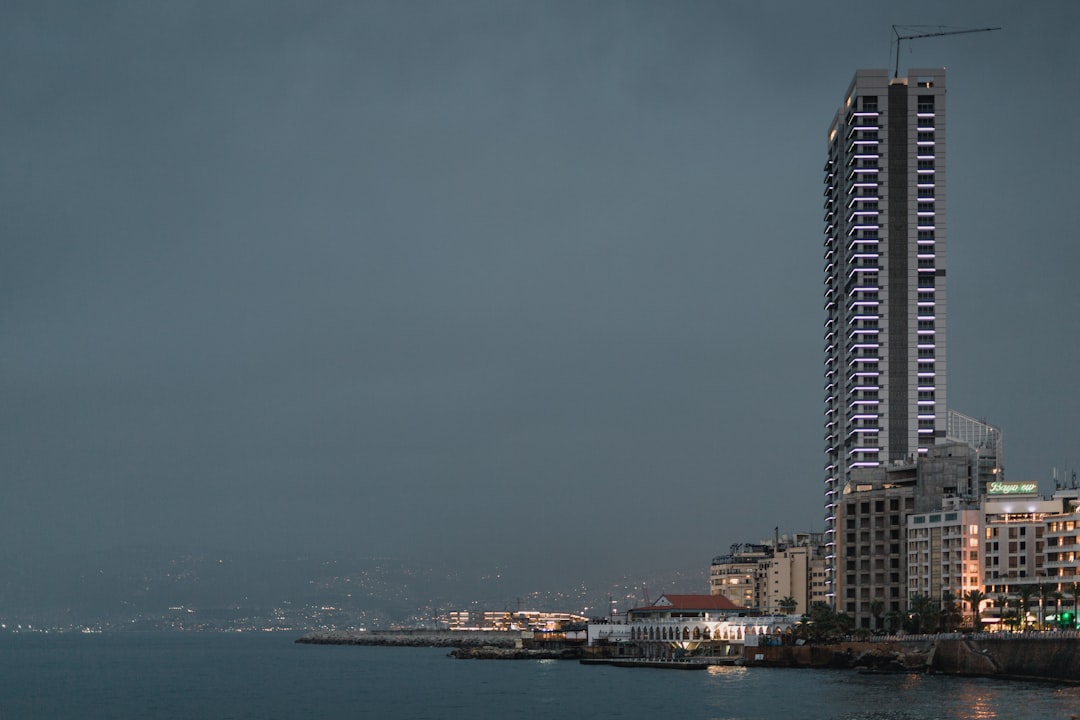
The first incident occurred following what Lebanese officials call the "Raouché Rock dispute," when the army refused to execute a cabinet decision to turn off illumination on the iconic coastal landmark. Rather than support the prime minister's authority, President Aoun awarded Army Commander Hekél the Cedar Medal at its highest rank—effectively endorsing military defiance of civilian government orders.
Two days before Salam's reported comments, the president visited the Defense Ministry despite the prime minister's objections regarding the army commander's failure to implement cabinet decisions. The visit signaled presidential backing for military autonomy from government oversight, establishing a pattern where the armed forces answer directly to Aoun rather than the constitutionally mandated chain of command through the cabinet.
Lebanon's constitution theoretically divides power among its sectarian communities: a Maronite Christian president, a Sunni Muslim prime minister, and a Shia Muslim parliament speaker. Executive authority formally rests with the cabinet, headed by the prime minister. The president serves as commander-in-chief but exercises that authority through the cabinet, not independently.

In this region, today's headline is yesterday's history repeating. Lebanese presidents have consistently attempted to expand their constitutional authority, while prime ministers have fought to preserve cabinet supremacy. These struggles have historically paralyzed government function during crises—precisely when decisive action matters most.
President Aoun brings a particular perspective to this constitutional conflict. He rose through military ranks to command the Lebanese Armed Forces before entering politics, maintaining deep loyalties within the officer corps. His election represented hope that a president with military credibility could finally assert state control over the armed groups—primarily Hezbollah—that have operated beyond government authority for decades.
Yet the current dispute suggests Aoun may be creating an alternative problem: an empowered military that answers to the presidency rather than the government. Such a structure could enable more decisive action in some circumstances, but it fundamentally undermines the cabinet system that Lebanese politics theoretically operates within.
Prime Minister Salam came to office with a mandate to restore basic governance after years of political paralysis. A distinguished international jurist who served as Lebanon's ambassador to the United Nations, Salam represents the technocratic competence that Lebanese civil society has demanded. His appointment suggested a possibility of moving beyond the sectarian patronage networks that have bankrupted the country.
The army commander dispute demonstrates the limits of technocratic solutions in Lebanon's deeply political environment. Even when reform-minded leaders gain formal positions, they confront power structures that resist institutional authority. Aoun's direct engagement with military leadership bypasses Salam's government, rendering cabinet decisions advisory rather than binding.
Salam has publicly denied orchestrating recent parliamentary criticism of Army Commander Hekél, though he acknowledged that some of the critiques raised valid concerns. This careful positioning reflects the prime minister's weak hand: he cannot directly challenge the army's insubordination without appearing to undermine national security, yet tolerating such defiance erodes his government's authority.
The timing could hardly be worse for internal government conflict. Lebanon faces simultaneous crises: economic collapse that has destroyed the currency and banking system, ongoing Israeli military operations against Hezbollah targets throughout Lebanese territory, massive displacement of southern populations, and complete breakdown of public services from electricity to healthcare.
Effective crisis response requires a unified government capable of making and implementing decisions. Instead, Lebanon has a president and prime minister fighting over authority while the country's challenges multiply. The army—theoretically the one national institution with capacity to act—finds itself caught between competing political masters.
Regional observers note parallels to previous periods of Lebanese political paralysis. The 2005-2008 crisis saw the country without a president for months, while competing factions vetoed each other's initiatives. The 2019-2022 period produced similar dysfunction, with the government unable to address the financial crisis because no faction would accept responsibility for painful reforms.
What distinguishes the current situation is that Salam and Aoun theoretically share reform objectives. Both have positioned themselves as national figures rather than sectarian representatives. Both acknowledge Lebanon's desperate need for functional governance. Yet institutional conflicts override personal intentions, reproducing the power struggles that have defined Lebanese politics for generations.
Unless the president and prime minister establish a clear division of authority, Lebanon's latest attempt at political reset risks following the pattern of its predecessors: initial hope giving way to familiar paralysis, while the country's capacity to govern itself continues to erode.