
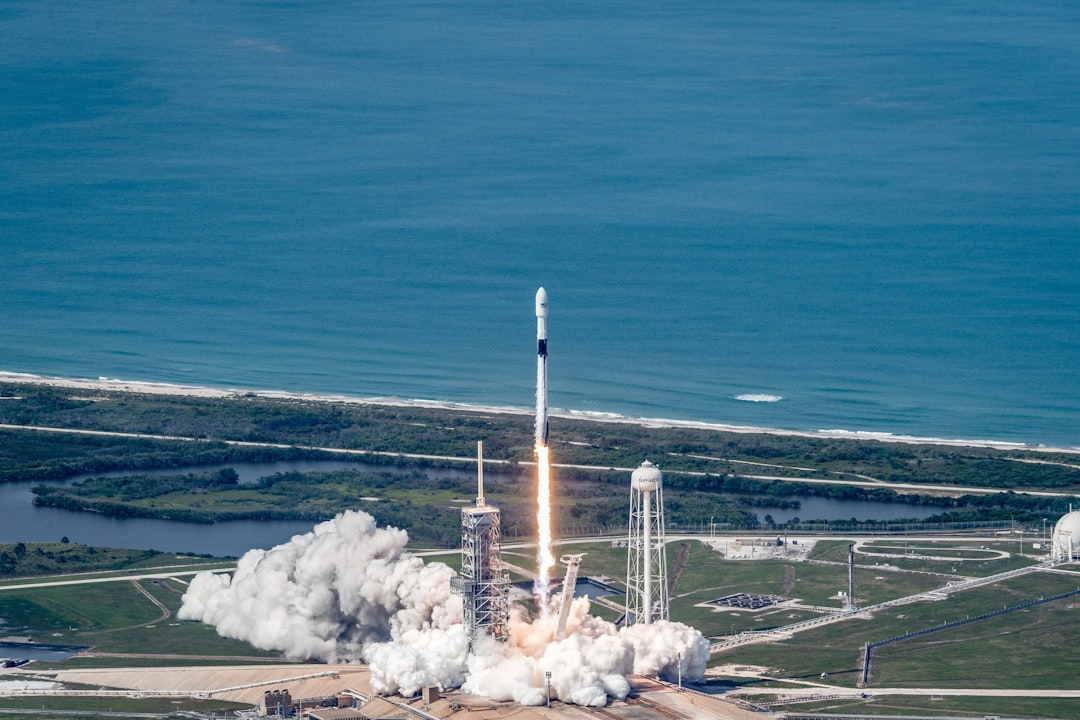
South Korea celebrated a commercial space milestone as its first privately-built observation satellite successfully reached orbit on May 2, four years behind its original schedule—a delay that highlights both the promise and growing pains of the country's emerging private space sector.
The satellite, developed by a Korean startup, launched aboard a SpaceX Falcon 9 rocket from Vandenberg Space Force Base in California, according to the Korea JoongAng Daily. The achievement marks Korea's entry into the competitive commercial satellite imaging market, joining a regional space race where China and Japan have already established significant private-sector capabilities.
The four-year delay from the original 2022 target date reflects the technical and financial hurdles facing Korean space startups as they attempt to compete with established international players. Industry observers note that while Korean companies excel in semiconductor and display technology, the space sector requires different expertise and substantially longer development cycles—lessons the commercial space industry is learning in real time.
East Asian Space Competition Intensifies
The satellite's successful deployment comes as East Asia emerges as a critical theater in the global space race. China has aggressively developed its commercial space sector with dozens of Earth observation satellites already operational, while Japan has leveraged partnerships between established aerospace firms and startups to build a robust commercial satellite industry.
South Korea, despite its technological prowess in electronics and manufacturing, has lagged in private space development—making this launch particularly significant for the country's space ambitions. The satellite will provide high-resolution imaging for commercial and government clients, potentially serving markets in agriculture, urban planning, and disaster response.
The mission represents more than technological achievement. It demonstrates Korea's commitment to building comprehensive national power that extends beyond its traditional strengths in consumer electronics and semiconductors. As regional competition intensifies across domains from chips to satellites, Korean policymakers view a viable commercial space sector as essential to maintaining technological sovereignty.
Startup Sector Faces Scaling Challenges
The extended development timeline reveals structural challenges in Korea's startup ecosystem. Unlike the United States, where venture capital flows freely to space ventures and regulatory frameworks accommodate rapid iteration, Korean startups face more conservative funding environments and bureaucratic hurdles that can extend development timelines.
Industry experts suggest the delay also reflects the technical difficulty of satellite development, an endeavor that requires expertise in mechanical engineering, electronics, software, and orbital mechanics—a combination that even well-funded startups struggle to assemble. The fact that the company ultimately succeeded, despite setbacks, may prove more instructive than a smooth initial launch would have been.
The government has pledged support for expanding Korea's space economy, viewing it as strategically important as the country navigates technological competition with China and maintains its alliance with the United States. Commercial satellite capabilities offer dual-use potential, serving both civilian and national security needs in an increasingly contested regional environment.
In Korea, as across dynamic Asian economies, cultural exports and technological leadership reshape global perceptions—even as security tensions persist. The successful satellite launch demonstrates that Korean innovation extends beyond smartphones and semiconductors into frontier technologies that will define 21st-century competition. Whether the country can build on this achievement to create a sustainable commercial space sector remains the critical question for the decade ahead.