
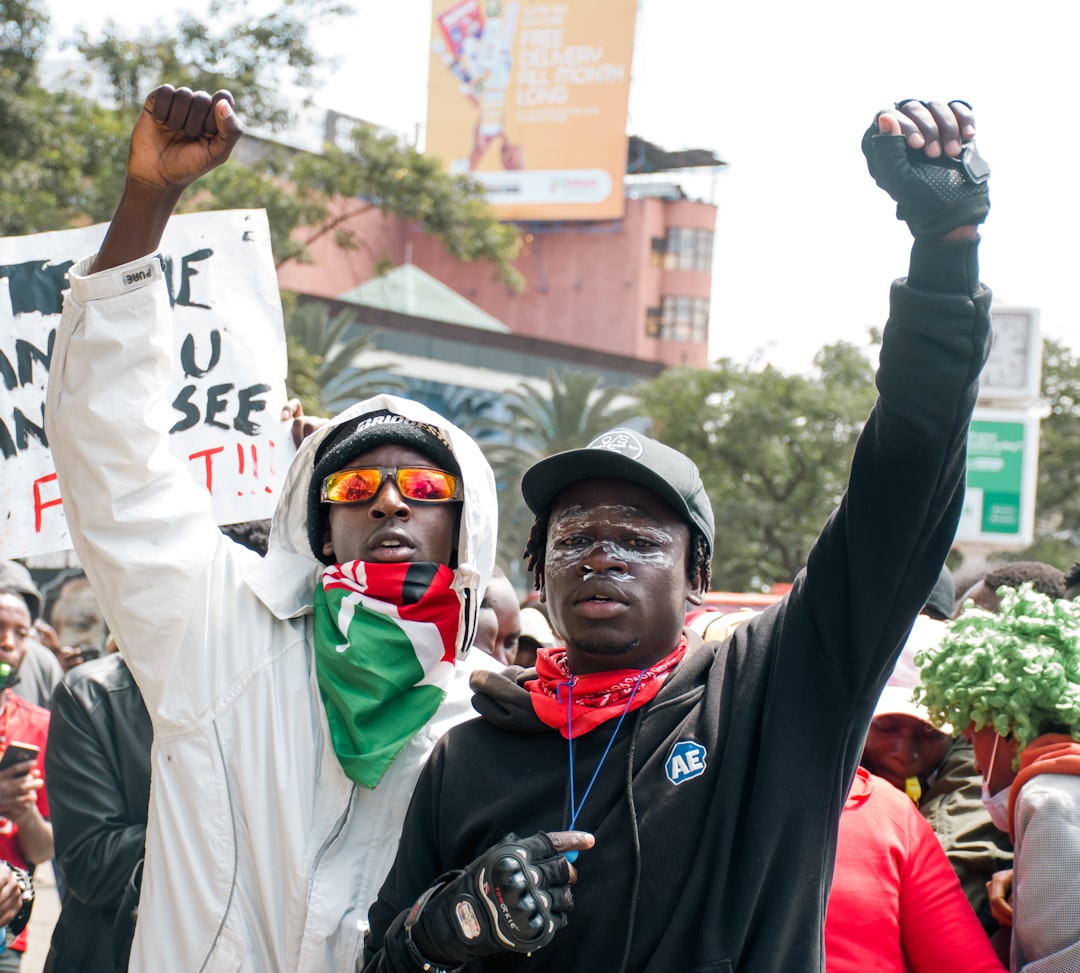
Seven people are dead and a regional politician is in custody after ethnic incitement in Kenya's Garissa region triggered a cascade of violence that has exposed the deadly consequences of unchecked political rhetoric.
The crisis began when a Garissa politician, responding to the death of a young Somali man allegedly killed by police, declared war on what she termed "Nywele Ngumu"—a derogatory Swahili phrase meaning "hard hair," used to refer to non-Somali Kenyans. Video of her inflammatory remarks spread rapidly on social media.
Within hours, the consequences were visible. Buses traveling to Garissa were stoned by locals near Mwingi town, with threats issued to prevent them from crossing through the area. At Tseukuru, seven people were killed by what authorities described as Somali bandits—an attack that occurred shortly after the politician's public statements.
"I am not saying she had a hand in it, but it is hard to rule out a possibility," wrote a Kenyan analyst documenting the escalation on social media. The timeline is damning: incendiary rhetoric, followed by ethnic violence, followed by retaliatory attacks.
The Directorate of Criminal Investigations (DCI) confirmed the politician's arrest on Sunday. The Kyallo police officer allegedly responsible for the initial killing of the young Somali man is also reported to be in custody, though authorities have not publicly confirmed his status.
Dr. Halima Abdullahi, a conflict resolution specialist at Nairobi's Strathmore University, says the Garissa violence fits a familiar pattern. "Politicians use ethnic grievances to mobilize support, then claim innocence when violence follows. But incitement has consequences, and the law must hold them accountable."
Kenya's northeast, including Garissa, has long been marginalized politically and economically. The region's predominantly Somali population has faced discrimination, police brutality, and limited government services. Legitimate grievances, however, do not justify ethnic incitement—and the politician's rhetoric crossed that line.
The initial police killing that sparked the crisis points to a broader problem: Kenya's police force operates with near-total impunity. Officers are rarely held accountable for extrajudicial killings, particularly in marginalized regions like Garissa. When justice is systematically denied, politicians can weaponize that anger.
"Anyone in Kenya who has basic education knows that the police force operates independently," one observer noted. "Most are corrupt and only loyal to their bosses. The fact that an officer is from your tribe does not mean that what he does is affiliated with you."
Yet the politician chose to frame the killing in ethnic terms, calling for collective action against non-Somalis rather than demanding accountability from the police institution. The result: buses stoned, communities threatened, seven people dead.
The Garissa violence is now a test case for Kenya's legal system. Will the politician face consequences for incitement? Will the Kyallo officer be prosecuted for the initial killing? Or will impunity prevail on both sides, setting the stage for the next cycle of violence?
For the families of the seven dead in Tseukuru, for the young Somali man killed by police, and for the bus passengers who fled the stones in Mwingi, the answers will determine whether Kenya's promise of equal justice under law extends beyond Nairobi.
"Let's hope justice takes its course," one Kenyan wrote. "Justice for Aden"—the young man whose death sparked this crisis—"should be served."
54 countries, 2,000 languages, 1.4 billion people. In Kenya, ethnic incitement just killed seven more.