A 25-year-old Colombian journalist was tortured and executed by FARC dissident forces whose commander holds official status as a government peace negotiator, exposing the profound contradictions in Colombia's implementation of President Gustavo Petro's "Total Peace" strategy.
Mateo Pérez Rueda, a political science student at the Universidad Nacional in Medellín and founder of the independent digital outlet El Confidente, entered the rural vereda Palmichal in Briceño, Antioquia on May 5 to document combat between the army and dissident fighters. Despite warnings from local authorities about the danger, Pérez pursued the story that would cost him his life.
According to testimonies from local residents reported by El Colombiano, the young journalist from Yarumal was intercepted at an illegal checkpoint, tortured in front of the community, and killed. His body remained in dissident-controlled territory for several days until a humanitarian mission by the International Committee of the Red Cross and the Defensoría del Pueblo recovered it on May 8.
The forces responsible operate under the command of Alexánder Díaz Mendoza, known by the alias Calarcá, who currently holds the designation of "gestor de paz"—an official peace facilitator appointed by the national government. This status granted him release from custody in July 2024 after he was captured in Anorí transporting weapons and cash in a convoy escorted by the National Protection Unit.
Federico Gutiérrez, mayor of Medellín, highlighted the absurdity: Calarcá simultaneously holds two positions—criminal commander and government peace negotiator. Senator Paloma Valencia pointed out that this designation provides judicial protection even as violence attributed to his structure escalates.
President Petro attempted to distance the killing from his peace policy, attributing the murder to Víctor Chalá of the Frente Darío Gutiérrez, a faction that split from Calarcá's Frente 36 and focuses on illegal gold mining. The government maintains it has no negotiations with Chalá's group.
Yet this distinction offers little clarity to families in conflict zones or to organizations defending press freedom. The Foundation for Press Freedom (FLIP) documented 469 aggressions against journalists in Antioquia during 2025 alone, according to Telemedellin, a staggering figure that reflects how dangerous Colombia remains for independent reporters.
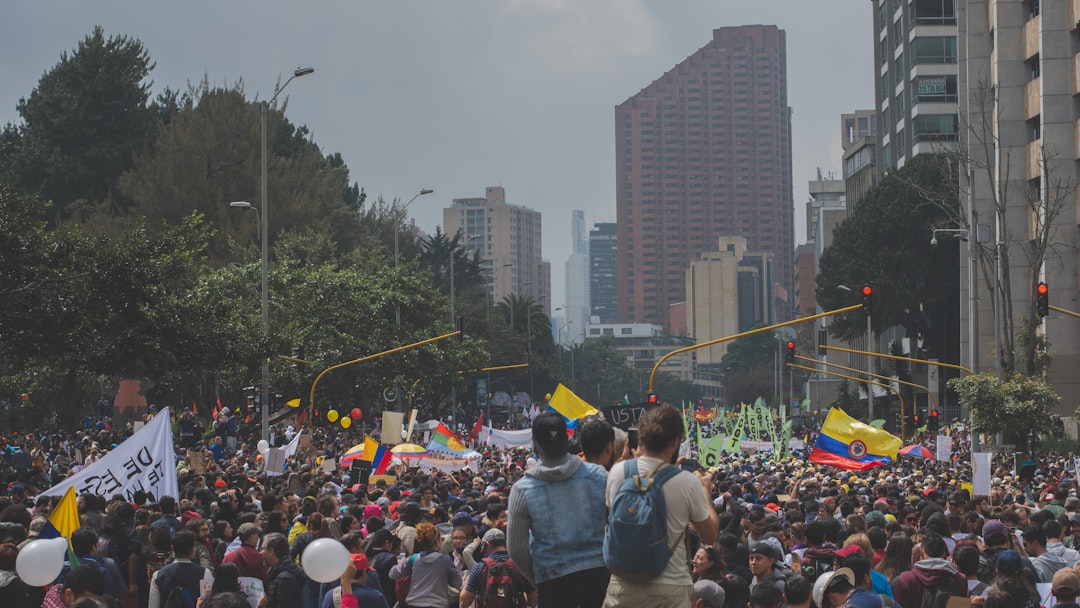
On May 9, journalists, media organizations, and civil society groups gathered near the Plaza de la Libertad in Medellín to honor Pérez and demand progress in the investigation. Indepaz, a Colombian peace research organization, recognized him as a human rights defender whose work in El Confidente—a media outlet he founded while still in high school—documented the risks faced by communities in Yarumal, Briceño, Valdivia, and Ituango under the control of illegal armed groups.
The Antioquia governorate and Medellín municipal government have raised the reward for information leading to Chalá's capture to 500 million pesos (approximately $125,000). But money cannot resolve the structural problem: armed groups operating with tacit or explicit state recognition while continuing to terrorize rural populations.
In Colombia, as across post-conflict societies, peace is not an event but a process—requiring patience, investment, and political will. The 2016 peace agreement with the FARC guerrillas ended five decades of armed conflict, bringing demobilization of the main insurgent force. Yet implementation has proven far more difficult than signing ceremonies.
Dissident factions like the Frente 36 rejected the accord or later rearmed, filling power vacuums in remote areas where the state struggles to establish presence. These groups control coca cultivation, illegal mining, and smuggling routes, generating revenue that funds continued operations. Communities caught between armed actors and security forces face impossible choices.
The peace gestor designation was intended to facilitate dialogue with groups willing to negotiate, offering legal protections to enable travel and communication. In theory, it creates space for gradual de-escalation. In practice, as Pérez's murder demonstrates, it can provide impunity for commanders who maintain armed structures while ostensibly pursuing peace.
This paradox is not unique to Colombia. Across the Andean region, governments grapple with how to negotiate with non-state armed actors without legitimizing violence or undermining the rule of law. Ecuador and Peru face similar dilemmas with criminal organizations that blend insurgent rhetoric with narcotrafficking and extortion.
For young journalists like Pérez, the question is not geopolitical but immediate: can they report on violence without becoming its victims? He understood the risks—the mayor's office warned him explicitly—but pursued the story anyway. That commitment to documenting reality, to giving voice to marginalized communities, is what independent journalism requires.
His death also raises uncomfortable questions about protection mechanisms. If a peace negotiator's forces kill a journalist, what recourse exists? Will Calarcá face consequences, or will his official status shield him? Will Chalá be captured, or will he operate with impunity in remote mountain zones where state presence is nominal?
The answers will signal whether Total Peace represents a genuine transformation or merely a rebranding of old patterns: negotiations without accountability, agreements without implementation, peace without justice.
Regional observers watch closely. Colombia's experience with FARC demobilization, reintegration, and transitional justice serves as a reference point across Latin America. When the process succeeds—when former combatants reintegrate into civilian life, when rural development programs offer alternatives to coca cultivation, when truth commissions provide recognition to victims—it demonstrates that peace is possible.
But when peace negotiators command forces that torture journalists, when designations meant to facilitate dialogue become shields for impunity, when rural communities remain trapped between armed groups and abandonment, the process risks becoming hollow. Peace requires more than agreements; it requires the state's presence and protection in every corner of the territory.
Mateo Pérez Rueda founded El Confidente as a teenager because he believed his community deserved truthful reporting about the violence shaping their lives. He died at 25 trying to document that violence. His murder is not just a press freedom tragedy; it is an indictment of a peace process that has yet to reach the places and people who need it most.