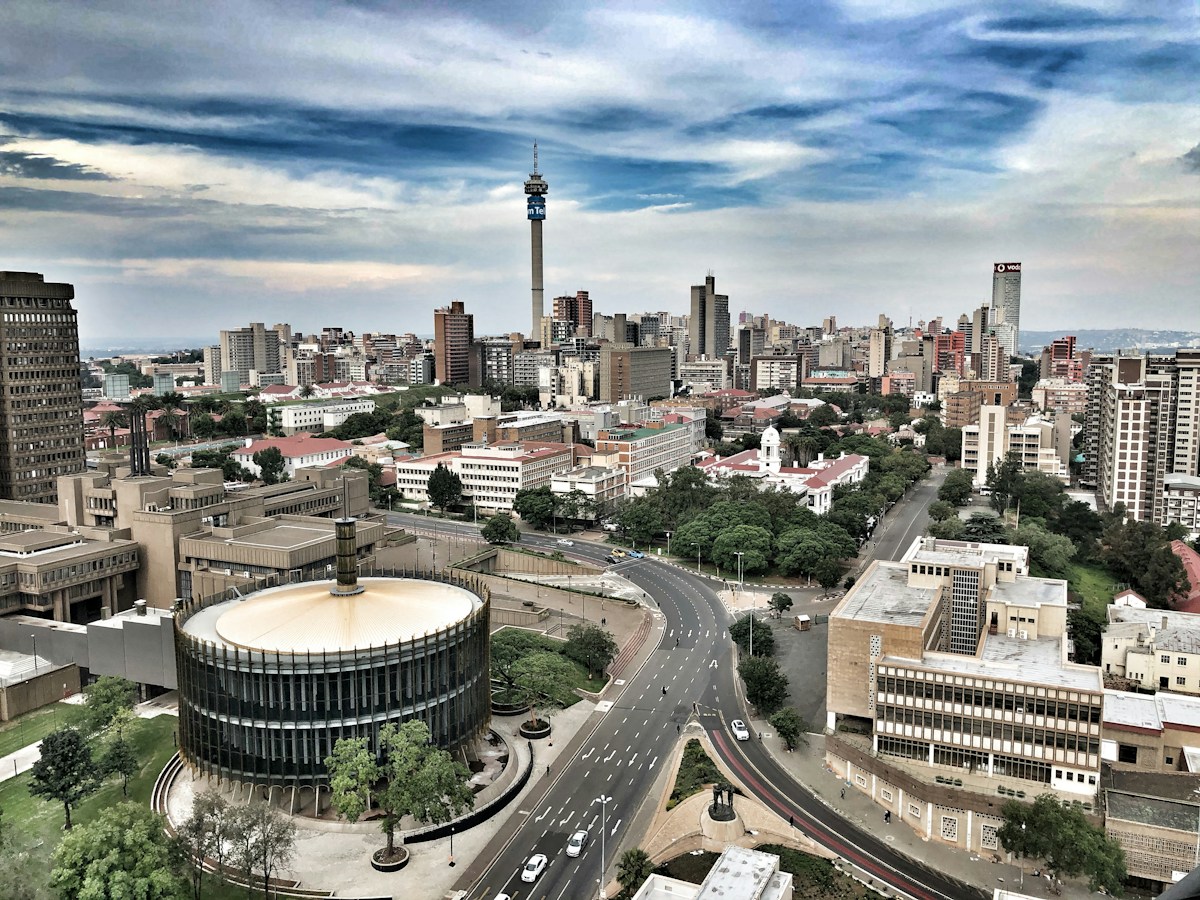
Johannesburg, Africa's wealthiest city and economic heart of South Africa, is in "severe financial distress," Finance Minister Enoch Godongwana warned in a sharply worded letter to Mayor Dada Morero—a declaration that exposes the deep governance failures plaguing the nation's most important metropolis.
The April 24 letter, reported by Daily Maverick, ordered Morero to immediately halt implementation of a R10.3 billion wage agreement with municipal workers, warning the unfunded deal could "destroy the sustainability of the City and negatively affect the national economy."
The numbers paint a grim picture: Johannesburg owes creditors R25.2 billion—up from R17 billion in 2022/23—while holding just R3.9 billion in available cash. The city faces a R3.9 billion budget overspend by January alone on salaries, electricity, and operations. Revenue collection continues falling short of targets, and the National Treasury slashed the city's equitable share from R979 million to R455.9 million.
"The City lacks the liquidity required to pay its creditors," Godongwana wrote, declaring the situation threatened both municipal stability and South Africa's broader economic health.
Wage Deal Triggers Crisis
The Finance Minister's intervention follows Mayor Morero's controversial decision to sign a two-year wage agreement with the SA Municipal Workers Union (Samwu) ahead of the G20 summit in Johannesburg. The mayor sought to prevent strikes during the high-profile international gathering—but Godongwana called the deal "unfunded" and in violation of municipal finance laws.
The Democratic Alliance has challenged the agreement in court, while credit rating agency Moody's placed the city under review for possible downgrade. The Johannesburg Stock Exchange suspended trading in the city's debt instruments—a humiliating blow for Africa's financial capital.
For the city's six million residents, the financial crisis translates into deteriorating services: unsafe streets, leaking pipes, uncollected refuse, and crumbling roads. Opposition party Rise Mzansi accused the city of "playing politics and cutting corners" while residents suffer.
A Governance Reckoning
In South Africa, as across post-conflict societies, the journey from apartheid to true equality requires generations—and constant vigilance. Johannesburg's crisis reflects broader failures that have plagued ANC governance across the country: infrastructure decay, fiscal mismanagement, and the struggle to deliver services to historically marginalized communities.
The timing is particularly awkward for the Government of National Unity (GNU), formed after the ANC lost its parliamentary majority in 2024 elections. The coalition with the Democratic Alliance and other parties promised improved governance and economic management—yet Johannesburg, under ANC control, exemplifies the persistent challenges.
Cosatu, the trade union federation allied with the ANC, accused Godongwana of prioritizing "fiscal austerity over worker livelihoods." But the Finance Minister's position reflects hard fiscal realities: a city that cannot pay its bills cannot deliver services, and a Johannesburg financial collapse would ripple across South Africa's economy.
The dispute highlights tensions within the tripartite alliance of the ANC, Cosatu, and the South African Communist Party—long-standing partners now divided over economic policy as the nation confronts tough choices about fiscal sustainability versus public sector wages.
Continental Implications
As an African Union leader and BRICS member, South Africa positions itself as a model for democratic governance and economic management on the continent. Yet Johannesburg's distress—alongside persistent electricity crises, failing state-owned enterprises, and corruption scandals—undermines that narrative.
The crisis in Africa's wealthiest city demonstrates how quickly urban governance can deteriorate when political calculations override fiscal discipline. Johannesburg generates roughly 16% of South Africa's GDP and hosts the continent's most sophisticated financial markets—making its stability critical not just for South Africa but for regional economic confidence.
Godongwana has given Mayor Morero limited time to respond before potentially invoking constitutional provisions allowing national intervention in failing municipalities—a step that would further expose the ANC's governance record ahead of future elections.
Service Delivery at Stake
Beyond the political theater and financial statistics, Johannesburg's crisis affects millions of residents who depend on functional municipal services. Water infrastructure failures, electricity distribution problems, and collapsing road networks disproportionately impact working-class and poor communities—the very constituencies the ANC claims to champion.
The city's financial distress also affects its ability to maintain public safety, with implications for crime rates in a metro already struggling with violent crime and property theft. Business confidence in Johannesburg depends on functional services and fiscal stability—both now in question.
Yet South Africa retains democratic strengths: independent media exposing these failures, opposition parties demanding accountability, constitutional mechanisms for intervention, and civil society organizations advocating for residents. The Finance Minister's public warning itself reflects transparency that many African nations lack.
The question is whether these democratic institutions can compel the governance improvements needed to rescue Johannesburg from financial collapse—and whether other South African cities heed the warning before facing similar crises.
As Johannesburg confronts severe financial distress three decades after apartheid's end, the crisis serves as a stark reminder that democracy alone cannot guarantee effective governance. Delivering on the promises of freedom requires competent management, fiscal discipline, and putting service delivery above political calculations—lessons Johannesburg is learning the hard way.