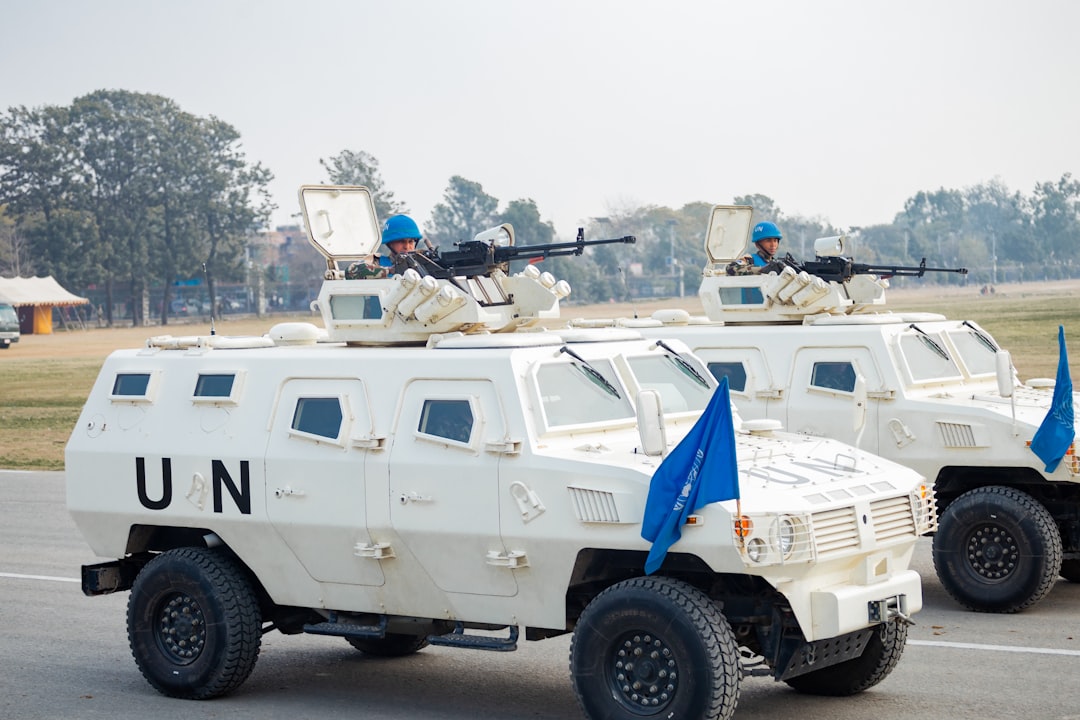
Israeli Defense Forces tanks deliberately rammed Italian military vehicles serving with the United Nations peacekeeping mission in southern Lebanon on Saturday, according to UNIFIL officials, marking the latest escalation in a deteriorating relationship between Israel and the European nations that provide the majority of UN troops patrolling the border zone.The incident occurred in two separate collisions on Saturday in Bayada, southwestern Lebanon, when Israeli Merkava tanks made contact with a Lince armored vehicle and a logistics truck as Italian convoys attempted to navigate a road typically used to access UNIFIL positions. Israeli soldiers had blocked the route with their tanks.No injuries were reported, though UNIFIL stated the collisions caused "significant damage" to Italian vehicles. The Italian government characterized the damage as "minor" compared to earlier incidents this month - perhaps Rome's diplomatic way of saying things could be worse, though that sets a rather low bar when your peacekeepers are being used as tank bumpers."These actions are in contrast with Israel's obligations under Security Council Resolution 1701 and requirements to ensure peacekeeper safety and freedom of movement," UNIFIL said in a statement that deployed the measured language of UN bureaucracy to describe what is, in plain English, military vehicles attacking peacekeepers.Here's what Brussels must now confront: Italy is an EU member state. Its soldiers wear the blue helmets of a UN mission authorized by the Security Council. And they're being physically targeted by a state that receives substantial European diplomatic support and maintains close security cooperation with EU members.This isn't the first incident. On April 8, Israeli forces fired warning shots that struck vehicles occupied by peacekeepers and destroyed surveillance cameras at UNIFIL headquarters. Saturday's tank collisions represent an escalation from bullets to armor.The Italian UNIFIL contingent noted both incidents occurred "during maneuvers" - military-speak that suggests the Israelis weren't simply parking badly. Meanwhile, Israeli Prime Minister Benjamin Netanyahu visited troops in southern Lebanon the same day, stating the military operation continues with no apparent acknowledgment of the UN force his tanks were ramming.For the European Union, this creates an impossible diplomatic equation. UNIFIL's mission in southern Lebanon includes troops from France, Spain, Ireland, and Italy - the largest contributor with over 1,000 personnel. When EU member state militaries are targeted while serving under UN mandate, what's the appropriate response from Brussels?So far, the answer appears to be careful statements about "concern" and "obligations under international law." Which is diplomatic code for: we're watching our peacekeepers get attacked and we're not quite sure what to do about it because Israel is technically an ally and this is very awkward.The incidents come as EU-Israel relations face broader strain over Israeli operations in Gaza and now Lebanon. Several EU foreign ministers have called for reviews of the EU-Israel Association Agreement. Spain and Ireland have been particularly vocal critics of Israeli military actions.But calling for reviews and issuing statements of concern is one thing. EU member states having their soldiers physically rammed by tanks is rather more concrete.Brussels decides more than you think - except when it doesn't. This is one of those moments when the gap between EU diplomatic posture and actual leverage becomes painfully visible. Italy's peacekeepers are under UN command, not EU command. The EU can condemn, it can call for restraint, it can review agreements. But it cannot order Israeli tanks to stop ramming Italian soldiers.The question now is whether this escalation from bullets to armor will force European capitals to move beyond statements. Because if UN peacekeepers from EU member states aren't safe from the militaries they're supposedly monitoring, then the entire premise of European involvement in Middle East peacekeeping faces a rather fundamental problem.And unlike most Brussels policy disputes, you can't solve this one with a directive or a regulation. You need someone to tell the tanks to back up. So far, no one seems willing to make that call.
|